US regulators certify Boeing 737 MAX 10 after delays / Photo: Jason Redmond - AFP/File

 Lula campaign seeks to disqualify Bolsonaro over Meta 'interference'

 Tech jitters lead stocks lower, oil surges then slides
 Solid GM results overshadowed by latest jump in commodity costs

 Power outage hits Google Cloud services, disrupting UK banks

 Gold Remains Under Pressure as Energy Inflation Clouds Rate Outlook

 Tamil Nadu Adds 25 State-Funded Workdays for Eligible Rural Households

 Asian Technology Shares Slide as Investors Reassess AI Boom

 Doha Debates Examines Who Should Set the Moral Rules for AI

 CNN Global Perspectives to Make Middle East Debut in Doha

 Industry Groups Outline Four Steps to Help Women Farmers Reach Markets

 World Gold Council Sees Digital Gold Market Tripling by 2031

 iQOO Neo 12 Set for October 28 China Launch With 144Hz Display

 Low-Cost Homemade Ideas Offer Alternatives for Halloween Costumes

 Tamil Nadu and Puducherry Face Return of Very Heavy Rain

 UN says 19 mn Afghans facing acute food insecurity by April
 China opposes US ban on govt agencies from using DeepSeek

 Indonesia investigates crash of suspected Chinese rocket fragment

 Middle East fuel crunch drives solar push in tiny Fiji

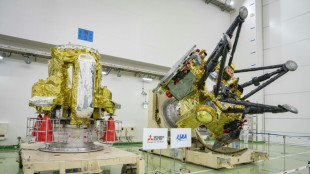 Japan probe on its way to Mars moon

 Ukraine races to secure energy supplies ahead of winter

 US judge orders Saudi engineer held in OpenAI case
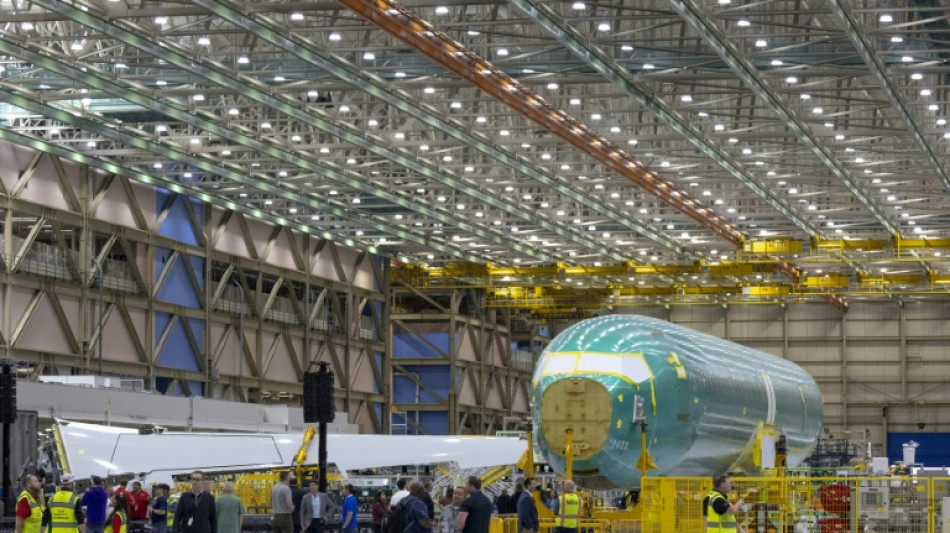
US officials gave final approval Tuesday to the Boeing 737 MAX 10, certifying the latest long-delayed version of the popular single-aisle aircraft.
The Federal Aviation Administration issued a certificate confirming the largest plane in the MAX family "complies with all applicable design and safety requirements," a Department of Transportation press release said.
The move, which follows US certification of the 737 MAX 7 in August, clears the way for increased plane deliveries in the coming years, a key aspect of Boeing's plan to improve financial performance after a lengthy period of weakness.
"The FAA's decision follows a thorough review of the aircraft's design and safety requirements," said FAA Administrator Bryan Bedford. "We will continue to hold Boeing to the highest safety standards as the company begins production of the 737 MAX-10."
Boeing, which expects to commence 737 MAX 10 deliveries in 2027, said it undertook more than 2,000 hours of flight testing and supplied tens of thousands of pages of documentation.
"Our flight test team ran a disciplined, methodical campaign to validate every system," said Chris Payne, general manager for 737 airplane development programs. "That rigor gives us confidence as we move toward deliveries."
- Faster certifications ahead? -
Boeing first launched the aircraft at the 2017 Paris Air Show. In 2018, Boeing said it aimed to have deliveries in 2020.
When the 737 MAX 10 had its first flight in June 2021, Boeing targeted 2023 for first deliveries.
US regulators have heavily scrutinized Boeing's designs during certifications following a pair of MAX crashes in 2018 and 2019 that together claimed 346 lives.
The process was also slowed by a near-catastrophic January 2024 Alaska Airlines flight in which a fuselage panel blew out mid-flight.
In January, Boeing unveiled a new MAX production line in Everett, Washington, supplementing output for a plane that had previously been assembled exclusively in Renton, Washington.
Tuesday's announcement came in parallel with an expected visit by US Transportation Secretary Sean Duffy to Everett.
Duffy told broadcaster CNBC that the United States needs to become more efficient in certifying aircraft, saying that European regulators needed only half the time.
"Safety is paramount, but we have to certify aircraft more quickly if we're going to still compete as as Americans," Duffy told the network.
"I feel very confident if we all come together and get a better process in place, we'll be just as, or more safe, but also can certify aircraft far more quickly."
The MAX 10 lists maximum seats of 230, compared with 172 for the MAX 7, with the MAX 8 and the MAX 9 between the two, according to Boeing's website.
Boeing CEO Kelly Ortberg said at a Wall Street conference in September that he expects to increase output of the 737 MAX to 52 per month in 2027 from the current monthly level, which the FAA has authorized at 47.
During the September 16 appearance, Ortberg had said he expected FAA certification "very soon," while also emphasizing the company's efforts to reach a deal with Boeing's white-collar union that would avoid a strike.
FAA officials had in late September briefly paused certification over concerns about a software problem, but they later concluded the issue did not pose safety risks.
Boeing's Society of Professional Engineering Employees in Aerospace approved a new contract on October 1, removing a potential strike from the list of Boeing concerns.
Shares of Boeing finished down 0.5 percent.
X.Wong--CPN