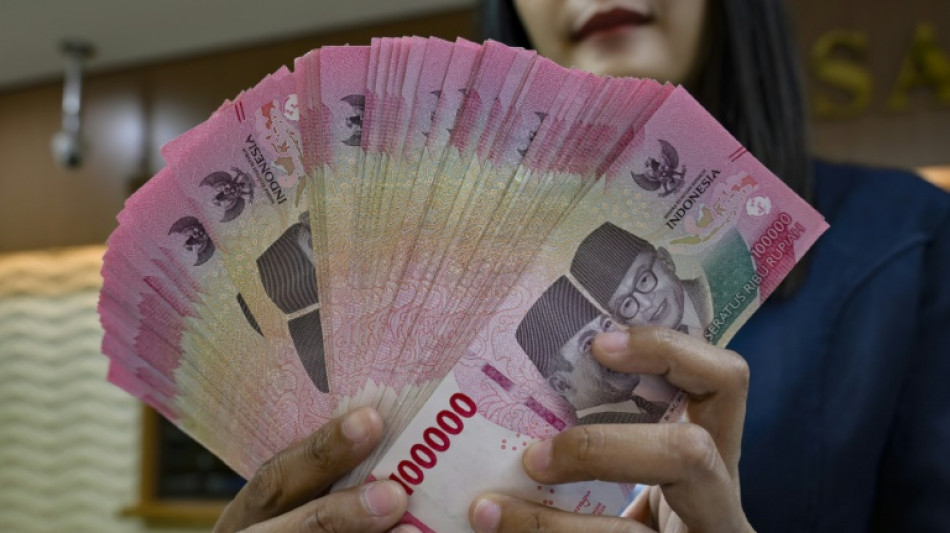
Indonesian rupiah falls to record low against US dollar / Photo: BAY ISMOYO - AFP

 Trump blasts 'sick conspiracy' against AI as warnings mount

 French defence group Thales calls on governments to regulate AI

 Oil gains on Mideast supply fears, AI warnings rattle tech firms

 STARCARES-Renovated Court In Thailand Grows Into a Shared Space for School and Community

 Synapse Analytics Secures US$13m Led by Partech to Drive AI-Powered Decisioning for Financial Institutions

 Surfer hospitalised after shark attack in Western Australia

 US hosts G20 'energy abundance' talks amid Iran war shock

 Migrant workers flock to Indian Kashmir despite militant threats

 Canada's Carney seeks closer Europe ties to counter hostile US

 Dozens arrested in major anti-LGBTQ raids in Turkey

 Poland, Ukraine slam Russian strikes near border as 'escalation'

 iPhone 18預購後出現可疑扣款 四間銀行調查未授權交易

 Galaxy Tab S12系列效果圖曝光 Ultra擬配雙鏡頭及瀏海螢幕

 Altman tells Fortune OpenAI will not go public in 2026

 ستاندرد آند بورز تثبت تصنيف السعودية عند A+

 Anthropic details Claude misuse as US targets major illicit online marketplace

 Venezuelans outside Caracas say capital not sharing blackout burden

 Anthropic boss calls for slowing pace of AI development

 BRICS nations urge 'maximum restraint' in Middle East war

 Europe eyes battle over 'pervert' AI glasses

 Children in flood-hit Nepal grapple with loss, cling to hope

 Venice Film Festival: A look back on the highlights

 DR Congo school fire stampede death toll rises to 26: UNICEF

 Dance Fitness Tempe Announces Expansion of Accessible Digital Movement Programs

 Europe saw record summer air traffic despite Mideast war: Eurocontrol

Indonesia's rupiah hit its weakest level ever against the dollar on Thursday, breaching the psychological 18,000 threshold amid concerns about the country's economy amid surging energy costs.
The unit hit 18,028 against the greenback despite recent central bank efforts to provide support.
The rupiah has tumbled more than seven percent this year and is Asia's worst-performing currency, according to Bloomberg News, as the US-Israel war on Iran sent global oil prices surging.
Permata Bank chief economist Josua Pardede said an exchange rate of 18,000 was a "psychological threshold" for market investors.
The weakening, he told AFP, was fuelled by high dollar demand caused by the spike in oil prices and a narrowing trade surplus.
Indonesia is a net oil importer and is particularly impacted by the rising crude costs, though the government insists it will leave subsidised fuel prices unchanged.
The country's trade surplus has been hammered, narrowing to just $89 million in April, from $3.3 billion a month before, further reducing dollar supply in the Indonesian market, Josua said.
"Dollar supply from goods trade is dwindling, while dollar needs for energy imports, raw materials, dividends, foreign debt payments and seasonality needs remain significant," he told AFP on Wednesday.
"This is why the increase in the BI (Bank Indonesia) lending rate and intervention is not enough to reverse the rupiah's (depreciation)."
The central bank hiked rates by 0.5 basis points to 5.25 percent last month -- the first increase in two years -- as it looked to stabilise the rupiah and keep inflation in check.
And spokesman Ramdan Denny Prakoso said Wednesday that it continued to use "all available policy instruments" to "maintain adequate foreign exchange liquidity".
Bank Indonesia also tightened rules for dollar purchases. Since May, buyers of more than $25,000 in a given month must provide supporting documents to justify their need for greenbacks.
The level was previously lowered from $100,000 to $50,000 in April.
L.Peeters--CPN