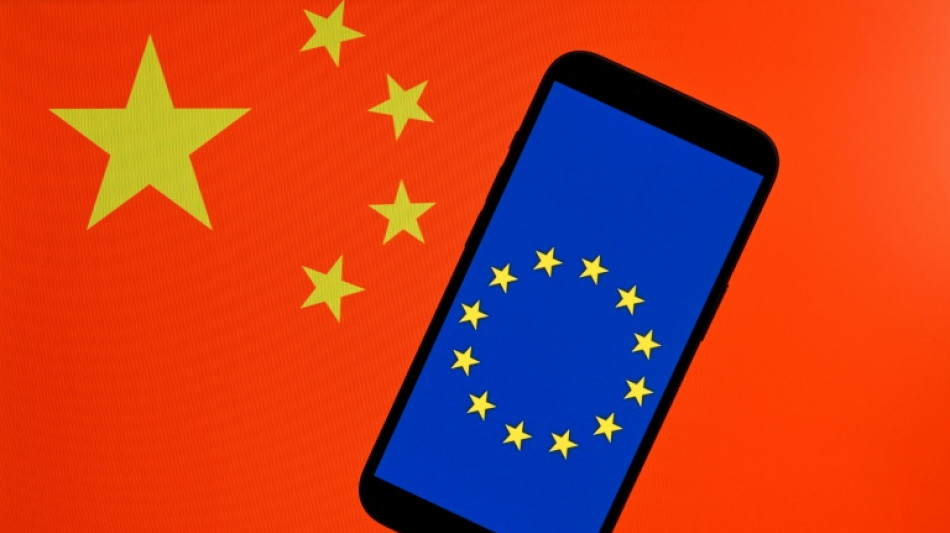
EU wants 'robust' defence against China trade imbalance / Photo: Nicolas TUCAT - AFP/File

 New York seizes 12 celeb deep-fake porn sites

 France, Iraq deepen energy, defence ties during Zaidi visit
 PopDEX Surpasses $61M TVL and $2B Trading Volume in Closed Beta
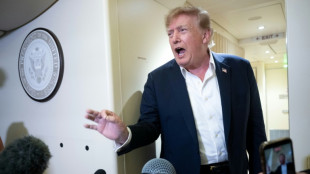 Trump blasts 'sick conspiracy' against AI as warnings mount

 French defence group Thales calls on governments to regulate AI

 Oil gains on Mideast supply fears, AI warnings rattle tech firms

 STARCARES-Renovated Court In Thailand Grows Into a Shared Space for School and Community

 Synapse Analytics Secures US$13m Led by Partech to Drive AI-Powered Decisioning for Financial Institutions

 Surfer hospitalised after shark attack in Western Australia

 US hosts G20 'energy abundance' talks amid Iran war shock

 Migrant workers flock to Indian Kashmir despite militant threats
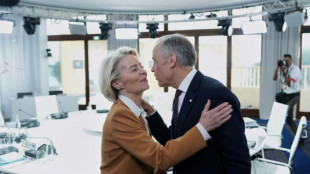 Canada's Carney seeks closer Europe ties to counter hostile US

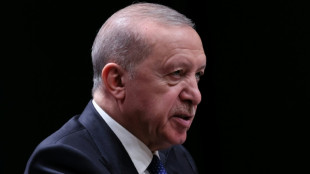 Dozens arrested in major anti-LGBTQ raids in Turkey
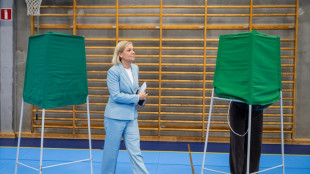
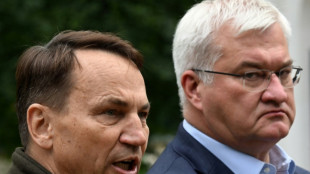 Poland, Ukraine slam Russian strikes near border as 'escalation'
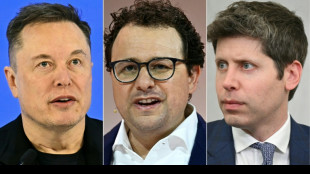
 iPhone 18預購後出現可疑扣款 四間銀行調查未授權交易

 Galaxy Tab S12系列效果圖曝光 Ultra擬配雙鏡頭及瀏海螢幕

 Altman tells Fortune OpenAI will not go public in 2026

 ستاندرد آند بورز تثبت تصنيف السعودية عند A+

 Anthropic details Claude misuse as US targets major illicit online marketplace

 Venezuelans outside Caracas say capital not sharing blackout burden

 Anthropic boss calls for slowing pace of AI development

 BRICS nations urge 'maximum restraint' in Middle East war

 Europe eyes battle over 'pervert' AI glasses

 Children in flood-hit Nepal grapple with loss, cling to hope

 Venice Film Festival: A look back on the highlights

The European Union must act more forcefully to rebalance its trade relationship with China, the bloc's executive said Friday, after holding talks on protecting critical industries from Chinese rivals.
As tensions come back down a notch with the United States following Europe's approval of a 2025 trade agreement, the bloc is turning its focus to China, with a growing chorus seeking a crackdown.
And it's not alone.
Experts and governments are increasingly warning of a "China shock 2.0", with a glut of inexpensive goods made in the Asian powerhouse threatening manufacturers not just in Europe but around the world as trade deficits with China widen.
Of rising concern in Europe is the bloc's trade deficit in goods, which hit around 360 billion euros ($419 billion) last year, meaning Chinese exports exceeded EU imports significantly.
Chinese foreign ministry spokeswoman Mao Ning said before talks ended on Friday that Beijing was "closely following" the developments and "will take necessary measures to safeguard its legitimate rights and interests".
Friday's debate between European commissioners will feed further talks on trade imbalances at the G7 heads of state meeting in France on June 15-17 and an EU leaders' summit in Brussels on June 18-19.
"China's industrial dominance is not accidental. It is the result of decades of state subsidies and non-reciprocal market access," EU industry chief Stephane Sejourne told EU ministers in Brussels on Thursday.
He later told reporters that 29 million jobs were "at very high risk in the coming months due to the trade deficit", citing the European Central Bank.
- Call for swift action -
Since 2023, European Commission President Ursula von der Leyen has pushed a "de-risk, not decouple" approach that balances concerns over relying too much on China with keeping ties -- which Brussels echoed again Friday.
The commissioners discussed what measures, both current and new, the EU should take to defend the continent's companies from what Brussels sees as unfair competition from Chinese rivals.
Industry groups from the metals, clean technology and fertiliser sectors said a "more effective and swift application of the EU's trade defence toolbox" was "urgently needed" in a letter denoucning unfair practices.
The EU in recent years has tried to tackle the imbalance through higher tariffs and quotas and a wave of anti-subsidy probes in the clean tech sector, leading to increased trade frictions between Brussels and Beijing.
The EU is also exploring taking a page out of US President Donald Trump's playbook, with a tool similar to Section 301 of its trade laws, which gives Washington the power to set sector-specific tariffs -- which in Europe's case might include chemicals, metals or green tech.
Chinese attempts to invest in Europe have also increasingly met resistance.
"The main thing is Europe has an arsenal of trade instruments at its disposal already. What's missing is a lack of political will to deploy them," said Sander Tordoir, chief economist at the Centre for European Reform (CER) think tank.
- Chips on the menu -
Europe is simultaneously seeking to diversify its trading partners, especially for rare earths, an industry dominated by China, after Beijing's stringent export controls last year revealed just how vulnerable the bloc is.
The EU also hopes new rules set to be unveiled next week will bolster local manufacturing of chips, used in various electronic products.
Without naming China, four major EU economies including France, Italy and the Netherlands circulated a document at the weekend pointing to the need for tougher measures to combat the "rise of unfair trade practices".
But their push pits them against Europe's biggest economy, Germany, which exports many goods like cars and factory machinery. Berlin is fearful of upsetting Beijing and the painful consequences that could bring.
CER's Tordoir, however, believed there was a "shift ongoing" in Berlin.
burs-raz/ec/js
H.Müller--CPN