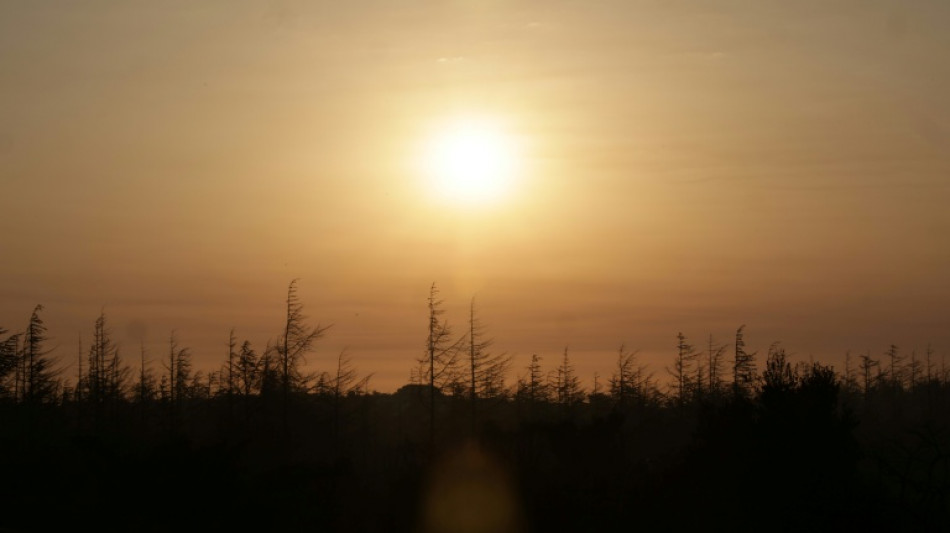
UN climate panel fails to agree date for global warming update: envoy / Photo: Valentine CHAPUIS - AFP/File

 US budget deficit grows to nearly $2 trillion, highest since 2021
 Swiss solar-powered plane altitude record confirmed
 Elon Musk unveils Tesla's 'flying' car
 France's summer wildfires could cost insurers up to 563 mln euros
 'Real inequality': France's education divide laid bare by protests

 Millions may be forced to move as climate change hits South Asia: UN
 'Under attack' from fragrance, Hanoi prunes its famous blossoms
 Indonesian stocks dive 11% as MSCI weighs market reclassification
 Le Pen looms large as Macron enters final months on EU stage
 Fiji to deploy solar-powered Australian military drones at sea
 ChangeNOW Announces NOW AI After Resolving Website Integration Vulnerability

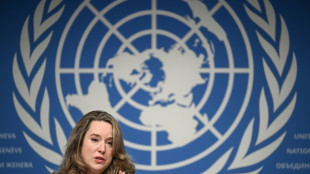
The UN's IPCC climate panel failed after a week of tough talks to reach an agreement on when to release its next report on global warming, the senior French envoy at the talks said Friday.
Benoit Faraco said that "a few countries" had pressed to delay publication after the 2028 date that many European countries had wanted for the next Inter-governmental Panel on Climate Change (IPCC) report.
"After a week of difficult discussions, a broad coalition of developed and developing countries from all five continents, united in their support for science and the timeline proposed by scientists, managed to withstand pressure from a few countries seeking to slow down the process of adopting these reports," he said in a post on Linkedin.
"This deadlock is not new, and it risks costing us valuable time in our response to climate change," the French envoy said.
The IPCC is the global authority on climate science and many countries wanted its next major report out in 2028 for a crucial review of progress to cut planet-warming emissions.
But some countries, including Saudi Arabia, India and China, say that postponing the "seventh assessment report" until 2029 will provide developing countries more time to absorb its findings.
When the IPCC meeting opened in Addis Ababa on Monday, IPCC chair Jim Skea implored nations to end the stalemate and warned of the "organisational and reputational significance of its decision".
Last week, ministers from more than 30 nations signed a letter criticising "those whose entrenched interests are at odds with reducing greenhouse gases".
- Talks 'travesty' -
"Divorcing the policy cycle under the United Nations from the scientific evidence provided by the IPCC would undermine the global effort to address the climate crisis and weaken international cooperation," they said.
European nations and other industrialised countries made up roughly half the 35 signatories. But the chair of the Least Developed Countries group representing the world's 44 poorest nations also signed the letter, as did ministers from small-island states and many emerging economies.
Tina Stege, climate envoy for the Marshall Islands which fears devastation from the rising seas, said: "It’s a travesty that a handful of countries continue to delay the IPCC’s reports -- the science we need back home to help us save lives and livelihoods.
"We were here to work, but found every proposal dismissed - on inclusivity, on the relevance of the science for our national planning, on the necessity of evidence to inform the next global stocktake.
"Progress was blocked, down to the end -— a shameful play for time when there is no time to waste," she said.
Shreeshan Venkatesh of the Climate Action Network said the group was "deeply disappointed" by the failure. "Parties had enough time to reach agreement on such an important matter."
He said the IPCC talks should be reconvened as early as possible.
"Reconvening the session at the earliest is critical, especially as the world confronts the horrific realities of escalating climate impacts daily, particularly among the peoples and communities least responsible for creating the crisis," said Venkatesh.
The IPCC reports are normally released every five to seven years. The sixth report came out in 2021.
L.Peeters--CPN