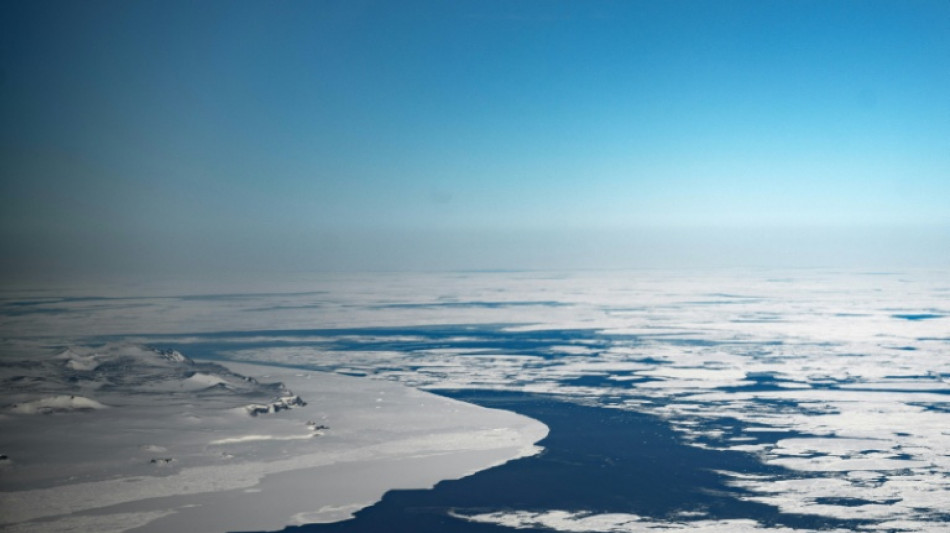
Polar oceans transformed as warming melts ice habitats: research / Photo: Olivier MORIN - AFP/File

 UK-France Channel migrant exchange deal scrapped: London

 The voices of Spain's housing camp protesters

 G20 trade ministers open talks under strain of Trump tariffs

 US reports firm Q2 economic growth, inflation steady
 UK PM Burnham reopens divisive debate on rejoining EU

 Dangote's $16bn Kenya refinery 'new chapter' for Africa

 Energy costs spark inflation surges in France, Italy

 French inflation jumps to 3% in September on energy costs

 Polar oceans transformed as warming melts ice habitats: research

 Vietnam admits 'differing opinions' on Hanoi development
 Paw-fect candidate: Australia finds new koala rescue dog
 ChatGPT maker wants to be the App Store for AI as safety concerns grow
 Trump hails 'morally binding' AI self-regulation pledge

 OpenAI unveils low-cost AI model, a day after shelving Astra upgrade

 Stocks move lower despite oil prices dropping

 Amaze Holdings (NYSE: AMZE) Executes Binding LOI to Acquire BullionFX | Alchemy, a Decentralized Gold-Backed Financial Ecosystem for Valued at US$155 Million
 Stocks move sideways despite oil moving lower
 African leaders to gather in Egypt for business summit

 Tom Cruise trades stunts for satire as toxic tycoon 'Digger'

 Families demand justice for Cameroon's 'nightmare' wave of murdered women

 Slovenia sees surge in '.si' sites after Trump hypes 'super intelligence'
 STARTRADER Raises Lloyd's of London Client Fund Insurance to USD 30 Million in Aggregate

 South Korea volleyball team latest to be bussed to wrong Games venue
 Stocks drop and oil rises as Hormuz hopes fade
 OpenAI cancels release of newest model due to safety concerns

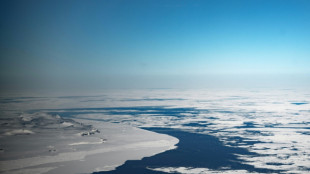
Climate change is increasingly reshaping the polar oceans, with Arctic waters warming rapidly, sea ice shrinking and wildlife losing habitat at both ends of the planet, an annual report said Wednesday.
The Copernicus Ocean State Report depicts profound changes across the world's seas, from record-breaking heatwaves in the Mediterranean and Black seas to shifts in marine ecosystems and increasingly acidic waters.
"The message is very clear. The ocean is changing rapidly," said Pierre Bahurel, director general of Mercator Ocean International, which runs the European Union's Copernicus Marine Service.
Some of the more dramatic effects from global warming are taking place in the poles, which occupy around 20 percent of the global ocean surface.
The Arctic's combined sea surface and sea-ice surface temperature rose 4.2C between 1982 and 2024, or around 1C per decade, according to the 10th annual oceans report.
By comparison, global sea surface temperatures have been increasing by 0.12C per decade.
In the Kara Sea north of Siberia, temperatures have climbed by 6.7C since 1982, or 1.68C per decade.
As temperatures rise, Arctic sea ice has shrunk by nearly half a million square kilometres per decade since 1979, equivalent to losing an area the size of Spain every 10 years.
The retreating ice exposes Arctic coastlines to waves, worsening coastal erosion and raising risks for coastal communities and infrastructure, the report warned.
"The Arctic sea ice has been declining since the early 80s, leaving around 60 percent of coastal infrastructure vulnerable to erosion and sea level rise," Karina von Schuckmann, director of the oceans report, said in a media briefing.
Ice loss in Antarctica, meanwhile, is threatening penguin populations on the frozen continent.
Record-low Antarctic sea ice in 2022 coincided with the first-ever recorded large-scale breeding failure of emperor penguins, the report said.
Emperor penguins rely on stable sea ice to live, hunt and breed and their chicks can perish if they fall in freezing water before developing waterproof feathers.
In April, emperor penguins were upgraded from "near threatened" to "endangered" by the IUCN, the global authority on threatened wildlife.
More than 90 percent of emperor penguin colonies could be near-extinct by 2100 if sea ice loss persists at its current rate.
T.Morelli--CPN