-
 Germany urges EU action against China to defend carmakers
-
Nepal floods among 'most challenging' disasters: WFP

-
 Japan eyes changing prostitution law to punish sex buyers
-
Kids and social media: what would change under new EU law

-
 Modi pitches India as global chipmaking hub
-
King Charles to call on tech giants for 'reassurances' over AI

-
 Ukraine plans record defence spending in 2027
-
STARPRIME Responds to Diverging Gold Market Demand with AM/PM Fixing and XAU24/7

-
 NASA scan discovers new, 'once in a century' Moon crater
-
Where the US-China tariff row stands ahead of White House summit

-
 Most stocks rise as Fed hikes and indicates drive to curb inflation
-
Indonesia cash-for-photos scheme turns animal hunters into protectors

-
 UK-Sudanese author pens book to give children 'African history of Africa'
-
Argentine judge orders suspension of Falklands oil project

-
 US Congress passes sweeping Russia sanctions bill
-
US Fed raises rates to tackle 'too high' inflation, irking Trump

-
 US stocks fall, dollar gains after Fed lifts interest rates
-
Turkey releases 106 protesters, jails more LGBTQ activists

-
 US Fed raises rates to tackle 'too high' inflation in move sure to rile Trump
-
Candidate for UN chief calls for AI regulation akin to nuclear weapons

-
 US Fed raises rates to battle inflation in move likely to rile Trump
-
'We're losing control,' AI pioneer Yoshua Bengio tells AFP

-
 US House faces test on sweeping Russia sanctions bill
-
IR-MED and Dice Technologies Announce collaboration to Evaluate and Advance Pressure-Injury Prevention Platform in Japan

-
 British PM says to make 'difficult decisions' as inflation rises
-
Watts, Pitt, Cruz to light up Spain's top film festival

-
 Global fuel price demos: a round-up
-
Toogood Gold's Table Mountain Sits in the Shadow of a Nevada Gold Rush

-
 Leverate Launches MCP for Traders to Connect AI Assistants With Trading Platforms
-
MEXC July–August Security Report: 38.66M USDT in Risk Funds Intercepted, Futures Insurance Fund Hits 792M USDT

-
 MEXC Launches $1M "Discover Your Wall Street DNA" Campaign to Help Traders Find Their Market Fit
-
Emporio Armani names Dario Vitale new creative director

-
 Stocks edge higher ahead of US Fed rate call
-
EU to ban social media for under 13s, curb access until 15

-
 BASIS.pro Expands On-Chain Infrastructure with XDC Network Partnership and Zypher DAO as Auto Earn Goes Live
-
Wildfires push endangered Sumatran elephants to brink: Indonesian NGO

-
 Pickle-flavoured tart? AI inspires Japan's convenience stores
-
Bank of Japan set to raise rates under pressure from inflation, US

-
 EU chief hosts Canada's Carney in push to 'deepen' alliance
-
EU chief to unveil social media, gaming curbs for under-15s

-
 Meta chief pushes back on AI slowdown calls
-
'Resident Evil' film brings video game's ethos to the big screen

-
 US Fed to deliver rate decision with markets betting on hike
-
GA-ASI Mojave First UAS To Complete Battlefield Short Field Ops

-
 i-payout Expands U.S. Money Transmitter Licensing Footprint and Advances European EMI Strategy
-
Sanders, Bannon warn of AI dangers in rare US left-right alignment

-
 US Senate crypto bill collapses amid partisan deadlock
-
Empty benches as schools reopen in Venezuela's quake-hit Guaira

-
 OpenAI, Anthropic and Google are working to create an AI standards body
-
Tiny English village holds 'independence' vote over asylum seeker housing

Watch Live: Trump or Harris? America votes!
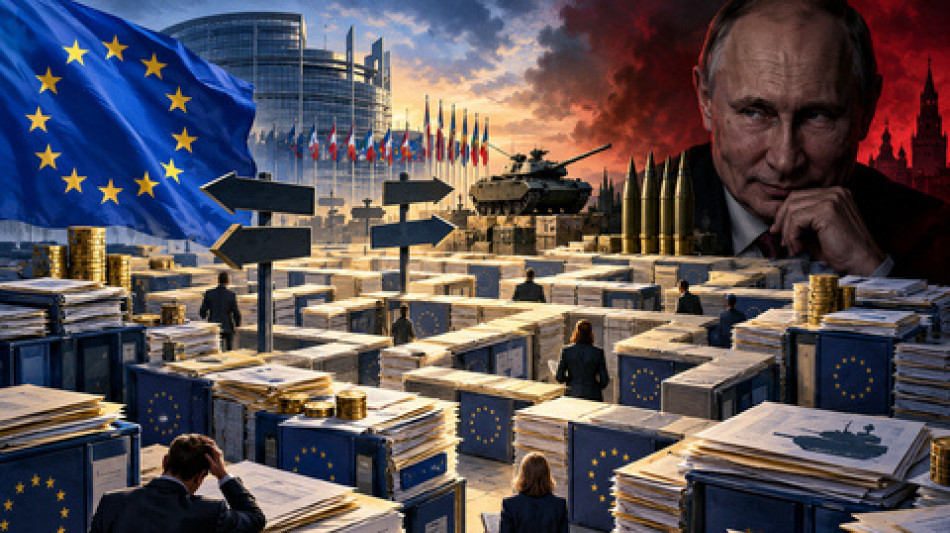
"The Potential Impact of a Trump Victory on the European Union: Opportunities and Challenges"
As the United States approaches the pivotal 2024 Presidential Election, the world watches with anticipation. The outcome of this election will have far-reaching implications, especially for the European Union. A victory for Donald Trump, following the election on November 5th, could bring significant changes to transatlantic relations. While a second Trump presidency presents both opportunities and risks for Europe, the impact of a Democratic loss also poses challenges that the EU must carefully navigate.
Recalibrating Transatlantic Relations: Opportunities for Independence
A renewed Trump presidency would almost certainly usher in a period of recalibration in transatlantic relations. During his previous term, Trump prioritized an "America First" approach, often expressing skepticism about multilateral institutions, including NATO, and emphasizing fairer burden-sharing among allies. Should Trump reclaim office, the European Union might find itself with an opportunity to redefine its own strategic autonomy.
For years, European leaders have discussed reducing their dependency on the United States in defense and security matters. Under Trump's leadership, this necessity may be reinforced, encouraging the EU to enhance its military capabilities and cohesion as a geopolitical entity. A Trump administration that remains indifferent to European security concerns could accelerate efforts within Europe to pursue a stronger defense policy, particularly under initiatives such as the Permanent Structured Cooperation (PESCO) and the European Defence Fund (EDF). This would help the EU establish itself as a more self-reliant global power.
Further, Trump's potential economic policies might create space for Europe to strengthen its partnerships elsewhere. During his previous administration, Trump's preference for bilateral trade agreements over multilateral accords led to tensions with trading partners, including the EU. Should Trump return, the EU may seek to solidify and diversify trade relationships with emerging economies and other key markets, fostering partnerships that could reduce reliance on U.S. economic cooperation.
Economic Uncertainty and Regulatory Divergence
However, a Trump victory is likely to create significant economic uncertainties. In a second term, Trump might be inclined to revisit trade conflicts and tariffs that previously put the transatlantic economy under strain. Such policies could undermine EU-U.S. economic relations, particularly if Trump continues to question the value of existing trade agreements or imposes new tariffs on European goods. A weakened trade relationship would undoubtedly create ripples across European markets, especially for sectors such as automotive, agriculture, and technology.
Moreover, Trump's stance on climate policies diverges significantly from the EU's green agenda. While the Biden administration worked in lockstep with Europe on climate change, supporting the Paris Agreement and promoting green initiatives, Trump has previously downplayed climate science and rolled back environmental regulations. A renewed Trump presidency could therefore complicate global efforts to tackle climate change, making it harder for the EU to find common ground on pressing environmental issues and necessitating Europe to act as the principal advocate for international climate agreements.
Geopolitical Challenges and Strategic Implications
A Trump win would likely have substantial ramifications for the EU's strategic posture. The previous Trump administration’s unpredictable approach to foreign policy saw strained relations with traditional allies while displaying overtures towards autocratic regimes, such as Russia and North Korea. A similar pattern could leave the EU more vulnerable, as a Trump administration might deprioritize NATO, questioning the value of collective defense. Such a shift would place a heavier burden on Europe to guarantee its own security, especially amid ongoing tensions with Russia following the invasion of Ukraine.
In the face of these challenges, European nations may need to take a more unified stance on defense, with stronger commitments from member states to meet NATO's defense spending targets. While this could foster a more cohesive EU defense policy, it may also expose divisions within the Union, particularly between countries more inclined towards U.S. alignment and those preferring an independent EU security strategy.
Another aspect to consider is the relationship with China. Under Trump, the U.S. took an aggressive stance on confronting Beijing, and a renewed emphasis on economic decoupling might force Europe to navigate a delicate balance. European nations, many of which have significant trade ties with China, could face pressures to align more closely with the U.S. position, risking economic fallout or diplomatic tensions with Beijing.
The Consequences of a Democratic Defeat for Europe
A Democratic loss would signal a broader shift in American politics, one that Europe cannot ignore. The Biden administration’s tenure was marked by efforts to restore alliances, re-engage with international institutions, and support liberal democratic values. A defeat of the Democrats would likely symbolize a repudiation of these principles by the American electorate, potentially emboldening populist and nationalist movements within Europe itself.
The EU may find itself needing to take on the mantle of championing liberal democracy on the world stage. With Washington potentially shifting towards a more isolationist posture, Europe would need to double down on diplomatic efforts to uphold international norms, promote human rights, and counterbalance the influence of autocratic regimes. Additionally, European nations that are increasingly challenged by internal populist movements may struggle to maintain unity in the face of rising skepticism towards liberal democratic institutions.
Navigating the Path Forward
While the potential re-election of Donald Trump could create significant challenges for the European Union, it also presents an opportunity for Europe to assert its role as an independent geopolitical actor. The EU must prepare for the possibility of a more transactional and less predictable relationship with Washington. Strengthening internal cohesion, investing in defense capabilities, and diversifying global partnerships are essential steps the EU should take in response to a potential second Trump presidency.
At the same time, Europe should engage diplomatically with a Trump-led administration, seeking avenues of cooperation on issues of shared interest, such as counterterrorism and energy security. Navigating this complex landscape will require deft diplomacy, resilience, and a clear strategic vision. The European Union, if united and proactive, can mitigate risks while seizing the opportunities presented by a changing global order—regardless of the outcome of the American presidential election.
Taiwan: Is the "Silicon Shield" collapsing?
Iran lifts Dollar, sinks Euro

Germany doesn't want any more migrants?
US Federal Reserve with “announcement”

Ukraine Loses Kursk: A Collapse?
Rebellion against Trump: "Ready for War?"
Canada challenges Trump on Tariffs
Trump, Putin and the question: What now?

Israel escalates War to crush Hamas

Houthis and al-Qaeda

EU: Greenpeace warns of dying farms