
Coin Press - Trump fears Asia's oil shock


Trump fears Asia's oil shock


Asia is by far the largest importer of oil and liquefied natural gas in the world. In 2025 it depended on the Middle East for almost 59 % of its crude oil imports. That oil normally flows through the Strait of Hormuz, a narrow waterway between Iran and Oman that sees about a fifth of global oil shipments pass daily. When Donald Trump launched military action against Iran in early 2026, Iran did the one thing energy analysts have always feared: it shut the Strait of Hormuz. Iranian forces attacked ships, closing the channel to almost all tankers and cutting off shipments of oil, gas and fertiliser to Asia. Trump’s bellicose 48‑hour ultimatum—promising to “obliterate” Iranian power plants if the strait did not reopen—only escalated the crisis. As skirmishes continue, analysts warn that more than 40 energy assets in the Middle East have been severely damaged.

Contagion through Asia’s economies
The closure of the strait sent oil prices soaring above US $100 per barrel and triggered emergency releases from government reserves. Yet the pain is being felt unevenly. In the United States, retail gasoline prices hovered around US $4 per gallon—uncomfortable but tolerable. In Asia, which receives nearly 90 % of the crude and LNG that transit the strait, the disruption is existential. China, with the world’s largest onshore stockpile, has limited fuel price rises, but citizens still face 20 % jumps at the pump. India reports long fuel queues and panic‑driven rationing. Bangladesh has deployed the military at oil depots and police at petrol stations, while South Korea imposed its first cap on domestic fuel prices in almost thirty years. Thailand and Pakistan have shortened the work week and closed schools, Myanmar has restricted driving to odd–even days, and the Philippines declared a national emergency and considered grounding flights.

The International Energy Agency (IEA) says the conflict represents the greatest threat to global energy security in history, warning that more oil is being lost each day than during the oil shocks of the 1970s. Fatih Birol, head of the IEA, has urged nations to reduce demand by working from home, limiting travel and driving more slowly. Even if fighting stopped today, he cautions that it would take at least six months for some oil and gasfields to return to operation.

Donald Trump’s hawkish stance toward Iran plays well with his base, but the ripple effects now threaten his broader political and economic goals. Several factors explain why an Asian energy crisis would be his worst nightmare:

-  Global economic contagion: Asia’s economies are tightly woven into global supply chains. Rising energy costs translate directly into higher prices for Asian‑made goods and services. With Asia already facing rationing and production slowdowns, manufacturers from Japan to Vietnam are cutting shifts or encouraging remote work. A prolonged shock could slow global trade and dent U.S. corporate earnings, undermining the boom Trump has promised at home.

-  Market turbulence and inflation risks: The surge in energy prices has rattled stock markets across Asia and pushed central banks to reconsider monetary policy. Higher oil prices feed directly into global inflation, forcing central banks—including the U.S. Federal Reserve—to maintain higher interest rates. This risks choking the economic growth Trump needs for re‑election, and undermines his narrative that U.S. prosperity can be insulated from foreign crises.

-  Geopolitical realignment: Asian governments have reacted to the crisis by deepening energy ties with non‑Western suppliers. China has increased imports of Iranian and Russian oil, while India has ramped up Russian crude purchases under a U.S. waiver. Japan has released 80 million barrels from its strategic reserves. Such moves reduce U.S. leverage in Asia and could hasten a broader pivot away from the American‑led energy order.

-  Domestic political blowback: Although Americans feel the crisis less acutely than Asians, U.S. voters are already sensitive to rising fuel prices. Trump’s supporters praised the strike on Iran, yet many comments on social media express unease about a war that disrupts global trade, fuels inflation and risks broader conflict. Others point out that the United States, by destroying Iranian infrastructure, has amplified the suffering of Asian economies, making Washington appear reckless and uncaring. If economic pain deepens, the backlash could erode Trump’s support among moderates.

-  Strategic overreach: Military analysts note speculation that the U.S. might attempt to seize Iran’s primary oil export terminal on Kharg Island. Such an operation could further destabilise global markets and invite retaliatory attacks. Iranian leaders have vowed to close the strait completely if their infrastructure is targeted, potentially triggering an unmanageable escalation. Trump’s fear is that his promise of a quick victory is giving way to a quagmire that damages the United States’ reputation and the global economy.

Calls for diversification and renewable energy
The crisis has renewed debates about energy independence. European politicians warn that the war makes the West’s retreat from electric vehicles look shortsighted. Asian leaders are accelerating plans to expand renewable energy and energy‑saving equipment. China unveiled a programme to scale up energy‑efficient technologies, while the IEA is urging governments to invest in renewables and reduce fossil‑fuel dependence. Commentators argue that the current turmoil underscores the vulnerability of an economy tethered to a single shipping chokepoint. Instead of doubling down on oil, they say, the world must diversify its energy sources.

Outlook and More
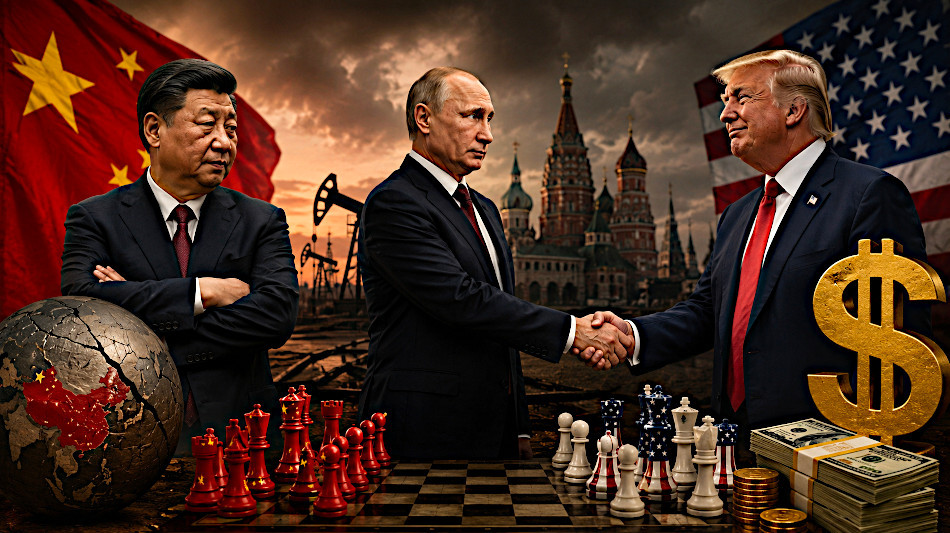
From Dhaka’s petrol queues to Seoul’s price cap and Manila’s flight cancellations, Asia is bearing the brunt of the Iran war. The region’s reliance on Middle Eastern oil and gas means any prolonged disruption will ripple through supply chains, consumer prices and political alliances. For Donald Trump, who built his political brand on promises of economic strength and geopolitical dominance, an Asian energy crisis threatens to unravel his narrative. It risks stalling global growth, fuelling inflation, weakening U.S. influence and inviting political backlash. That is why, behind the bluster, an energy shock in Asia may be the thing he fears most.


Featured


Long live Ukraine - Хай живе Україна - Да здравствует Украина

Es lebe die Ukraine - Да здравствует Украина - Long live Ukraine - Хай живе Україна - Nech žije Ukrajina - Länge leve Ukraina - תחי אוקראינה - Lang leve Oekraïne - Да живее Украйна - Elagu Ukraina - Kauan eläköön Ukraina - Vive l'Ukraine - Ζήτω η Ουκρανία - 乌克兰万岁 - Viva Ucrania - Ať žije Ukrajina - Çok yaşa Ukrayna - Viva a Ucrânia - Trăiască Ucraina - ウクライナ万歳 - Tegyvuoja Ukraina - Lai dzīvo Ukraina - Viva l'Ucraina - Hidup Ukraina - تحيا أوكرانيا - Vivat Ucraina - ขอให้ยูเครนจงเจริญ - Ucraina muôn năm - ژوندی دی وی اوکراین - Yashasin Ukraina - Озак яшә Украина - Živjela Ukrajina - 우크라이나 만세 - Mabuhay ang Ukraine - Lenge leve Ukraina - Nyob ntev Ukraine - Да живее Украина - გაუმარჯოს უკრაინას - Hidup Ukraine - Vivu Ukrainio - Længe leve Ukraine - Živjela Ukrajina - Жыве Украіна - Yaşasın Ukrayna - Lengi lifi Úkraína - Lank lewe die Oekraïne

Stargate project, Trump and the AI war...

In a dramatic return to the global political stage, former President Donald J. Trump, as the current 47th President of the United States of America, has unveiled his latest initiative, the so-called ‘Stargate Project,’ in a bid to cement the United States’ dominance in artificial intelligence and outpace China’s meteoric rise in the field. The newly announced programme, cloaked in patriotic rhetoric and ambitious targets, is already stirring intense debate over the future of technological competition between the world’s two largest economies.According to preliminary statements from Trump’s team, the Stargate Project will consolidate the efforts of leading American tech conglomerates, defence contractors, and research universities under a centralised framework. The former president, who has long championed American exceptionalism, claims this approach will provide the United States with a decisive advantage, enabling rapid breakthroughs in cutting-edge AI applications ranging from military strategy to commercial innovation.“America must remain the global leader in technology—no ifs, no buts,” Trump declared at a recent press conference. “China has been trying to surpass us in AI, but with this new project, we will make sure the future remains ours.”Details regarding funding and governance remain scarce, but early indications suggest the initiative will rely heavily on public-private partnerships, tax incentives for research and development, and collaboration with high-profile venture capital firms. Skeptics, however, warn that the endeavour could fan the flames of an increasingly militarised AI race, raising ethical concerns about surveillance, automation of warfare, and data privacy. Critics also question whether the initiative can deliver on its lofty promises, especially in the face of existing economic and geopolitical pressures.Yet for its supporters, the Stargate Project serves as a rallying cry for renewed American leadership and an antidote to worries over China’s technological ascendancy. Proponents argue that accelerating AI research is paramount if the United States wishes to preserve not just military supremacy, but also the economic and cultural influence that has typified its global role for decades.Whether this bold project will succeed—or if it will devolve into a symbolic gesture—remains to be seen. What is certain, however, is that the Stargate Project has already reignited debate about how best to safeguard America’s strategic future and maintain the balance of power in the fast-evolving arena of artificial intelligence.

Ukraine sends ground robots

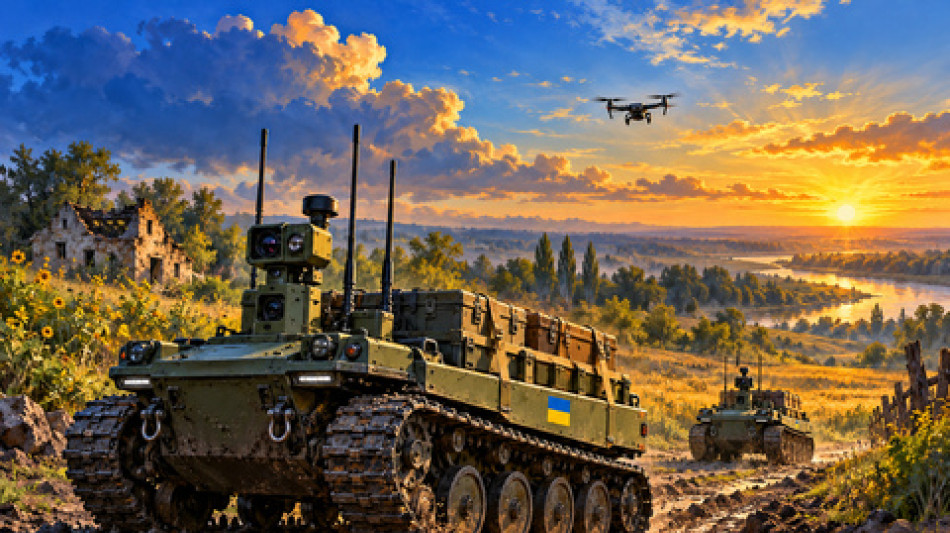
Ukraine is putting ground robots to work on a scale that is beginning to change how its army supplies positions, evacuates casualties and conducts some of its most dangerous combat missions. The significance lies in the gradual transfer of battlefield exposure from people to machines. For a force under sustained pressure to preserve experienced soldiers, that change could matter well beyond the individual missions captured on video.The expansion is measurable. By early September 2026, Ukraine’s DELTA battlefield management system had recorded approximately 112,000 logistics and evacuation missions by ground robotic systems since the start of the year. The monthly total rose from 7,511 in January to 25,143 in August, an increase of roughly 3.3 times. These figures describe missions, not the number of robots deployed, and they should not be read as a tally of successful attacks or lives saved. They nevertheless show how far the technology has moved into routine military activity.Supply work explains much of its value. Ammunition, food and water still have to reach troops in positions exposed to surveillance and attack. Wounded soldiers still have to be brought out. A remotely operated vehicle can undertake part of that movement while its operator remains elsewhere. The load may be ordinary; the route is what makes the task dangerous. Repeated across many positions, reducing the number of journeys made by people can alter the daily burden on an infantry force.The strongest case for a robot is often the journey it allows a soldier to avoid. That changes the economics of military equipment. The purchase price matters, but so do the consequences of losing it. A destroyed machine consumes production capacity and money. A lost soldier also removes training, experience and relationships that cannot be replaced on a factory schedule. This is why an apparently modest cargo platform can have greater practical importance than a more spectacular experimental weapon.Combat applications are developing alongside that logistical role. Ukraine’s Third Army Corps includes NC13, a unit specialising in ground robotic operations. In September, corps commander Andrii Biletskyi described an ambition to replace around a third of the corps’ frontline personnel with robots by the end of the year. That remains an objective for a particular formation, rather than a demonstrated reduction across the Ukrainian army. It signals how seriously some commanders now regard the technology.There is a longer history behind the sudden attention. In December 2024, the Khartiia Brigade used a coordinated force of aerial drones and ground robots in an assault near Hlyboke in the Kharkiv region. More than 50 unmanned systems took part. The operation demonstrated that different remotely operated platforms could be combined for surveillance, fire support and attack. It also exposed the limits: ground conditions disabled some machines, and soldiers were still needed to secure and hold the territory afterwards.Those distinctions remain essential. An unmanned vehicle has no crew aboard; that does not make it an autonomous decision-maker. Remote operation, assistance with navigation and independent target selection are different capabilities. Much of the operational change visible in Ukraine concerns the first of these. Human operators, commanders and technicians remain central to making the equipment useful. Describing every remotely controlled vehicle as an artificial intelligence weapon obscures both its present strengths and its weaknesses.The physical environment imposes constraints that software cannot simply remove. A ground vehicle must negotiate soil, vegetation, rubble and obstacles that an aircraft may pass over. Its camera sees from a low position. Communications can be intermittent, and movement through complex terrain requires information that may be incomplete or already outdated. Research on small military robot teams has long identified the combination of restricted visibility, difficult navigation and unreliable communication as a central challenge. Ukraine is testing those problems under combat conditions.Scaling the fleet therefore requires a larger support system. More vehicles mean more operators to train, more repairs, more replacement components and a greater need to coordinate machines with the soldiers around them. The useful measure is how many tasks can be completed reliably over time. A large delivery of equipment can look impressive while leaving unanswered questions about serviceability, workload and availability after repeated deployments.Nor does removing a crew eliminate risk. Operators still work within a military system exposed to attack, and a machine that fails during an evacuation may leave a casualty in danger. Remote control changes where human vulnerability sits. It does not make the mission consequence-free. Reliability is particularly important when the payload is a wounded person rather than ammunition, and success in one role cannot automatically establish suitability for another.The likely effect on the fighting is therefore uneven. Robotic systems can ease dangerous supply tasks and support selected assaults while remaining poorly suited to others. Their value depends on the terrain, the communications environment and the organisation using them. A successful demonstration offers evidence of a capability; repeated use establishes whether a formation can depend on it.Ukraine’s developing robot force is best understood through that practical test. Can it keep a position supplied with fewer exposed soldiers? Can it bring someone back who would otherwise remain stranded? Can it reduce the personnel required for a dangerous task without creating a greater burden elsewhere? The answers will determine how much battlefield activity can move to machines. For the soldiers still holding the line, those gains are substantial enough without the promise of a war fought without people.