-
 Germany urges EU action against China to defend carmakers
-
Nepal floods among 'most challenging' disasters: WFP

-
 Japan eyes changing prostitution law to punish sex buyers
-
Kids and social media: what would change under new EU law

-
 Modi pitches India as global chipmaking hub
-
King Charles to call on tech giants for 'reassurances' over AI

-
 Ukraine plans record defence spending in 2027
-
STARPRIME Responds to Diverging Gold Market Demand with AM/PM Fixing and XAU24/7

-
 NASA scan discovers new, 'once in a century' Moon crater
-
Where the US-China tariff row stands ahead of White House summit

-
 Most stocks rise as Fed hikes and indicates drive to curb inflation
-
Indonesia cash-for-photos scheme turns animal hunters into protectors

-
 UK-Sudanese author pens book to give children 'African history of Africa'
-
Argentine judge orders suspension of Falklands oil project

-
 US Congress passes sweeping Russia sanctions bill
-
US Fed raises rates to tackle 'too high' inflation, irking Trump

-
 US stocks fall, dollar gains after Fed lifts interest rates
-
Turkey releases 106 protesters, jails more LGBTQ activists

-
 US Fed raises rates to tackle 'too high' inflation in move sure to rile Trump
-
Candidate for UN chief calls for AI regulation akin to nuclear weapons

-
 US Fed raises rates to battle inflation in move likely to rile Trump
-
'We're losing control,' AI pioneer Yoshua Bengio tells AFP

-
 US House faces test on sweeping Russia sanctions bill
-
IR-MED and Dice Technologies Announce collaboration to Evaluate and Advance Pressure-Injury Prevention Platform in Japan

-
 British PM says to make 'difficult decisions' as inflation rises
-
Watts, Pitt, Cruz to light up Spain's top film festival

-
 Global fuel price demos: a round-up
-
Toogood Gold's Table Mountain Sits in the Shadow of a Nevada Gold Rush

-
 Leverate Launches MCP for Traders to Connect AI Assistants With Trading Platforms
-
MEXC July–August Security Report: 38.66M USDT in Risk Funds Intercepted, Futures Insurance Fund Hits 792M USDT

-
 MEXC Launches $1M "Discover Your Wall Street DNA" Campaign to Help Traders Find Their Market Fit
-
Emporio Armani names Dario Vitale new creative director

-
 Stocks edge higher ahead of US Fed rate call
-
EU to ban social media for under 13s, curb access until 15

-
 BASIS.pro Expands On-Chain Infrastructure with XDC Network Partnership and Zypher DAO as Auto Earn Goes Live
-
Wildfires push endangered Sumatran elephants to brink: Indonesian NGO

-
 Pickle-flavoured tart? AI inspires Japan's convenience stores
-
Bank of Japan set to raise rates under pressure from inflation, US

-
 EU chief hosts Canada's Carney in push to 'deepen' alliance
-
EU chief to unveil social media, gaming curbs for under-15s

-
 Meta chief pushes back on AI slowdown calls
-
'Resident Evil' film brings video game's ethos to the big screen

-
 US Fed to deliver rate decision with markets betting on hike
-
GA-ASI Mojave First UAS To Complete Battlefield Short Field Ops

-
 i-payout Expands U.S. Money Transmitter Licensing Footprint and Advances European EMI Strategy
-
Sanders, Bannon warn of AI dangers in rare US left-right alignment

-
 US Senate crypto bill collapses amid partisan deadlock
-
Empty benches as schools reopen in Venezuela's quake-hit Guaira

-
 OpenAI, Anthropic and Google are working to create an AI standards body
-
Tiny English village holds 'independence' vote over asylum seeker housing

Strike fears rise over Iran
For weeks, diplomacy has been moving in step with mobilisation. Now, the two are beginning to collide. In the past month, the United States has quietly assembled a posture in and around the Gulf that looks less like routine “deterrence” and more like readiness: the sort of layered force mix designed to survive first contact, sustain operations, and manage escalation if an initial strike fails to end a crisis. Israel, still bruised by the consequences of its last major exchange with Iran, has been calibrating its own preparedness—publicly insisting it will not tolerate a rebuilt Iranian nuclear capability, while privately bracing for retaliation should Washington pull the trigger.
Iran, meanwhile, is behaving like a state that believes war is plausible even as it negotiates: hardening sensitive sites, dispersing assets, projecting defiance at home and abroad, and seeking to extract concessions at the negotiating table without conceding what it regards as sovereign rights. The result is a familiar but dangerous pattern: talks under threat, force under ambiguity, and a region where a single misread signal can become irreversible.
A deadline that turns talks into an ultimatum
Diplomacy has resumed through indirect channels, with meetings hosted by regional intermediaries and later shifting to a European venue for further contacts. The core dispute remains unchanged: the United States is pressing for a far tighter ceiling on Iran’s nuclear activities—up to and including an end to enrichment—while Iran insists that any arrangement must recognise its right to a peaceful nuclear programme and deliver meaningful economic relief. The novelty is not the substance, but the tempo. Washington has been coupling the talks to a time-bound warning: an explicit window of days, not months, for Iran to accept terms. By design, such a clock does two things at once. It increases pressure on Tehran, narrowing the space for protracted bargaining. And it compresses decision-making in Washington itself, forcing the White House to choose between accepting an imperfect agreement, extending the deadline (and absorbing the political cost), or acting militarily.
That compression matters because nuclear negotiations are not purely technical. Every clause—verification access, stockpile limits, centrifuge restrictions, sequencing of sanctions relief—becomes a proxy for trust, and trust is precisely what is absent. Tehran remembers the collapse of earlier arrangements and doubts that any American undertaking will outlast political cycles. Washington, for its part, doubts that Iranian transparency will ever be sufficient to rule out a “threshold” capability—the ability to assemble a weapon quickly should a decision be taken. In such conditions, the deadline is less a diplomatic instrument than a strategic signal: it tells Iran that the United States is prepared to shift from coercion-by-sanctions to coercion-by-strike.
What “limited” could mean—and why planners prepare for more
Publicly, American language has left open the notion of a “limited” strike—an operation framed as narrow, finite, and aimed at nuclear infrastructure or enabling military systems. Privately, military planning reportedly assumes a more complicated reality: that even a restrained opening move could trigger a prolonged sequence of actions and reactions. There are practical reasons for that caution. Iran’s nuclear programme is not a single target. It is a network of facilities, capabilities, personnel, and supply chains—some above ground, others buried; some declared, others suspected. A truly “limited” strike that achieves strategic effect would need to do more than crater buildings. It would have to degrade specialised equipment, disrupt command-and-control, blunt air defences, and impede Iran’s ability to reconstitute what was lost. That logic tends to expand target lists.
Then there is the second-order problem: retaliation. Even if Tehran avoids a full-scale conventional response, it retains multiple pathways to impose costs—through missile or drone attacks on regional bases, harassment of shipping, cyber operations, or action by aligned non-state actors. A “limited” operation can therefore become weeks of force protection, counter-strikes, and crisis management, even if neither side formally declares war.
This is why Washington’s posture-building has emphasised depth rather than symbolism: carrier-based aviation to generate sustained sorties; additional combat aircraft to widen options and reduce dependence on any single base; intelligence, surveillance and reconnaissance to locate mobile launchers and dispersing assets; missile defence to blunt the most predictable forms of retaliation; and logistical throughput to sustain tempo if the first wave is not the last.
The anatomy of a build-up
The US military’s regional footprint is designed for flexibility, but the current concentration has been notable in both scale and composition. Naval forces have been moving into theatre with the kind of redundancy that suggests planners are hedging: not merely “presence”, but the ability to surge, absorb attrition, and maintain operations over time. Air assets have also been repositioned, including stealth-capable platforms and supporting aircraft needed for extended operations—tankers for refuelling, early warning systems to coordinate airspace, and specialised reconnaissance to locate targets that do not stay still.
Such moves are rarely announced as preparation for attack. They are described instead as “reassurance” of allies, “deterrence” of escalation, and “defence” of regional interests. Yet the difference between deterrence and readiness is not rhetorical; it is logistical. When large quantities of equipment and personnel arrive on tight timelines, and when plans are discussed in terms of sustained operations rather than short punitive raids, it becomes harder to treat the build-up as merely precautionary.
For regional states hosting American forces, this creates a delicate dilemma. Hosting provides security guarantees; it also makes them potential targets. Some will press Washington privately to keep any operation brief. Others will press for maximal damage to Iran’s capabilities, arguing that half-measures invite future crises. Either way, their geography ties them to the outcome.
Israel’s calculus: opportunity, fear, and the problem of follow-through
Israel’s security establishment has been preparing for the possibility that the United States will strike—and that Iranian retaliation will be directed at Israel regardless of whether Israel participates in the initial blow. The expectation is not simply that missiles might fly, but that Iran would seek an outcome that restores deterrence: a demonstration that attacks on Iranian soil carry immediate regional costs.
Israel also faces a strategic paradox. It wants the Iranian nuclear programme stopped or rolled back decisively. But it also knows that partial damage can be worse than none if it leads Iran to rebuild faster, deeper, and more covertly, with domestic legitimacy reconstituted through wartime mobilisation. This is why Israeli debate often pivots on a blunt question: if the programme cannot be ended outright, what is the objective of force? Delay, degradation, or destruction? Each goal demands different levels of escalation and different tolerances for regional fallout.
In parallel, Israel has continued to articulate conditions it believes any diplomatic arrangement should meet: deep restrictions on enrichment and stockpiles; curbs on missile ranges; an end to support for armed partners across the region; and a halt to internal repression that, in Israel’s view, fuels instability and radicalisation. Iran rejects such bundling as an attempt to turn nuclear negotiations into a referendum on its entire security doctrine. Here, too, the danger is sequencing. If Washington and Israel appear aligned on maximalist demands that Iran will not accept, the “deadline” becomes not a pressure tactic but a glide path to conflict.
Iran’s counter-moves: hardening, dispersal, and a negotiating stance under fire
Iran has responded to the rising threat environment in ways consistent with a state that expects air power. Sensitive facilities have been fortified and further protected, including through physical hardening—measures intended to complicate targeting, reduce damage, and slow follow-on assessments. Such efforts are not, by themselves, proof of weaponisation; they are, however, evidence that Tehran is trying to preserve programme survivability under the assumption that strikes are possible.
At the same time, Iran has signalled that it is preparing a counterproposal in the talks—an attempt to show engagement while defending its red lines. Those red lines are widely understood in Tehran: no permanent end to enrichment; no negotiation of its ballistic missile programme; and no wholesale abandonment of regional partnerships that Iran frames as deterrence and strategic depth.
This position is sharpened by domestic vulnerability. Iran has faced significant internal unrest and a harsh state response. Under such pressure, concessions that appear imposed by foreign threats can be politically toxic. A leadership worried about legitimacy at home may therefore be more willing to endure external risk than to accept a deal portrayed as capitulation. That dynamic complicates American calculations. The more the United States emphasises coercion—deadlines, threats, military options—the more it may strengthen the internal argument in Tehran that compromise is dangerous, and that only resilience preserves sovereignty.
Why the next phase could be more dangerous than the last
The most unstable period in crises of this kind is often the final stretch before a decision—when signals are plentiful, interpretations multiply, and each side tries to shape the other’s psychology. For Washington, the danger is that a “limited” strike produces an “unlimited” problem: not regime collapse, not capitulation, but a drawn-out campaign of defence, retaliation management, and incremental escalation. For Israel, the danger is that even a successful American operation leaves Iran wounded but capable—angry enough to retaliate, intact enough to rebuild, and determined enough to push its most sensitive work further underground.
For Iran, the danger is that hardening and dispersal are interpreted as sprinting towards a threshold, prompting attack; while restraint is interpreted as weakness, inviting further coercion. Tehran’s leadership may believe that showing preparedness deters war. Washington may read the same actions as evidence that time is running out. Layered on top of these strategic dynamics is the simplest risk of all: miscalculation. Aircraft and ships operating in crowded theatres, missiles and drones on alert, proxy forces with their own incentives, and domestic political pressures that reward toughness—each increases the probability that an incident becomes a trigger.
In public, all parties still speak the language of prevention: preventing a nuclear-armed Iran, preventing regional war, preventing escalation. In practice, prevention is being pursued through instruments that can themselves create the very catastrophe they are meant to avoid. The world has been here before. The difference now is that the military pieces are moving more visibly, the timelines are shorter, and the political space for stepping back is narrower. In that environment, the question is not only whether a strike is imminent, but whether any actor still has enough room—and enough restraint—to keep it from becoming inevitable.

Truth: The end of the ‘Roman Empire’

US: Trump begins mass deportations!
Russia and the terrorism against Ukraine

Iran lifts Dollar, sinks Euro
Is that Israel's final blow?
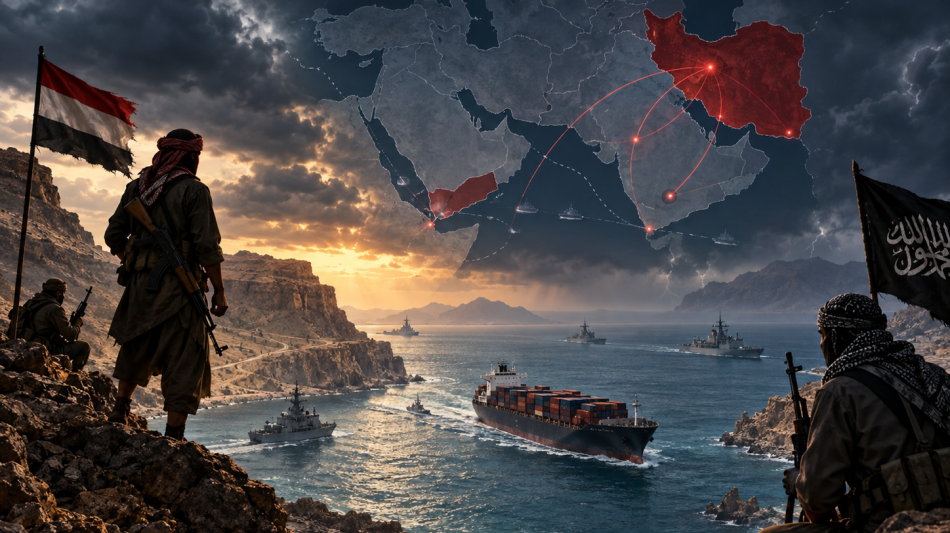
Houthis and al-Qaeda
North Korea Infiltrates Economy
Malaysia's Strategic Ascent

Boomers: Selfish or Scapegoats?
Israel presses Tehran
Iran and the holy War risk