
Coin Press - EU misstep on mercosur Deal


EU misstep on mercosur Deal


The European Union has spent decades negotiating a comprehensive trade agreement with the Mercosur bloc of South American nations. The pact would create a market of more than 700 million people and eliminate tariffs on over 90 percent of bilateral trade, allowing European manufacturers to sell more cars, machinery and wines to Argentina, Brazil, Paraguay and Uruguay, while letting South American producers export beef, poultry, sugar and other agricultural commodities to Europe. It is intended to secure access to raw materials, diversify supply chains and demonstrate Europe’s commitment to multilateralism at a time when global trade relations are under strain.

Long negotiations and last‑minute hesitation
The deal, however, has repeatedly stalled because of domestic European politics. French lawmakers demanded that their government refer the agreement to the EU’s Court of Justice, arguing that the way Brussels sought to bypass national parliaments violated EU treaties. France’s president assured protesting farmers that he would not support the agreement until stronger safeguards were added, reflecting longstanding fears that cheap South American imports would undercut European producers and that lax environmental rules in Brazil could lead to further deforestation. Austria, Poland, Ireland and Hungary sided with Paris and called for a “blocking minority” in the Council of Ministers. Italy, a potential swing vote, also hesitated until Brussels offered extra funding and a strengthened safeguard clause to protect sensitive products. In the European Parliament, a group of 145 members petitioned to send the accord to the EU Court, a move that would freeze ratification.

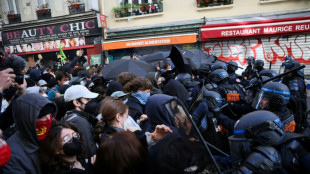
This domestic resistance provoked mass demonstrations. Thousands of farmers drove tractors into Brussels, Paris and other European capitals, blocking roads and throwing potatoes at police. They fear the pact would allow imports produced under looser health and environmental standards, undermining local markets and depressing prices. French unions demanded “mirror clauses” requiring Mercosur producers to meet EU pesticide rules and stricter inspections at the border. Brussels responded by including a legally binding safeguard mechanism in the agreement that would allow tariffs to be re‑imposed if imports from Mercosur harmed EU farmers. Supporters, led by Germany and Spain, argue that Europe cannot afford to turn inward. They warn that Chinese firms are expanding across Latin America and that failing to ratify the pact would leave the EU isolated.

Trump’s tariff offensive
The debate within Europe coincides with an aggressive trade posture from Washington. President Donald Trump has recast U.S. trade policy around tariffs, imposing broad levies on steel, aluminium and automobiles. Negotiators seeking a U.S.–EU trade accord reported in June 2025 that Washington was insisting on a 10 percent baseline “reciprocal tariff” on most European goods, and some officials acknowledged it would be difficult to avoid such duties. European carmakers such as Mercedes and Stellantis have already pulled earnings guidance because of uncertainty over U.S. tariffs. Failing to secure a new trade arrangement could expose European industry to levies of up to 50 percent.

On 17 January 2026, Trump escalated tensions further. In a post on his social network, he announced that additional 10 percent tariffs on goods from Denmark, Norway, Sweden, France, Germany, the Netherlands, Finland and Great Britain would take effect on 1 February and rise to 25 percent on 1 June. He linked the levies to an extraordinary demand that Denmark sell Greenland to the United States. European leaders rejected the threat and warned that using tariffs to force the sale of a territory undermined alliances. Trade experts noted that such measures would erode the basis for a U.S.–EU deal and encourage Europeans to look elsewhere for markets.

Europe’s self‑inflicted wound
Against this backdrop of mounting tariffs, the EU’s hesitance to ratify its largest free‑trade agreement looks like a self‑inflicted wound. The Mercosur pact would give European exporters a new market just as the U.S. threatens to close its own. It would offer Latin American partners an alternative to Chinese investment and send a message that Europe remains open for business. Delaying or blocking the deal not only frustrates South American allies but also signals that the EU lacks the capacity to act decisively in its own interest.

Critics in Europe acknowledge that domestic concerns must be addressed but argue that these are not insurmountable. The latest version of the agreement includes a safeguard mechanism that would temporarily reintroduce tariffs if imports surge. It also strengthens cooperation on digital trade and protects critical raw materials, reflecting lessons from Russia’s war in Ukraine. The pact commits both regions to uphold the Paris climate agreement and provides for stricter monitoring of deforestation. Supporters believe these measures strike a balance between protecting European farmers and promoting free trade.

Geopolitical ramifications
The stakes go beyond economics. In the days before the Mercosur signing ceremony, U.S. tariff threats and talk of a possible military seizure of Greenland drew condemnation from European officials. At the same time, Latin American leaders warned they would not wait indefinitely; Brazil’s president suggested he would abandon the deal if it were not signed soon. Europe’s credibility as a global actor depends on demonstrating that it can deliver agreements without being held hostage by internal politics. The more Europe hesitates, the more it encourages partners to seek alternatives with China or the United States.

A call for strategic clarity
Europe cannot insulate itself from global shocks by retreating behind national borders. Protectionism at home invites retaliation abroad, as Trump’s escalating tariffs demonstrate. By stalling the Mercosur agreement, the EU undermines its own leverage in negotiations with Washington and risks turning potential allies into competitors. Ratifying the pact, with appropriate safeguards for farmers and the environment, would expand markets for European goods, strengthen ties with a region rich in critical raw materials and agricultural products, and send a clear message that the EU is committed to open, rules‑based trade. In a world where tariffs are wielded as political weapons, shooting oneself in the foot is a mistake Europe cannot afford to make.


Featured


Long live Ukraine - Хай живе Україна - Да здравствует Украина

Es lebe die Ukraine - Да здравствует Украина - Long live Ukraine - Хай живе Україна - Nech žije Ukrajina - Länge leve Ukraina - תחי אוקראינה - Lang leve Oekraïne - Да живее Украйна - Elagu Ukraina - Kauan eläköön Ukraina - Vive l'Ukraine - Ζήτω η Ουκρανία - 乌克兰万岁 - Viva Ucrania - Ať žije Ukrajina - Çok yaşa Ukrayna - Viva a Ucrânia - Trăiască Ucraina - ウクライナ万歳 - Tegyvuoja Ukraina - Lai dzīvo Ukraina - Viva l'Ucraina - Hidup Ukraina - تحيا أوكرانيا - Vivat Ucraina - ขอให้ยูเครนจงเจริญ - Ucraina muôn năm - ژوندی دی وی اوکراین - Yashasin Ukraina - Озак яшә Украина - Živjela Ukrajina - 우크라이나 만세 - Mabuhay ang Ukraine - Lenge leve Ukraina - Nyob ntev Ukraine - Да живее Украина - გაუმარჯოს უკრაინას - Hidup Ukraine - Vivu Ukrainio - Længe leve Ukraine - Živjela Ukrajina - Жыве Украіна - Yaşasın Ukrayna - Lengi lifi Úkraína - Lank lewe die Oekraïne

Stargate project, Trump and the AI war...

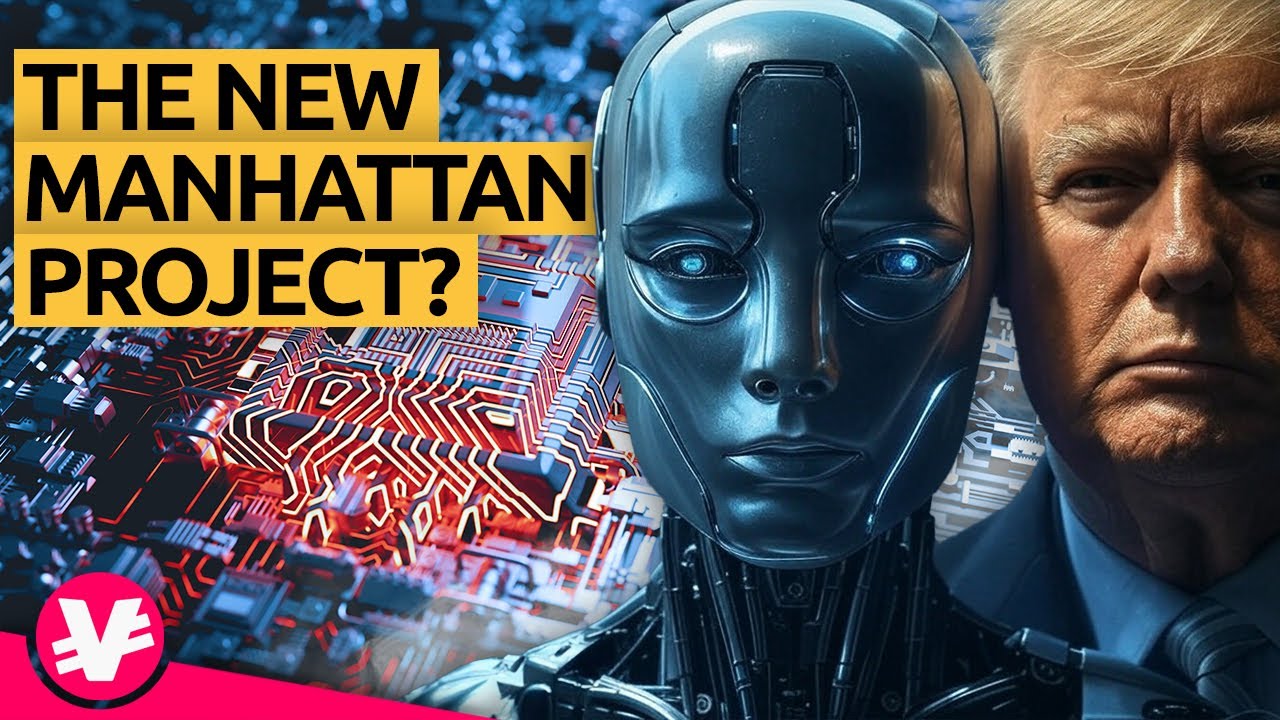
In a dramatic return to the global political stage, former President Donald J. Trump, as the current 47th President of the United States of America, has unveiled his latest initiative, the so-called ‘Stargate Project,’ in a bid to cement the United States’ dominance in artificial intelligence and outpace China’s meteoric rise in the field. The newly announced programme, cloaked in patriotic rhetoric and ambitious targets, is already stirring intense debate over the future of technological competition between the world’s two largest economies.According to preliminary statements from Trump’s team, the Stargate Project will consolidate the efforts of leading American tech conglomerates, defence contractors, and research universities under a centralised framework. The former president, who has long championed American exceptionalism, claims this approach will provide the United States with a decisive advantage, enabling rapid breakthroughs in cutting-edge AI applications ranging from military strategy to commercial innovation.“America must remain the global leader in technology—no ifs, no buts,” Trump declared at a recent press conference. “China has been trying to surpass us in AI, but with this new project, we will make sure the future remains ours.”Details regarding funding and governance remain scarce, but early indications suggest the initiative will rely heavily on public-private partnerships, tax incentives for research and development, and collaboration with high-profile venture capital firms. Skeptics, however, warn that the endeavour could fan the flames of an increasingly militarised AI race, raising ethical concerns about surveillance, automation of warfare, and data privacy. Critics also question whether the initiative can deliver on its lofty promises, especially in the face of existing economic and geopolitical pressures.Yet for its supporters, the Stargate Project serves as a rallying cry for renewed American leadership and an antidote to worries over China’s technological ascendancy. Proponents argue that accelerating AI research is paramount if the United States wishes to preserve not just military supremacy, but also the economic and cultural influence that has typified its global role for decades.Whether this bold project will succeed—or if it will devolve into a symbolic gesture—remains to be seen. What is certain, however, is that the Stargate Project has already reignited debate about how best to safeguard America’s strategic future and maintain the balance of power in the fast-evolving arena of artificial intelligence.

Ukraine sends ground robots

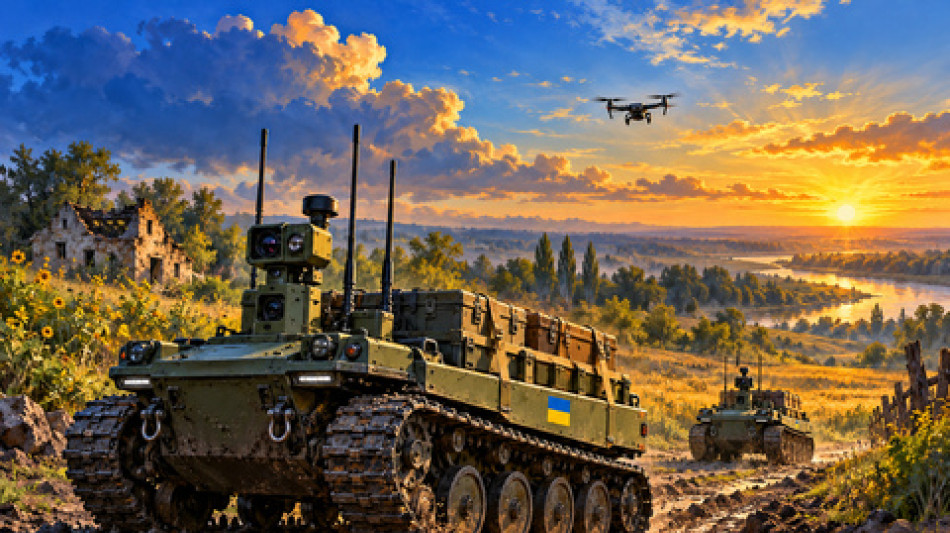
Ukraine is putting ground robots to work on a scale that is beginning to change how its army supplies positions, evacuates casualties and conducts some of its most dangerous combat missions. The significance lies in the gradual transfer of battlefield exposure from people to machines. For a force under sustained pressure to preserve experienced soldiers, that change could matter well beyond the individual missions captured on video.The expansion is measurable. By early September 2026, Ukraine’s DELTA battlefield management system had recorded approximately 112,000 logistics and evacuation missions by ground robotic systems since the start of the year. The monthly total rose from 7,511 in January to 25,143 in August, an increase of roughly 3.3 times. These figures describe missions, not the number of robots deployed, and they should not be read as a tally of successful attacks or lives saved. They nevertheless show how far the technology has moved into routine military activity.Supply work explains much of its value. Ammunition, food and water still have to reach troops in positions exposed to surveillance and attack. Wounded soldiers still have to be brought out. A remotely operated vehicle can undertake part of that movement while its operator remains elsewhere. The load may be ordinary; the route is what makes the task dangerous. Repeated across many positions, reducing the number of journeys made by people can alter the daily burden on an infantry force.The strongest case for a robot is often the journey it allows a soldier to avoid. That changes the economics of military equipment. The purchase price matters, but so do the consequences of losing it. A destroyed machine consumes production capacity and money. A lost soldier also removes training, experience and relationships that cannot be replaced on a factory schedule. This is why an apparently modest cargo platform can have greater practical importance than a more spectacular experimental weapon.Combat applications are developing alongside that logistical role. Ukraine’s Third Army Corps includes NC13, a unit specialising in ground robotic operations. In September, corps commander Andrii Biletskyi described an ambition to replace around a third of the corps’ frontline personnel with robots by the end of the year. That remains an objective for a particular formation, rather than a demonstrated reduction across the Ukrainian army. It signals how seriously some commanders now regard the technology.There is a longer history behind the sudden attention. In December 2024, the Khartiia Brigade used a coordinated force of aerial drones and ground robots in an assault near Hlyboke in the Kharkiv region. More than 50 unmanned systems took part. The operation demonstrated that different remotely operated platforms could be combined for surveillance, fire support and attack. It also exposed the limits: ground conditions disabled some machines, and soldiers were still needed to secure and hold the territory afterwards.Those distinctions remain essential. An unmanned vehicle has no crew aboard; that does not make it an autonomous decision-maker. Remote operation, assistance with navigation and independent target selection are different capabilities. Much of the operational change visible in Ukraine concerns the first of these. Human operators, commanders and technicians remain central to making the equipment useful. Describing every remotely controlled vehicle as an artificial intelligence weapon obscures both its present strengths and its weaknesses.The physical environment imposes constraints that software cannot simply remove. A ground vehicle must negotiate soil, vegetation, rubble and obstacles that an aircraft may pass over. Its camera sees from a low position. Communications can be intermittent, and movement through complex terrain requires information that may be incomplete or already outdated. Research on small military robot teams has long identified the combination of restricted visibility, difficult navigation and unreliable communication as a central challenge. Ukraine is testing those problems under combat conditions.Scaling the fleet therefore requires a larger support system. More vehicles mean more operators to train, more repairs, more replacement components and a greater need to coordinate machines with the soldiers around them. The useful measure is how many tasks can be completed reliably over time. A large delivery of equipment can look impressive while leaving unanswered questions about serviceability, workload and availability after repeated deployments.Nor does removing a crew eliminate risk. Operators still work within a military system exposed to attack, and a machine that fails during an evacuation may leave a casualty in danger. Remote control changes where human vulnerability sits. It does not make the mission consequence-free. Reliability is particularly important when the payload is a wounded person rather than ammunition, and success in one role cannot automatically establish suitability for another.The likely effect on the fighting is therefore uneven. Robotic systems can ease dangerous supply tasks and support selected assaults while remaining poorly suited to others. Their value depends on the terrain, the communications environment and the organisation using them. A successful demonstration offers evidence of a capability; repeated use establishes whether a formation can depend on it.Ukraine’s developing robot force is best understood through that practical test. Can it keep a position supplied with fewer exposed soldiers? Can it bring someone back who would otherwise remain stranded? Can it reduce the personnel required for a dangerous task without creating a greater burden elsewhere? The answers will determine how much battlefield activity can move to machines. For the soldiers still holding the line, those gains are substantial enough without the promise of a war fought without people.