-
 Micron's Taiwan workers say 68 months' bonus not enough
-
'Another arrow to the quiver': World Bank posts record private capital mobilization

-
 Canada's Carney pushes 'new alliance' with EU despite Trump threats
-
Ireland to boycott Eurovision 2027 over Gaza

-
 Beyond Investment Returns: Families Are Measuring Wealth by Freedom, Continuity, and Legacy, According to Nour Private Wealth
-
India's Tata Sons reappoints N. Chandrasekaran as chairman

-
 King Charles disputes claims in book by Princess Diana's brother
-
Germany urges EU action against China to defend carmakers

-
 Nepal floods among 'most challenging' disasters: WFP
-
Japan eyes changing prostitution law to punish sex buyers

-
 Kids and social media: what would change under new EU law
-
Modi pitches India as global chipmaking hub

-
 King Charles to call on tech giants for 'reassurances' over AI
-
Ukraine plans record defence spending in 2027

-
 STARPRIME Responds to Diverging Gold Market Demand with AM/PM Fixing and XAU24/7
-
NASA scan discovers new, 'once in a century' Moon crater

-
 Where the US-China tariff row stands ahead of White House summit
-
Most stocks rise as Fed hikes and indicates drive to curb inflation

-
 Indonesia cash-for-photos scheme turns animal hunters into protectors
-
UK-Sudanese author pens book to give children 'African history of Africa'

-
 Bayer to Present How it Rebuilt Global Planning with OMP at Gartner Supply Chain Planning Summit 2026
-
Argentine judge orders suspension of Falklands oil project

-
 US Congress passes sweeping Russia sanctions bill
-
US Fed raises rates to tackle 'too high' inflation, irking Trump

-
 US stocks fall, dollar gains after Fed lifts interest rates
-
Turkey releases 106 protesters, jails more LGBTQ activists

-
 US Fed raises rates to tackle 'too high' inflation in move sure to rile Trump
-
Candidate for UN chief calls for AI regulation akin to nuclear weapons

-
 US Fed raises rates to battle inflation in move likely to rile Trump
-
'We're losing control,' AI pioneer Yoshua Bengio tells AFP

-
 US House faces test on sweeping Russia sanctions bill
-
IR-MED and Dice Technologies Announce collaboration to Evaluate and Advance Pressure-Injury Prevention Platform in Japan

-
 British PM says to make 'difficult decisions' as inflation rises
-
Watts, Pitt, Cruz to light up Spain's top film festival

-
 Global fuel price demos: a round-up
-
Toogood Gold's Table Mountain Sits in the Shadow of a Nevada Gold Rush

-
 Leverate Launches MCP for Traders to Connect AI Assistants With Trading Platforms
-
MEXC July–August Security Report: 38.66M USDT in Risk Funds Intercepted, Futures Insurance Fund Hits 792M USDT

-
 MEXC Launches $1M "Discover Your Wall Street DNA" Campaign to Help Traders Find Their Market Fit
-
Emporio Armani names Dario Vitale new creative director

-
 Stocks edge higher ahead of US Fed rate call
-
EU to ban social media for under 13s, curb access until 15

-
 BASIS.pro Expands On-Chain Infrastructure with XDC Network Partnership and Zypher DAO as Auto Earn Goes Live
-
Wildfires push endangered Sumatran elephants to brink: Indonesian NGO

-
 Pickle-flavoured tart? AI inspires Japan's convenience stores
-
Bank of Japan set to raise rates under pressure from inflation, US

-
 EU chief hosts Canada's Carney in push to 'deepen' alliance
-
EU chief to unveil social media, gaming curbs for under-15s

-
 Meta chief pushes back on AI slowdown calls
-
'Resident Evil' film brings video game's ethos to the big screen

New York’s lost Luster
New York City long prided itself on drawing the world’s brightest minds and deepest pockets. Yet the past decade has brought a slow ebb in the pool of people who power its economy. Population figures show the city’s ascent faltering: after years of growth, the number of residents began to decline in 2017 and then plunged by nearly half a million between April 2020 and July 2022. A modest rebound of about 120 000 people since 2022, largely through international migration, has not fully offset the losses. Domestic migration patterns reveal that most leavers initially head to suburbs around New York, but the states that gain the most are low‑tax, fast‑growing destinations such as Florida and Texas. High costs and quality‑of‑life concerns are recurring themes among those who leave.
Recent estimates released in 2025 show that New York’s pandemic‑era population decline is reversing. The city added about 87 000 residents between July 2023 and July 2024, lifting its total population to roughly 8.478 million. The state as a whole gained around 130 000 residents over the same period, recouping one‑third of the half‑million people lost between April 2020 and July 2022. These two consecutive years of growth reflect improved counts of international migration and shelter populations. Nevertheless, net domestic outmigration remains substantial—around 121 000 people in 2024—though that figure marks the lowest level since 2013 and is largely driven by low‑ and middle‑income households.
Millionaires and high‑earners: shrinking share of the nation’s wealth
New York’s public services depend heavily on a small number of wealthy residents. In 2022 millionaires represented less than 1 % of tax filers yet provided 44 % of state and 40 % of city personal‑income tax revenue. That reliance is threatened by a marked decline in the city’s share of national wealth. From 2010 to 2022 New York’s share of the United States’ millionaire households fell from 12.7 % to 8.7 %, dropping the state from second to fourth place behind California, Florida and Texas. While the number of millionaires in New York almost doubled during that period, comparable households more than tripled in California and Texas and quadrupled in Florida. Had New York retained its 2010 share of millionaires, the state and city would have collected about US$13 billion more in personal‑income tax in 2022.
The erosion is visible in migration data. Between 2019 and 2020, tax filings show that the number of city residents earning between US$150 000 and US$750 000 fell by nearly six percent, while those making more than US$750 000 dropped by almost ten percent. A study of address‑change data compiled by the state’s tax department found that in 2020 and 2021 more than six percent of millionaire households updated their addresses to locations outside New York; by 2023 that rate had fallen to below three percent, but it remains higher than before the pandemic. Meanwhile, high earners pay a combined state and city marginal tax rate that can exceed 13.5 %, a national high. Moving to nearby Connecticut can save a household earning US$1 million more than US$70 000 a year in state and local income taxes, and a US$5 million property can attract roughly US$23 000–48 000 less in annual property taxes. Such disparities give affluent households incentives to move without losing access to New York’s cultural attractions.
The pull of the Sun Belt and other competitors
The magnetism of Florida and Texas rests not only on their sunny climates. Neither state levies an income tax, and both boast lower living costs. Census data released in January 2025 show that Florida gained around 64 000 residents from other states between July 2023 and July 2024, while Texas added more than 85 000. During the same period New York recorded a net domestic migration loss of roughly 121 000 people. A report tracking wealth flows found that between 2013 and 2022 New York lost about US$517.5 billion in cumulative resident income as households moved away, while New Jersey lost US$170.1 billion; Florida on the other hand gained over US$1 trillion. Average incomes of people relocating from New York to Florida’s Miami‑Dade and Palm Beach counties exceeded US$266 000 and US$189 000 respectively.
Low taxes are not the only attraction. A detailed look at job trends reveals that New York is slowly losing ground in industries it once dominated. Since 1990 the share of city workers employed in finance and insurance has slipped from 11.5 % to 7.7 %. Of the 233 000 finance jobs created nationwide over the past five years, the state captured only 19 000. Major firms have been shifting managers and back‑office staff to lower‑cost markets such as Dallas, Salt Lake City, Alpharetta (Georgia) and Charlotte. New York’s combined state and local corporate tax rate can exceed 18 %, according to business associations; regulatory mandates on hiring practices and the high cost of compliance further add to operating expenses. These pressures encourage both start‑ups and established institutions to look elsewhere.
Lifestyle factors compound the economic calculus. Median monthly rent in the city now exceeds US$3 600, more than twice the US$1 700 average across the 50 largest U.S. cities. Annual nursery‑care fees average about US$26 000 and basic car insurance costs roughly US$1 729—both among the highest in the country. The federal cap on state‑and‑local tax deductions introduced in 2017 has increased effective tax rates for wealthy residents. High costs of living and limited deductions are cited by some of the city’s billionaire investors, including Paul Singer and Carl Icahn, who moved to Florida in recent years.
Business relocations and the corporate drip
Concerns over the city’s direction intensified after proposals for higher income and corporate taxes gained traction in the 2025 mayoral election. In the weeks following the vote, state records in Florida show that at least 27 firms registered by New York owners applied to expand operations there, while nine filed to relocate entirely. The mayor of Boca Raton reported that four corporate headquarters are already planning moves to his city, and he has received “too many to count” inquiries since the election. Local economic‑development officials in South Florida confirm that investment bankers and hedge‑fund managers are increasingly scouting office space. Civic leaders have responded by offering targeted incentives and promising to address growing pains such as housing and transport.
At home the city’s business landscape is changing. A moving‑industry report based on 24 million recorded moves found that from May 2024 to October 2025 New York lost 8 400 jobs in finance and more than 1 200 chain retail stores closed. While the data do not capture every corporate decision, they suggest that the losses are concentrated in high‑paying sectors that underpin the city’s tax base. Job growth since the pandemic has been skewed toward lower‑paid fields such as home healthcare and social assistance. Inflation‑adjusted private‑sector wages in New York fell 9 % between January 2020 and August 2025, whereas national wages rose 3 %.
Not just the wealthy: the middle‑class exodus
The narrative of billionaires fleeing masks a broader challenge. Data from the same moving‑industry report reveal that households earning between US$51 000 and US$200 000 account for the largest number of departures from New York City. People making US$51 000–100 000 recorded 66 158 outflows, followed closely by the US$101 000–200 000 group with 62 209. In contrast, departures among high‑income residents fell after the 2025 primary election. The report also notes that 88 % of newcomers earn under US$200 000, signalling a shift toward a lower‑income demographic. Working‑class and middle‑income households cite rising housing costs and the cost of raising children as primary reasons for leaving.
Research by an independent fiscal institute offers further nuance. After analysing eight years of migration records, the institute found that high earners typically move out of New York State at about one‑quarter the rate of other residents. The surge in wealthy departures during 2020 and 2021 was largely a temporary response to pandemic‑induced remote work. Migration rates for high earners returned to pre‑pandemic levels by 2022, and the state gained 17 500 millionaire households from 2020 through 2022 despite losing about 2 400. Statistical analysis showed no significant evidence that recent tax increases prompted high‑income migration; when affluent New Yorkers do move, they often choose other high‑tax states. Independent fact‑checkers note that working‑class New Yorkers, particularly Black and Hispanic residents and families with young children, leave at much higher rates than wealthy households.
Policy debates and social costs
Despite an improving population count, structural pressures remain. New York spends US$9 761 per resident on welfare and education—72 % more than Texas and 130 % more than Florida. Low‑income renters now devote 54 % of their income to rent, up from under 40 % in 1991; even a well‑paid professional must earn at least US$151 600 annually to ensure that rent on a studio consumes only 30 % of income. Without a rebound in finance or a dramatic housing boom, business leaders warn that New York could devolve into an “economically ordinary” US city, burdened by high rents and expanding welfare obligations.
Political debates have sharpened these tensions. The 2025 mayoral frontrunner, Zohran Mamdani, proposes adding a two‑percentage‑point surcharge on incomes above US$1 million and raising the corporate income‑tax rate to 11.5 % to fund universal childcare and free buses. Experts point out that tax‑induced mobility among high earners is small: studies by Northwestern University, the EU Tax Observatory and the Fiscal Policy Institute indicate that wealthy households rarely move solely because of tax differentials. Nevertheless, policy analysts caution that imposing the nation’s highest marginal rates could gradually erode the tax base.
Statistics from the Citizens Budget Commission show that more than 125 000 New Yorkers relocated to Florida between 2018 and 2022, carrying nearly US$14 billion in adjusted gross income. Such figures fuel both sides of the debate: proponents of higher taxes argue that migration flows are limited, while opponents warn that revenue losses could accelerate. The city’s 2025 “City of Yes” zoning reforms spurred construction of about 34 000 apartments in a single year, but housing supply remains tight. The interplay between taxes, housing costs and public services will determine whether New York regains its footing or continues to lose ground to lower‑cost competitors.
A city at a crossroads
New York’s appeal has always rested on its ability to offer unmatched cultural life, economic opportunity and diversity. The recent outflows of wealth, talent and businesses threaten this model. With millionaires comprising less than one percent of residents yet contributing nearly half of personal‑income tax revenue, the departure of even a few thousand people can blow a hole in public finances. The value proposition for middle‑income families is equally in jeopardy as housing and childcare costs soar. Meanwhile, the definancialisation of the local economy and the relocation of corporate headquarters erode the city’s job base. Taken together, these trends give credence to the image of a city that is “sinking” under the weight of its own costs.
Yet the picture is not one of unrelenting decline. International migration, natural population growth and inbound investment continue to sustain New York. Surveys show that residents still value the city’s parks, cultural institutions and transit network despite concerns about safety and affordability. The challenge for policymakers is to balance progressive social aims with economic competitiveness: to improve public services and housing affordability while keeping tax rates and business costs from driving away the very people and companies who fund them.

Germany under Weidel

India's island choke point

China’s lithography leap

China’s cartel lifeline
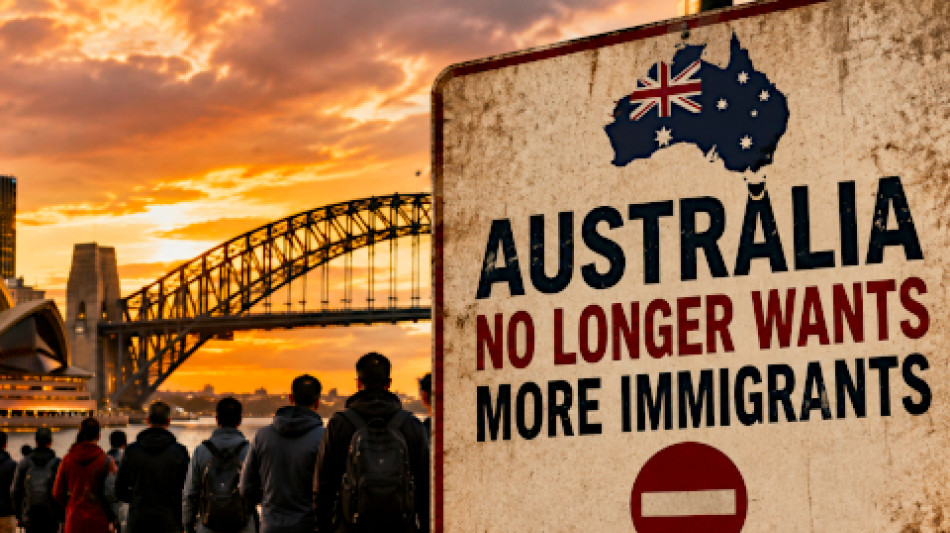
Australia limits migration

China's silicon reckoning

Unexpected economic twist

Beijing's new Taiwan playbook

Saudi Arabia’s Costly Mirage
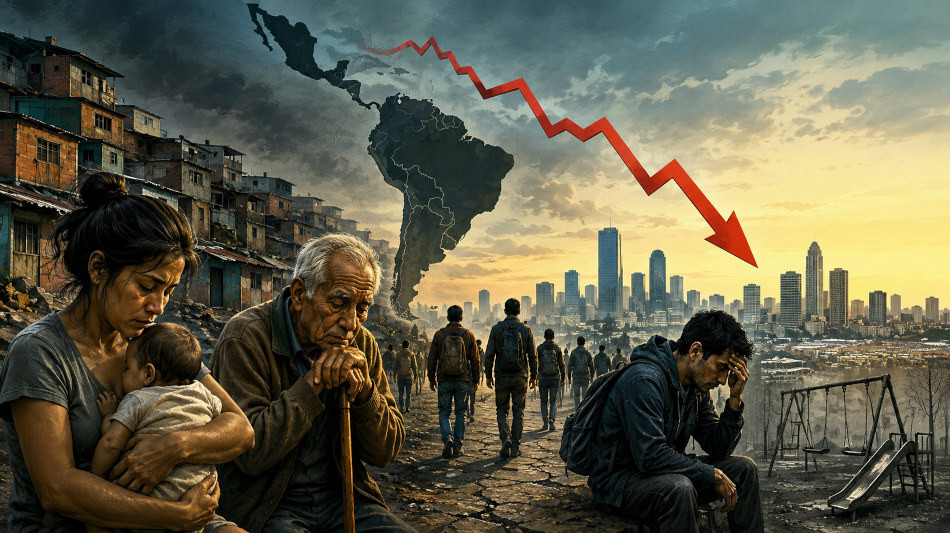
Latin America’s age trap

Sweden’s welfare reckoning