-
 Modi pitches India as global chipmaking hub
-
King Charles to call on tech giants for 'reassurances' over AI

-
 Ukraine plans record defence spending in 2027
-
STARPRIME Responds to Diverging Gold Market Demand with AM/PM Fixing and XAU24/7

-
 NASA scan discovers new, 'once in a century' Moon crater
-
Where the US-China tariff row stands ahead of White House summit

-
 Most stocks rise as Fed hikes and indicates drive to curb inflation
-
Indonesia cash-for-photos scheme turns animal hunters into protectors

-
 UK-Sudanese author pens book to give children 'African history of Africa'
-
Argentine judge orders suspension of Falklands oil project

-
 US Congress passes sweeping Russia sanctions bill
-
US Fed raises rates to tackle 'too high' inflation, irking Trump

-
 US stocks fall, dollar gains after Fed lifts interest rates
-
Turkey releases 106 protesters, jails more LGBTQ activists

-
 US Fed raises rates to tackle 'too high' inflation in move sure to rile Trump
-
Candidate for UN chief calls for AI regulation akin to nuclear weapons

-
 US Fed raises rates to battle inflation in move likely to rile Trump
-
'We're losing control,' AI pioneer Yoshua Bengio tells AFP

-
 US House faces test on sweeping Russia sanctions bill
-
IR-MED and Dice Technologies Announce collaboration to Evaluate and Advance Pressure-Injury Prevention Platform in Japan

-
 British PM says to make 'difficult decisions' as inflation rises
-
Watts, Pitt, Cruz to light up Spain's top film festival

-
 Global fuel price demos: a round-up
-
Toogood Gold's Table Mountain Sits in the Shadow of a Nevada Gold Rush

-
 Leverate Launches MCP for Traders to Connect AI Assistants With Trading Platforms
-
MEXC July–August Security Report: 38.66M USDT in Risk Funds Intercepted, Futures Insurance Fund Hits 792M USDT

-
 MEXC Launches $1M "Discover Your Wall Street DNA" Campaign to Help Traders Find Their Market Fit
-
Emporio Armani names Dario Vitale new creative director

-
 Stocks edge higher ahead of US Fed rate call
-
EU to ban social media for under 13s, curb access until 15

-
 BASIS.pro Expands On-Chain Infrastructure with XDC Network Partnership and Zypher DAO as Auto Earn Goes Live
-
Wildfires push endangered Sumatran elephants to brink: Indonesian NGO

-
 Pickle-flavoured tart? AI inspires Japan's convenience stores
-
Bank of Japan set to raise rates under pressure from inflation, US

-
 EU chief hosts Canada's Carney in push to 'deepen' alliance
-
EU chief to unveil social media, gaming curbs for under-15s

-
 Meta chief pushes back on AI slowdown calls
-
'Resident Evil' film brings video game's ethos to the big screen

-
 US Fed to deliver rate decision with markets betting on hike
-
GA-ASI Mojave First UAS To Complete Battlefield Short Field Ops

-
 i-payout Expands U.S. Money Transmitter Licensing Footprint and Advances European EMI Strategy
-
Sanders, Bannon warn of AI dangers in rare US left-right alignment

-
 US Senate crypto bill collapses amid partisan deadlock
-
Empty benches as schools reopen in Venezuela's quake-hit Guaira

-
 OpenAI, Anthropic and Google are working to create an AI standards body
-
Tiny English village holds 'independence' vote over asylum seeker housing

-
 Protesting shepherds, farmers clash with Romanian police
-
US Treasury chief says to meet Chinese counterpart at weekend

-
 Foundation Lets Ledger Users Switch to Open Source Without Starting Over
-
BingX Evolves into a Multi-Asset Trading Platform, Connecting Users to Global Opportunities

Rare Earth Standoff
China’s dominance over the supply of rare‑earth elements has long been a source of leverage in its dealings with the West. Rare earths are a group of 17 metallic elements used in electric vehicles, wind turbines, semiconductors and defence systems. Because they are essential for magnets, lasers and radar systems in everything from smart phones to F‑35 fighter jets, the monopoly held by one country carries major strategic implications. The latest round of export curbs announced in early October has thrust rare earths back into the centre of global diplomacy.
China tightens its grip
In Announcement No. 61 released by China’s Ministry of Commerce, Beijing expanded existing export restrictions by adding five rare‑earth elements—holmium, erbium, thulium, europium and ytterbium—to an already restrictive list. The ministry also required foreign companies to obtain licences to export magnets or semiconductor materials that contain more than 0.1 percent of heavy rare‑earth metals derived from China. These rules apply even when the finished products are made outside China, effectively extending Beijing’s jurisdiction to any product anywhere in the world that uses Chinese rare‑earth materials.
Officials justified the restrictions by citing national security and the dual‑use nature of rare‑earth items. China said certain foreign organisations had been transferring or processing rare‑earth materials and then passing them on for military use, and that tighter oversight was necessary to prevent threats to national security. The commerce ministry argued that implementing export controls is a normal part of international practice, pointing out that other major economies have similar rules. Beijing emphasised that it remained open to dialogue and would approve licences for civilian uses.
The timing of the announcement was significant. It came just weeks before a scheduled meeting between President Donald Trump and President Xi Jinping in South Korea and only days after U.S. lawmakers proposed tougher restrictions on chip exports to China. Analysts believe the move was designed to increase China’s leverage ahead of those talks and to pressure Washington to loosen its own export controls. Kristin Vekasi, an expert on Indo‑Pacific affairs, described it as “pre‑meeting choreography” intended to signal that Beijing is willing to weaponise its dominant position in the rare‑earths supply chain.
The strategic importance of rare earths
Rare earths are used in a wide range of civil and military technologies. According to research from a prominent security think‑tank, they are critical for fighter jets, submarines, Tomahawk missiles, radar systems and smart bombs. They also underpin the magnets used in electric vehicles and wind turbines and are essential for semiconductors that power artificial‑intelligence chips and advanced consumer electronics. China mines around 60 percent of the world’s rare‑earth ores, controls about 90 percent of separation and processing capacity, and manufactures roughly 93 percent of rare‑earth magnets. The United States imported 70 percent of its rare‑earth compounds and metals from China between 2020 and 2023.
By restricting exports, Beijing signals that it is prepared to exploit this dominance. Although the rules will not fully take effect until November 8 and December 1, the mere threat has rattled defence contractors and technology companies in the United States. The restrictions bar overseas defence users from receiving licences and impose case‑by‑case scrutiny on export applications involving advanced semiconductors. This could delay shipments of magnets and chips vital to everything from drones to radar systems. China has also prohibited its citizens from assisting foreign rare‑earth projects without prior approval, tightening control over expertise as well as raw materials.
Trump taps the brakes on tariff escalation
Washington responded with an initial threat to impose 100 percent tariffs on all Chinese goods if Beijing did not roll back its measures. U.S. officials denounced the restrictions as a “global supply‑chain power grab”. Yet Treasury Secretary Scott Bessent and trade representative Jamieson Greer emphasised that the United States did not want to decouple from China; they hinted that a negotiated compromise was still possible. In the weeks that followed, the White House attempted to calm financial markets by pausing some of its own tariff hikes, moving to cut duties on Chinese imports from 145 percent to 30 percent for a 90‑day truce.
This temporary reprieve, reached after talks in Geneva in mid‑May, included an agreement to slash steep tariffs on both sides and to lift earlier export countermeasures. China agreed to drop restrictions issued in April, while the United States reduced its tariffs for three months. Markets rallied, with global stock indices hitting new highs as traders welcomed the pause in hostilities. Critics, however, saw the move as a retreat by Washington rather than a Chinese concession; they noted that previous freezes had done little to resolve deeper disagreements over trade imbalances and fentanyl exports. A Reuters analysis described Trump’s on‑again off‑again tariff policy as a rollercoaster that has left investors struggling to plan for the next deadline.
With the next truce set to expire in November, U.S. officials signalled they might extend the pause in exchange for a delay in China’s new licensing regime. Bessent suggested rolling over the 90‑day tariff reprieve for a longer period to give negotiators more time. At the same time, he warned that Washington was prepared to take further action if Beijing proved to be an unreliable supplier. The administration has also discussed taking strategic stakes in domestic rare‑earths companies and establishing price floors and stockpiles to reduce dependence on Chinese supplies. As Bessent told reporters, the goal is to ensure the United States is never again vulnerable to a single supplier for critical materials.
Market and industrial reactions
China’s move jolted commodity markets. Shares in Chinese rare‑earth producers surged when the announcement was made; U.S. rare‑earth miners such as MP Materials and Energy Fuels also jumped as investors anticipated higher prices. Chinese companies Northern Rare Earth Group and Shenghe Resources gained close to 10 percent, while U.S. firms Critical Metals Corp and Energy Fuels saw double‑digit increases. The price reaction underscored how sensitive markets are to supply‑side news in an industry dominated by a handful of players.
The restrictions also triggered diplomatic ripples. Japan’s finance minister raised the issue at a meeting of the Group of Seven, calling for a coordinated response. European exporters, still recovering from the volatility unleashed by Trump’s “Liberation Day” tariffs in April, worried that another escalation could derail their recovery. Analysts noted that gold prices have risen sharply as investors seek a hedge against tariff‑induced inflation.
U.S. manufacturers have been pressing the government to secure alternative supplies. Noveon Magnetics, currently the only U.S. manufacturer of rare‑earth magnets, recently partnered with Australia’s Lynas Rare Earths to build a domestic supply chain. The Department of War (formerly the Department of Defense) invested $400 million in MP Materials and extended a $150 million loan to expand its processing facility in California. These measures aim to add heavy rare‑earth separation capacity in the United States and ensure long‑term supply.
A high‑stakes meeting on the horizon
Despite the heated rhetoric, both sides appear keen to avoid a full‑blown trade rupture. Chinese officials have stressed that export licences for civilian use will be approved. They argued that the United States has long maintained similar rules and accused Washington of exaggerating the impact of the controls. Beijing also noted that U.S. export controls on advanced semiconductors and related equipment have been in place since the 1950s.
For its part, Washington knows that an abrupt decoupling would harm both economies. The United States still depends heavily on Chinese rare‑earths, and high tariffs threaten to raise prices for consumers and industries. Polls suggest that volatile trade policies have shaken investor confidence. Moreover, because rare‑earth supply chains are global, any disruption would also hurt Chinese producers who rely on foreign buyers.
As Trump prepares to meet Xi in South Korea, the rare‑earth dispute has become a litmus test for the broader U.S.–China relationship. Analysts say Beijing is unlikely to abandon the restrictions unless Washington offers concessions on chip exports or scales back tariff threats. At the same time, the United States will struggle to build an independent supply chain quickly enough to neutralise China’s leverage. The outcome of the meeting could determine whether the world’s two largest economies slide deeper into economic confrontation or find a path back to cooperation.
Conclusion
The rare‑earth saga illustrates the complex interplay between economic security and geopolitical power. By expanding export controls, China has reminded the world that it holds a powerful card in its hands. The United States, in turn, has responded with tariff threats, pauses and plans to develop its own capacity. Both sides claim to seek cooperation even as they sharpen their negotiating tools. With the South Korea summit looming, the next moves will shape not only the future of the rare‑earths market but also the trajectory of U.S.–China relations and the global economy as a whole.

EU: Overcoming barriers to equality

Germany and its outdated pension system

How important is sustainable development?
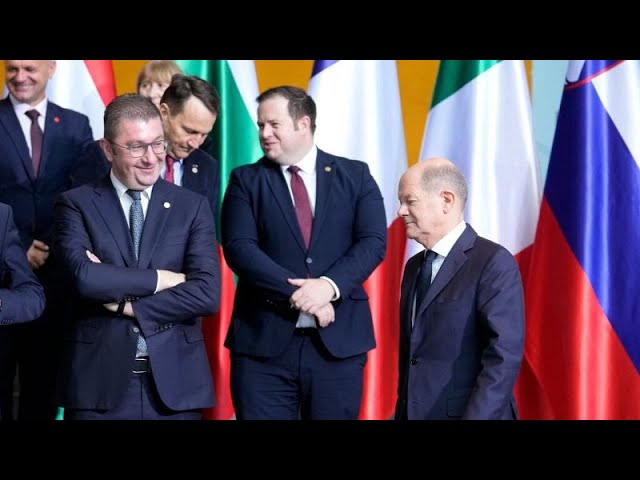
Berlin: EU-Summit of western Balkan heads of state

Germany's Anti-Woke Tide

Germany: The fight against economic migrants
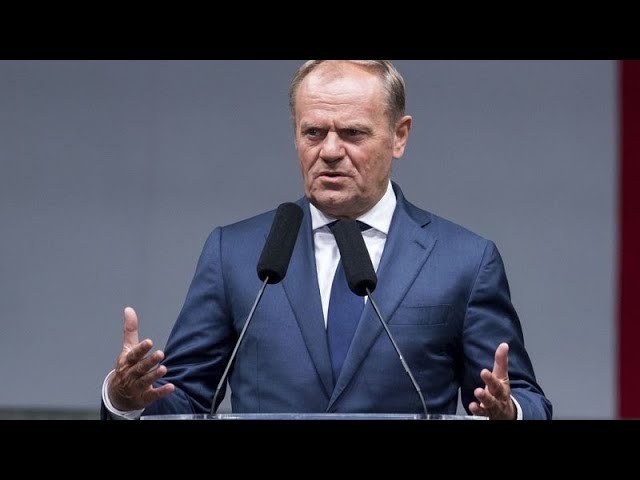
Polish PM and the danger of asylum seekers

Ukraine: Recruiters searched Kyiv venues

EU: Austrian elections shake Establishment

Terrorist state Iran: ‘We are ready to attack Israel again’

EU: Greenpeace warns of dying farms