-
 Micron's Taiwan workers say 68 months' bonus not enough
-
'Another arrow to the quiver': World Bank posts record private capital mobilization

-
 Canada's Carney pushes 'new alliance' with EU despite Trump threats
-
Ireland to boycott Eurovision 2027 over Gaza

-
 Beyond Investment Returns: Families Are Measuring Wealth by Freedom, Continuity, and Legacy, According to Nour Private Wealth
-
India's Tata Sons reappoints N. Chandrasekaran as chairman

-
 King Charles disputes claims in book by Princess Diana's brother
-
Germany urges EU action against China to defend carmakers

-
 Nepal floods among 'most challenging' disasters: WFP
-
Japan eyes changing prostitution law to punish sex buyers

-
 Kids and social media: what would change under new EU law
-
Modi pitches India as global chipmaking hub

-
 King Charles to call on tech giants for 'reassurances' over AI
-
Ukraine plans record defence spending in 2027

-
 STARPRIME Responds to Diverging Gold Market Demand with AM/PM Fixing and XAU24/7
-
NASA scan discovers new, 'once in a century' Moon crater

-
 Where the US-China tariff row stands ahead of White House summit
-
Most stocks rise as Fed hikes and indicates drive to curb inflation

-
 Indonesia cash-for-photos scheme turns animal hunters into protectors
-
UK-Sudanese author pens book to give children 'African history of Africa'

-
 Bayer to Present How it Rebuilt Global Planning with OMP at Gartner Supply Chain Planning Summit 2026
-
Argentine judge orders suspension of Falklands oil project

-
 US Congress passes sweeping Russia sanctions bill
-
US Fed raises rates to tackle 'too high' inflation, irking Trump

-
 US stocks fall, dollar gains after Fed lifts interest rates
-
Turkey releases 106 protesters, jails more LGBTQ activists

-
 US Fed raises rates to tackle 'too high' inflation in move sure to rile Trump
-
Candidate for UN chief calls for AI regulation akin to nuclear weapons

-
 US Fed raises rates to battle inflation in move likely to rile Trump
-
'We're losing control,' AI pioneer Yoshua Bengio tells AFP

-
 US House faces test on sweeping Russia sanctions bill
-
IR-MED and Dice Technologies Announce collaboration to Evaluate and Advance Pressure-Injury Prevention Platform in Japan

-
 British PM says to make 'difficult decisions' as inflation rises
-
Watts, Pitt, Cruz to light up Spain's top film festival

-
 Global fuel price demos: a round-up
-
Toogood Gold's Table Mountain Sits in the Shadow of a Nevada Gold Rush

-
 Leverate Launches MCP for Traders to Connect AI Assistants With Trading Platforms
-
MEXC July–August Security Report: 38.66M USDT in Risk Funds Intercepted, Futures Insurance Fund Hits 792M USDT

-
 MEXC Launches $1M "Discover Your Wall Street DNA" Campaign to Help Traders Find Their Market Fit
-
Emporio Armani names Dario Vitale new creative director

-
 Stocks edge higher ahead of US Fed rate call
-
EU to ban social media for under 13s, curb access until 15

-
 BASIS.pro Expands On-Chain Infrastructure with XDC Network Partnership and Zypher DAO as Auto Earn Goes Live
-
Wildfires push endangered Sumatran elephants to brink: Indonesian NGO

-
 Pickle-flavoured tart? AI inspires Japan's convenience stores
-
Bank of Japan set to raise rates under pressure from inflation, US

-
 EU chief hosts Canada's Carney in push to 'deepen' alliance
-
EU chief to unveil social media, gaming curbs for under-15s

-
 Meta chief pushes back on AI slowdown calls
-
'Resident Evil' film brings video game's ethos to the big screen

After Kirk: Speech at Risk
The killing of Charlie Kirk at a public campus event has sent shock waves through the United States and far beyond. It was not only the murder of a high‑profile activist in full view of students; it was an attack on the premise that contentious ideas can be debated in open air without fear. Authorities say a young man has been taken into custody, and investigators have not publicly established a motive. The urgency and breadth of the response—from law enforcement, universities, policymakers and tech platforms—make clear that this is a pivot point for how democracies balance security, speech and civic peace.
Campus speech under a new security regime
Kirk’s signature format—unscripted outdoor debates that drew both supporters and critics—now looks like a security planner’s worst case. In the days since the shooting, elected officials and campus leaders have begun moving events indoors, postponing rallies, and reassessing perimeter control, rooflines, and vantage points. Expect a rapid shift away from spontaneous outdoor gatherings toward credentialed, magnetometer‑protected forums with controlled ingress and overwatch. That will keep more people safe. It will also narrow the public square: fewer ad‑hoc debates, more ticketed events, more distance—literal and figurative—between speakers and the people who would challenge them.
The information war: virality, moderation and hoaxes
Footage of the shooting spread instantly across major platforms. Within hours, game platforms and social networks were forced to remove content that trivialized or re‑enacted the killing. Alongside the genuine evidence came a familiar wave of misinformation: recycled images falsely identifying the shooter; out‑of‑context videos; and speculative narratives that hardened into tribal “truths” before investigators could brief the public. This cycle—violence, virality, platform triage, and rumor—now shapes public understanding of political crime. The likely consequence is more aggressive emergency moderation rules for graphic content and for posts that glorify or game‑ify real‑world attacks. That, in turn, will revive older debates about who decides what counts as “glorification,” and whether private enforcement against certain kinds of speech chills legitimate reporting or commentary.
Condemnation is broad; polarization remains
The killing drew rapid denunciations from across the political spectrum and from leaders overseas. Yet the same feeds that carried condolences also carried celebrations and taunts from a small but visible fringe. University communities abroad were forced to distance themselves from individuals who appeared to cheer the violence. This is the paradox of the moment: mainstream figures on the left and right condemned the assassination, but the incentives of online life still reward performative cruelty. For conservatives, the episode reinforces what many already believe—that tolerance on the contemporary left often ends where non‑left ideas begin. For many progressives, the fear is that any backlash will be used to muzzle dissent, not to protect dialogue. Both narratives will harden; neither will reduce risk on their own.
Policy whiplash: security first, speech later
In Washington and in state capitals, the immediate response is security‑first: improving event protection, tightening coordination between campus police and federal agencies, and closing obvious gaps in venue hardening. Expect committees to examine rooftop access, “line‑of‑sight” risks, and crowd screening standards for non‑government speakers whose events attract opposition. There are early signals, too, of measures aimed at those who praise or trivialize political violence—especially from outside the country—through visa scrutiny and other tools. While such steps may be lawful and defensible, they raise enduring questions: Where does punishing incitement end and punishing opinion begin? And who gets to draw that line at Internet speed?
Universities at the fault line
American campuses will bear the brunt of the near‑term change. Student groups will be asked to accept more intrusive security rules. Open‑air forums may be curtailed. Insurance and legal counsel will push institutions toward lower‑risk formats. Ironically, some of these moves will reduce the very exposure that made Kirk’s events attractive to his supporters: the willingness to be confronted, in public, by critics. Whether universities can design spaces that are both truly open and genuinely safe will be a defining governance challenge of the academic year.
Global ripples
Abroad, leaders framed the killing as an assault on democratic norms and free inquiry. In Europe, it has already fed arguments about whether the rhetoric of American culture‑war politics is compatible with campus safety and pluralism. Expect more speech‑restrictive proposals in some jurisdictions, sharper scrutiny of U.S. speakers invited to foreign universities, and tighter platform enforcement against posts that celebrate political violence. At the same time, expect right‑of‑center parties to argue that tolerant societies must be intolerant of those who try to silence opponents by force.
What changes next - Three shifts now look likely:
1) Hardened venues, fewer spontaneous debates. Event organizers will accept higher costs and less spontaneity to reduce risk.
2) Stricter emergency moderation. Platforms will move faster to throttle “glorification” content, with new escalation paths for law enforcement and public officials.
3) A sharper line between words and violence. Political leaders are already insisting that speech—even harsh speech—must remain legal, while violence must be punished swiftly and severely. Whether that principle is applied evenly will determine whether this moment de‑escalates or further radicalizes the culture.
Kirk’s killing will not end the argument over speech; it will intensify it. If institutions respond by protecting debate while resisting the impulse to criminalize mere offense, the public square may emerge narrower but sturdier. If, instead, security becomes a pretext to police ideology, the assassination will have succeeded in shrinking the space where disagreeable ideas can be aired without fear.
The extreme left-wing scene in particular, as it exists in the Federal Republic of Germany, fuelled by a completely mindless gender craze coupled with ideological green agitation, leaves one speechless and demonstrates the downright anti-social brutalisation in Europe. Anything that does not share the same opinion must be met with decisive harshness, because democracy, no matter where on our planet, must not be intimidated by such undemocratic behaviour!
Russia and the terrorism against Ukraine

Wealth that Brazil is not utilizing!
Germany doesn't want any more migrants?
US Federal Reserve with “announcement”

EU: Greenpeace warns of dying farms

Terrorist state Iran: ‘We are ready to attack Israel again’

EU: Austrian elections shake Establishment
Ukraine: Recruiters searched Kyiv venues
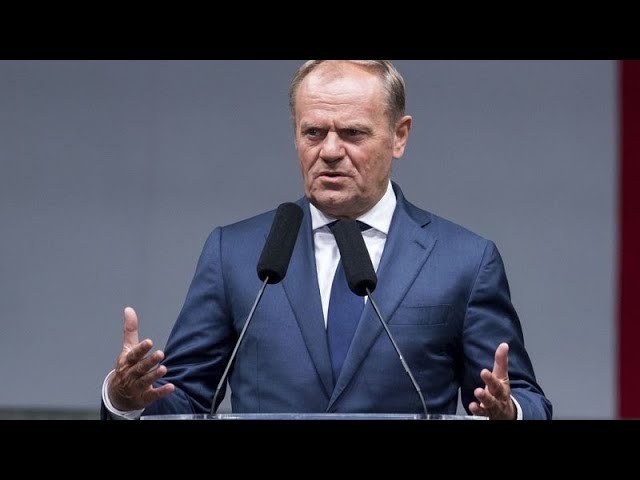
Polish PM and the danger of asylum seekers

Germany: The fight against economic migrants
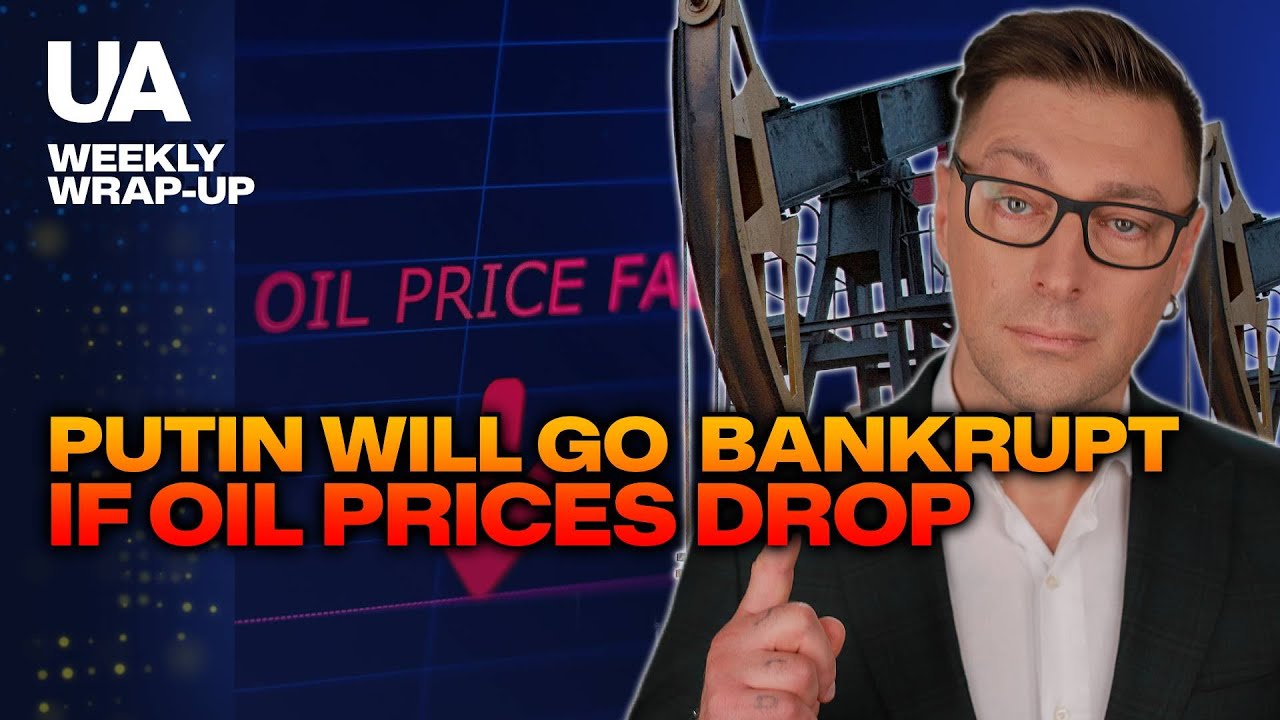
Putin's War Will Go Bankrupt if the Oil Prices Drop