
EU wants to break up with US tech / Photo: I-Hwa Cheng - AFP/File

 EU to ban social media for under 13s, curb access until 15

 Wildfires push endangered Sumatran elephants to brink: Indonesian NGO

 Bank of Japan set to raise rates under pressure from inflation, US

 EU chief to unveil social media, gaming curbs for under-15s

 'Resident Evil' film brings video game's ethos to the big screen

 i-payout Expands U.S. Money Transmitter Licensing Footprint and Advances European EMI Strategy

 US Senate crypto bill collapses amid partisan deadlock

 OpenAI, Anthropic and Google are working to create an AI standards body

 Protesting shepherds, farmers clash with Romanian police

 Foundation Lets Ledger Users Switch to Open Source Without Starting Over

 EU to propose curbing social media, online games for under 15s

 FX Junction Reaches 40,600 Members and 26 Million Trades

 'We unleashed the beast': the world's fears and hopes about AI

 Hospitality leaders ask Burnham to halve VAT amid rising costs

 Worcestershire invited to nominate groups for 2027 King’s volunteer award

 Berlin's run-down public spaces at heart of election campaign
 'Widow's Bay' and 'The Pitt' win big at Emmy Awards

 Most markets drop as oil extends gains ahead of expected US rate hike

 Sri Lanka's famed beach shack battles demolition

 Vserv targets ₹1,000 crore revenue by 2030 through AI expansion

 India prohibits bank fees on UPI payments up to ₹2,000

 Brazil's Amazon defender Raoni has cancer
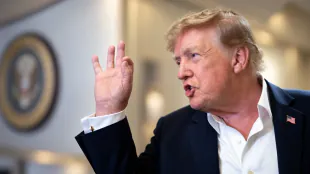 Trump rejects AI slowdown concerns as UN urges coordinated controls

 Higher wages draw migrant workers to Kashmir despite attacks

 Oil supply concerns and AI warnings weigh on global markets

Wary of being vulnerable to the whims of foreign governments, the European Union is preparing far-reaching new moves to ditch American digital companies and Chinese chips in favour of European alternatives.
The EU's technological sovereignty package is among many measures taken by Brussels to slash dependence on foreign firms and boost local manufacturing -- but risks opening up a new front in transatlantic tensions.
The hotly awaited package of new rules on chips, cloud computing and AI will be presented on Wednesday as part of the EU's effort to "reclaim its place in the global race for geoeconomic power", a draft strategy document seen by AFP said.
Of particular concern is how much the European Union relies on US cloud providers, which account for around 70 percent of Europe's market.
Since President Donald Trump returned to the White House last year, Europeans worry that critical digital infrastructure could be brought to a halt by an American "kill switch" if tensions ever reached fever pitch.
Top EU officials don't directly name their target as the United States, but American tech dominates, from cloud computing to social media to e-commerce.
"We need to develop our own capacities. We cannot allow someone trying to influence our own decisions, our own values, our own well-functioning economy and services," EU competition tsar Teresa Ribera said this month.
EU officials often point to Washington's sanctions against International Criminal Court judges -- imposed by Trump in February 2025 -- to illustrate the grip of US firms. Judge Nicolas Guillou has described how he lost access to his Visa card since it is an American system.
But US envoy to the EU Andrew Puzder has warned against any protectionist moves, while American companies have urged Europe not to keep them out.
"Europe will not be able to pull itself into the AI economy by bringing other people down," Puzder told AFP last month when asked about the plans.
- Sweeping package -
Wednesday's package will include:
-- the "Cloud and AI Development Act", aimed at speeding up the deployment of data centre infrastructure
-- a "Chips Act" proposal to reinforce the security of supply for semi-conductors by reducing dependence on foreign providers
-- a push for public authorities to use more open-source software solutions as a way to gain greater control and flexibility and avoid being locked in.
EU lawmaker Oliver Schenk told AFP the package was "not about opposing our trading partners or closing markets", but said: "Europe must avoid becoming structurally dependent on any single external actor" for AI, cloud and chips.
The draft strategy, which could still change before the announcement, said governments would be expected to conduct "sovereignty risk assessments" for cloud and AI to "improve resilience" and spot European alternatives.
"Europe must ensure that public investments in AI and cloud infrastructure strengthen European innovation capacity, resilience and security," Schenk said.
According to a second draft document on chips, the commission wants the power to intervene in the event of a crisis by forcing "manufacturers to prioritise orders for crisis-critical products, overriding existing contracts".
It also proposes common purchasing, which means the EU would act as "a central buyer for multiple member states facing severe shortages".
- 'No kill switch' -
Aaron Cooper of tech industry group Business Software Alliance sought to offer reassurances to Europeans who fear any US administration could act to hurt the bloc at times of tension, following past frictions, including over tariffs.
"There is no such thing as a kill switch," Cooper told AFP, adding companies "want to comply with laws wherever they're doing business".
American tech companies have been keen to shift the focus of the debate, insisting Europeans would be in charge of their data while using US services.
"Digital sovereignty is about control, not just borders," said Ana Paula Assis, chair for IBM Europe, Middle East, Africa and Asia Pacific, adding that the company helps its clients "maintain authority over their entire IT estate".
The EU says the package will drive innovation and help Europe catch up with the United States and China in the AI race.
But Ben Brake, director general of DOT Europe, whose members include Amazon and Apple, said "retaliating against US corporations in response to trade disputes will neither drive innovation nor strengthen Europe's competitiveness".
C.Smith--CPN