
French literary prize removes novel from longlist after AI claims / Photo: JOEL SAGET - AFP/File

 Asian markets mixed after recent oil surge

 Cash for nature protection: hotelier's offer to Principe islanders

 India rape cases turn focus back onto women's safety

 Rich nations should foot climate bill, says Nepal minister

 Italy bans burqas in schools, caps numbers of foreign students per class

 Napoli hoping to build new stadium, says owner

 What happens if the US bans diesel exports

 Oscar-winner Cotillard fears being moved by AI actor

 Stocks fall, oil prices rise as global bonds back under pressure

 Streamex Converts Interest Into Capital as GLDY Investment Strategy Secures $1M+ Institutional Allocation

 STARTRADER Named Best Fintech Forex Broker at Forex Expo Dubai 2026

 German think tanks urge Merz to stick with reforms after election defeats

 France's top-selling newspaper to slash jobs

 BaazEX Enters the Asian Trading Market With a New Approach to Online Forex Trading.

 Sao Tome voters want to stop exodus of 'neglected' youth

 Mexican cartels target Australia with their African meth

 Rapper-turned-PM faces first big test after Nepal disaster

 Meta launches camera-free AI glasses amid privacy pushback

 Anthropic touts AI-led biology discovery

 Stocks fall on soaring bond yields, higher oil prices

 ArcPoint Expands Globally with Institutional Intelligence Platform for Modern Investors

 Outgoing UN chief makes final climate push at New York summit

 Stocks dip, oil soars despite Trump hailing "productive" Iran talks

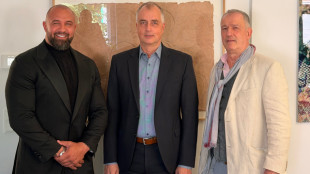 أليكس بودي والبروفيسور الدكتور شتيفان هاوبت يتفقان على التعاون من أجل مجموعة فنية أسطورية في رومانيا
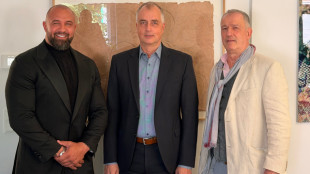
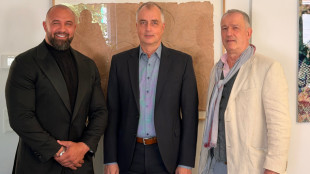 Alex Bodi și prof. dr. Stefan Haupt încheie un acord de cooperare pentru o colecție de artă legendară în România

The organisers of France's top literary prize, the Prix Goncourt, on Friday said they had removed a widely praised novel by a Canadian-Haitian writer from its longlist following online claims that artificial intelligence was used to write it.
This decision "is driven by the desire to preserve the integrity of the prix Goncourt and the Academy itself, whose central role is to promote and honour literature written by women and men," the Goncourt Academy said.
Novelist Thelyson Orelien this week denied using AI to write parts of his book "It Was Either That or Die" after the accusations surfaced on an account called "Balance ton Claude" (Expose Your Claude).
The controversy sent shockwaves through the French literary world and raised questions worldwide about how literature will manage the rise of AI.
The Academy had put the book on its initial longlist of over a dozen titles competing for the prestigious prize whose winner is announced in November. The longlist is due to be whittled down to a shortlist on October 6.
It cited findings indicating that the book is "in all likelihood, very largely the product of artificial intelligence" and also noted accusations of plagiarism.
The withdrawal of the book from the list "is about sending a clear message" to "make clear that we do not endorse or sanction in any way the creation of texts generated with the help of AI," the Academy said.
- 'What's the point?' -
French essayist and commentator Samuel Fitoussi, who notably writes for the right-wing Figaro daily, said Friday that he was part of the collective behind the "Balance ton Claude" account, saying he had acted as he feared "after several millennia of civilisation founded on writing AI will cause the disappearance of reading and writing."
"I wasn't alone; it was a collective project. The others will reveal their identity in due course if they wish," he added.
He added that as glitches are ironed out with time, AI "will increasingly be able to... produce exceptional works in near autonomy".
"One day the human writer will say to themselves: what's the point?" he said.
He said any authors who produce "copy-paste" from AI while claiming it to be their own work "betray the moral pact binding them to their readership".
The book's Canada-based publisher Boreal meanwhile announced the suspension of "promotional activities" for the book it published in the spring, saying this was to ensure the "well-being of Thelyson Orelien".
"Unfortunately, at this stage, it is impossible for us to confirm or refute the allegations facing the author," Boreal said, while urging people not to "jump to conclusions".
Orelien, a previously unknown writer whose debut is set to appear in more than 20 countries, has vehemently denied the allegations.
"I've always loved creating and writing, I don’t see why I would use a machine," the 38-year-old told France's Liberation daily, adding that he was "in the process of putting together a file" with his publishers "to prove" that he wrote the book himself.
T.Morelli--CPN