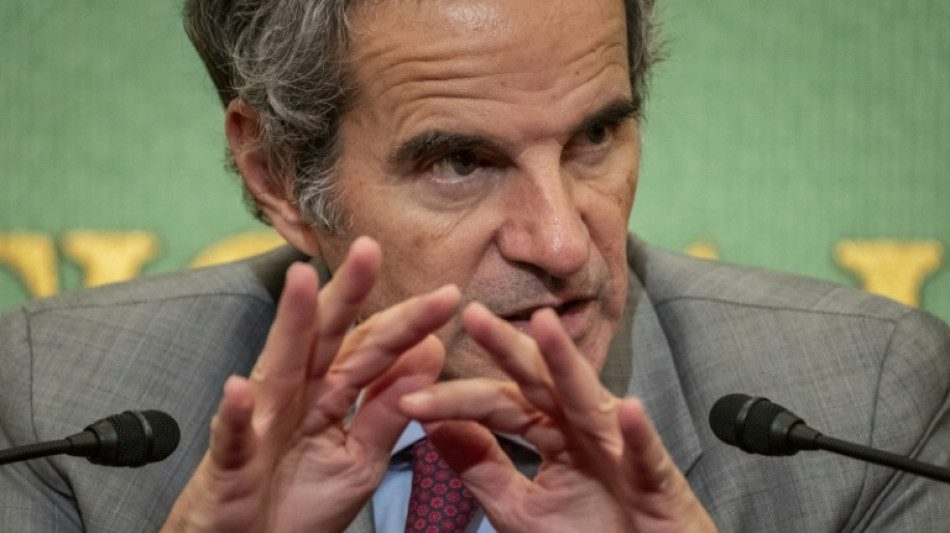
UN says Iran nuclear pledge needs 'very strong' verification / Photo: Yuichi YAMAZAKI - AFP

 J-VISIONS Vol. 4 Now Online: Read English Articles on Japanese Corporate IR
 نوشا آوبل دم از مسئولیت میزند؛ خرابی خیابانهای پوتسدام گواه ضعف مدیریت اوست
 Tech firms hit by AI slowdown call with Fed expected to hike rates
 South Korea aims to save seniors lost in digital age
 Russia's Stalin-admiring provincial leader waging an ultra-conservative crusade
 'Widow's Bay' and 'The Pitt' tipped for success at Emmy Awards
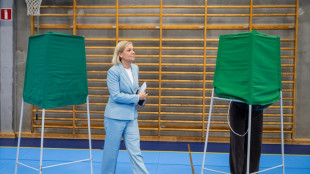 Leftwing opposition seen leading Sweden election, far-right losing ground
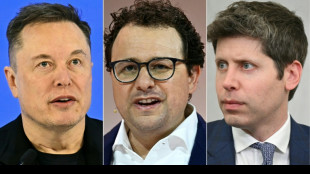 Trump administration reluctant to slow AI, Democrats see urgent need

 Can We Predict Volcanic Eruptions Like Weather? Scientists Seek Unified Physics

 اليورو يستقر في البنوك المصرية وأعلى سعر للبيع 59.85 جنيه
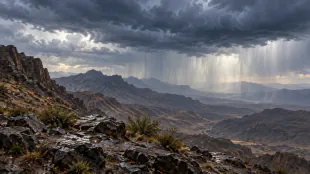 الأرصاد السعودية تتوقع سيولاً وأمطاراً رعدية في خمس مناطق
 Lights out in Laos as electricity exports surge

 Steven Strogatz weighs AI mathematics advances and their consequences for researchers

 Anthropic boss calls for AI slowdown, Altman and Musk agree

 French IT giant Capgemini sells subsidiary after row over ICE links

 Quebec Brokerage Qubit Insurance Announces New Data on Coverage Shortfalls as Rebuilding Costs Rise

 Lady Gaga welcomes first child with fiance: US media

 Bhutan business bets on hazelnuts for farming future

 'Widow's Bay' and 'The Pitt' are favorites for Emmys night

 Coastal erosion forces cancellation of California music festival

 Argentina's Dirty War rears its head in Venice film

 UK lawmakers throw out bill to legalise assisted dying

 US inflation steady in August, fueling Fed rate hike expectations

 New York marks 25th anniversary of 9/11 attacks

 Nepal flood reconstruction bill to be $4.78 bn: foreign ministry

The UN's nuclear chief said Friday that Iran's pledge not to build a nuclear weapon would need "very strong" verification, as the United States and the Islamic republic negotiate a permanent settlement to end their war.
Iran's nuclear programme is a key sticking point in talks to end the Middle East war, which began in late February with a massive US-Israeli campaign of strikes.
Iran and the US last week signed a preliminary deal to end the conflict, embarking on negotiations expected to address a host of disputes including the nuclear programme.
But there has been contrasting information from Tehran and Washington on whether UN inspectors will have access to Iranian nuclear facilities.
"I think the objective of this agreement is to ensure that there is no development of nuclear weapons in Iran. The government of Iran has declared quite clearly that this is not their intention," International Atomic Energy Agency (IAEA) head Rafael Grossi said Friday.
"But of course intentions are not enough. We have to have a very strong verification system in place... as soon as is practicable," he added.
Grossi said the UN's nuclear watchdog had so far "barely initiated" talks with Iran following the agreement with the United States.
The deal specifies that the country's stockpile of enriched uranium should be "downblended" under IAEA supervision.
Before the war the IAEA estimated that Iran had 440 kilograms (970 pounds) of uranium enriched to 60 percent, but the fate of that stockpile is unknown after the US and Israel bombed Iranian nuclear facilities last year.
Uranium enriched to 90 percent can be used to make a bomb.
"Initial conversations have taken place," Grossi said of his agency's contact with Iran. "We expect this work to pick up soon."
- 'Going to happen' -
Iran's nuclear programme has long been a source of friction with Western powers, who suspect Tehran is building a bomb.
Iran has systematically denied the claim and says it has a right to a civilian nuclear programme.
US President Donald Trump said on Tuesday that Tehran had "fully and completely agreed" to allow UN inspectors to return to the country, while on Wednesday Grossi said inspections of Iranian nuclear sites were "going to happen".
Iran however said this week it had no intention of admitting the watchdog.
Tehran agreed a landmark nuclear deal with six big powers in 2015 that placed limits on its nuclear programme in exchange for sanctions relief, but Trump walked away from the agreement during his first term as president.
Iran suspended cooperation with the IAEA last year after the US and Israeli attacks in June.
Grossi said an alternative to diluting the enriched uranium could be to ship it out of Iran.
"It would perhaps be more complicated, but there are a few technical alternatives to deal with the material," he said.
- 'Nothing has improved' -
The dispute threatens to derail efforts to reach a permanent settlement between the US and Iran following months of war, with the other key dispute being the Strait of Hormuz.
The strait is a narrow stretch of water between Iran and Oman that leads to the Arabian Sea and the Indian Ocean, making it a chokepoint for crucial energy shipments out of the Gulf.
Iran closed the waterway during the war in retaliation for US-Israeli strikes, and its control of the strait has emerged as key leverage in the negotiations, as the world economy reels from energy shortages.
On Wednesday an attack on a ship in the strait led the UN to suspend an effort to evacuate trapped mariners, many of whom have been stranded on the water since the war began.
The British maritime security agency UKMTO said a cargo ship was "hit on the starboard side by an unknown projectile, causing damage to the bridge", but reported no casualties.
Iran has also said it plans to introduce fees for crossing the strait, a scheme vehemently opposed by Washington and most Gulf countries.
Secretary of State Marco Rubio, visiting the Gulf on Wednesday, dismissed the idea of charges, saying it would open the door to "total chaos".
Rubio said the United States wants a deal with Iran but "we don't want a deal at any price".
In Tehran meanwhile, people told AFP that despite the diplomatic progress, there had so far been no tangible benefits in everyday life.
"Overall, nothing has improved," said Amir, 28, a government employee. "Life has simply become more difficult."
Mehdi, 35, a content creator, said that "until such changes are felt in people's everyday lives, it is only natural that hope will remain accompanied by doubt, and that anticipation will give way to exhaustion and anxiety".
burs-axn/ser
Ng.A.Adebayo--CPN