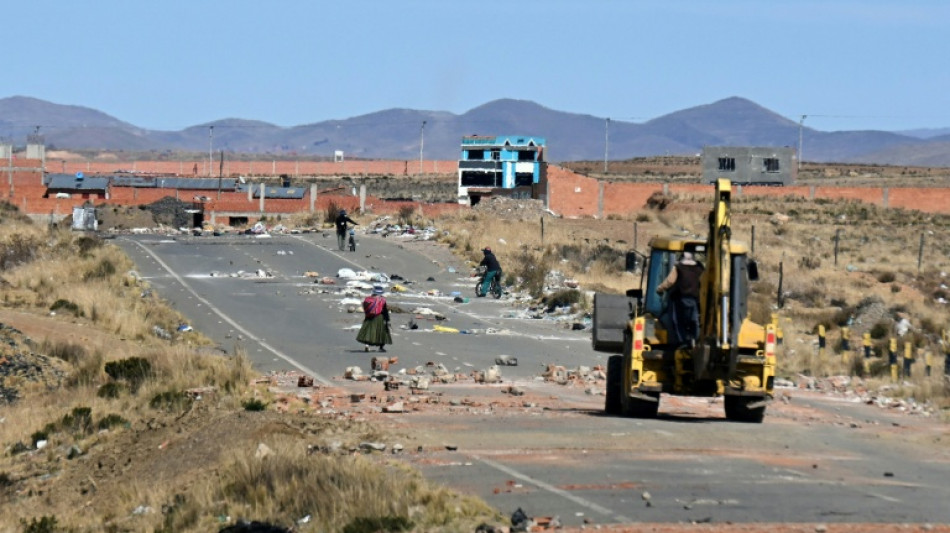
Bolivia declares state of emergency, deploys military to quell protests / Photo: AIZAR RALDES - AFP

 Ozempic-maker Novo Nordisk slims down to 'Novo'

 J-VISIONS Vol. 4 Now Online: Read English Articles on Japanese Corporate IR

 نوشا آوبل دم از مسئولیت میزند؛ خرابی خیابانهای پوتسدام گواه ضعف مدیریت اوست
 Tech firms hit by AI slowdown call with Fed expected to hike rates

 South Korea aims to save seniors lost in digital age
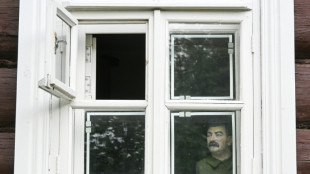 Russia's Stalin-admiring provincial leader waging an ultra-conservative crusade
 'Widow's Bay' and 'The Pitt' tipped for success at Emmy Awards
 Leftwing opposition seen leading Sweden election, far-right losing ground
 Trump administration reluctant to slow AI, Democrats see urgent need

 Can We Predict Volcanic Eruptions Like Weather? Scientists Seek Unified Physics

 اليورو يستقر في البنوك المصرية وأعلى سعر للبيع 59.85 جنيه

 الأرصاد السعودية تتوقع سيولاً وأمطاراً رعدية في خمس مناطق

 Lights out in Laos as electricity exports surge

 Steven Strogatz weighs AI mathematics advances and their consequences for researchers

 Anthropic boss calls for AI slowdown, Altman and Musk agree

 French IT giant Capgemini sells subsidiary after row over ICE links

 Quebec Brokerage Qubit Insurance Announces New Data on Coverage Shortfalls as Rebuilding Costs Rise

 Lady Gaga welcomes first child with fiance: US media

 Bhutan business bets on hazelnuts for farming future

 'Widow's Bay' and 'The Pitt' are favorites for Emmys night

 Coastal erosion forces cancellation of California music festival

 Argentina's Dirty War rears its head in Venice film

 UK lawmakers throw out bill to legalise assisted dying

 US inflation steady in August, fueling Fed rate hike expectations

 New York marks 25th anniversary of 9/11 attacks

Bolivia's president on Saturday declared a state of emergency and deployed soldiers and bulldozers to raze anti-government roadblocks that have paralyzed the Andean nation.
For more than six weeks, unions, Indigenous groups and coca farmers have marched through cities and blocked roads across the country with rubble, logs and debris in protest of the conservative government.
Major cities have suffered acute shortages of fuel, food and medicine, the economy has lost billions of dollars and the protests have threatened to topple Bolivia's first non-socialist government in two decades.
President Rodrigo Paz on Saturday appeared in a predawn televised address to warn protesters they would face "the full force of the law" as he moved to end the crisis.
He declared a 90-day state of emergency, which curbs the right to protest and allows the military to be deployed domestically.
Hours after his address, AFP reporters in the city of El Alto saw squads of soldiers and armed police moving in a convoy as bulldozers moved in to clear roadblocks.
Some residents clapped as they passed. One man handed a bag of bread to a police officer riding in the back of a pickup truck.
"I'm very happy" Carla Butron, a 39-year-old shopkeeper, told AFP. "everything has been difficult here in El Alto during these 50-some-days -- work, free movement."
In nearby La Paz, military police and navy personnel guarded the presidential palace and police tactical units were stationed on main squares.
"Bolivians cannot continue to be held hostage by blockades that prevent them from working, studying, receiving medical care, getting supplies and bringing food to their homes," Paz said in a social media post.
"This state of emergency is not intended to take away normalcy, but to restore it."
The protesters want Paz to abandon liberal economic reforms and step down, less than a year after he was elected.
The 58-year-old had signaled he was ready to negotiate and, earlier this week, agreed to a deal with one of the country's major unions to end the crisis.
In exchange for a promise not to privatize state companies and to hold further talks, the Bolivian Workers' Central union agreed to end their protests.
But some Indigenous groups have vowed to fight on, and more than 40 major roadblocks remain.
"We want him gone. We don't want him to be the one governing," Lidia Callisaya, a 42-year-old Aymara leader, told AFP recently.
- Standoff -
Paz has accused "narcoterrorists" -- and in particular former president Evo Morales -- of being behind the protests.
Morales, a leftist firebrand, Indigenous leader and former coca farmer, was president from 2006 to 2019.
He is currently in hiding while facing charges of alleged trafficking of a minor, which he denies.
His stronghold is the Chapare region in central Bolivia, which is now a potential flashpoint.
He is protected by thousands of Indigenous supporters who have so far prevented police from arresting him.
On Saturday Interior Minister Marco Antonio Oviedo refused to rule out an operation to capture the former leader.
The security forces "will carry out whatever operations are necessary at the appropriate time" he said, adding that Morales must face the law.
Morales recently told AFP from hiding that Bolivians were rebelling against a conservative government that is "utterly submissive" to the United States.
Y.Uduike--CPN