SpaceX IPO: rockets, AI losses and Musk in control / Photo: AFP PHOTO / SPACEX - SPACEX/AFP/File

 Trump blasts 'sick conspiracy' against AI as warnings mount

 French defence group Thales calls on governments to regulate AI
 Oil gains on Mideast supply fears, AI warnings rattle tech firms
 STARCARES-Renovated Court In Thailand Grows Into a Shared Space for School and Community

 Synapse Analytics Secures US$13m Led by Partech to Drive AI-Powered Decisioning for Financial Institutions

 Surfer hospitalised after shark attack in Western Australia
 US hosts G20 'energy abundance' talks amid Iran war shock

 Migrant workers flock to Indian Kashmir despite militant threats

 Canada's Carney seeks closer Europe ties to counter hostile US

 Dozens arrested in major anti-LGBTQ raids in Turkey

 Poland, Ukraine slam Russian strikes near border as 'escalation'
 iPhone 18預購後出現可疑扣款 四間銀行調查未授權交易

 Galaxy Tab S12系列效果圖曝光 Ultra擬配雙鏡頭及瀏海螢幕

 Altman tells Fortune OpenAI will not go public in 2026

 ستاندرد آند بورز تثبت تصنيف السعودية عند A+

 Anthropic details Claude misuse as US targets major illicit online marketplace

 Venezuelans outside Caracas say capital not sharing blackout burden

 Anthropic boss calls for slowing pace of AI development

 BRICS nations urge 'maximum restraint' in Middle East war

 Europe eyes battle over 'pervert' AI glasses

 Children in flood-hit Nepal grapple with loss, cling to hope

 Venice Film Festival: A look back on the highlights

 DR Congo school fire stampede death toll rises to 26: UNICEF

 Dance Fitness Tempe Announces Expansion of Accessible Digital Movement Programs

 Europe saw record summer air traffic despite Mideast war: Eurocontrol

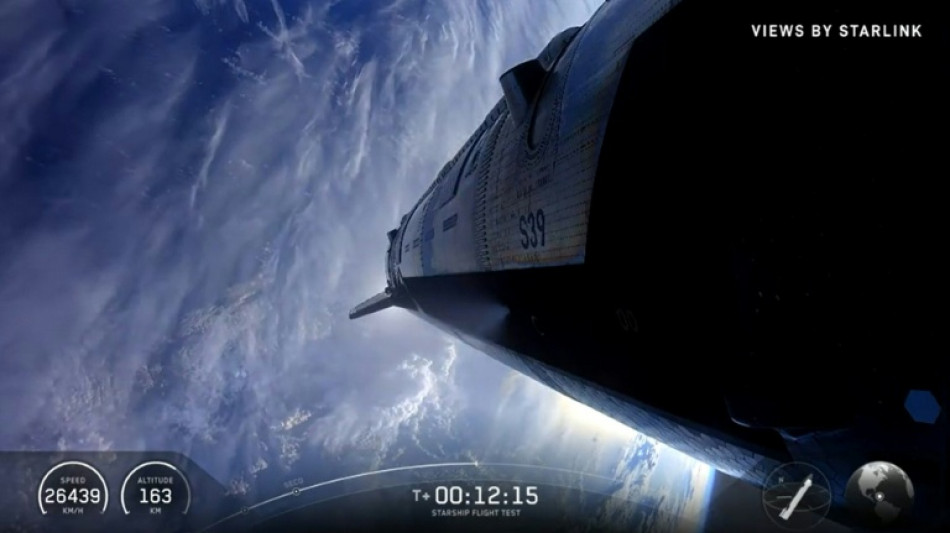
SpaceX is inviting investors to bet on Elon Musk's vision of AI data centers in space and humans on Mars.
It's gamble that comes with limited voting rights, restricted ability to sue, and a business that is currently losing billions of dollars a year.
- Magic touch -
Musk's celebrity and his track record turning Tesla and SpaceX into global giants have earned him a reputation as the man who sees where technology is heading -- and builds a world-class business from it.
The sky-high valuation for SpaceX -- nearly $1.8 trillion -- is based on the idea that his legendary run will continue and that Musk can achieve his goal of data centers in space and putting people on Mars.
But nothing at the core of the business as it stands today lines up with that valuation, with the company growing fast but losing money.
Revenue hit $18.7 billion in 2025 -- up 33 percent from the year before -- but costs grew even faster, producing a net loss of $4.9 billion. In the first quarter of 2026, it lost another $4.3 billion.
Yet SpaceX's IPO filing claims it could pull in over $28.5 trillion in revenue.
The real money, in SpaceX's telling, is in internet connectivity through its Starlink satellite service and above all artificial intelligence, provided by data centers rocketed into space.
Yet xAI -- the AI unit of SpaceX -- has struggled to keep pace with rivals. Its standalone AI revenue stands at around $500 million, a fraction of OpenAI's and Anthropic's revenue.
- Musk in control -
Musk will keep an iron grip on the rocket and AI giant even after it brings in a legion of new investors.
Ordinary investors who buy SpaceX stock will get what are called Class A shares, which give them one vote each on company decisions.
Musk, meanwhile, holds a different kind of share -- Class B -- that carries 10 votes apiece. His votes will simply swamp everyone else's with about 82 percent of the total voting power in the company.
Known as a dual-class structure, tech giants like Google, Meta and Snap have used the same playbook to keep their founders in charge after going public.
- Don't sue me -
Frustrated by years of shareholder lawsuits against publicly traded Tesla, Musk has ensured that SpaceX is built inside a legal fortress.
SpaceX requires shareholder lawsuits to be filed in a specialized Texas business court.
If a judge refuses, disputes go to private arbitration with no jury and no class actions -- stripping investors of the main legal tool used to take on large corporations.
The filing acknowledges there is "risk" a court could reject these provisions if challenged, but until one does, that is the rule.
- Regular investor -
Tapping into his legion of fans, SpaceX will set aside 30 percent of the IPO shares for everyday investors, not just big Wall Street firms.
In a normal IPO, institutions usually get most of the shares, so this is a bigger-than-usual chance for regular people to buy in.
Why does that matter? Because it changes who gets to own the stock on day one.
If more shares go to individual investors, the company is trying to spread ownership beyond hedge funds and mutual funds, some of whom may balk at the company's financials.
It can also make the stock more volatile at first. If a lot of excited people rush to buy, the price can jump quickly.
- No choice but to buy -
More than 60 percent of US stocks are owned by passive funds that copy a market index like the Nasdaq 100.
Nasdaq changed its rules in May to allow SpaceX to join the index within 15 trading days -- down from the previous three months.
The index funds, whose investors include US retirement plans, will have to find room for the new entrant, creating a big wave of buying for SpaceX and selling of other stocks.
Moreover, only 4 percent of the $1.77 trillion company will be made available for purchase -- an exceptionally thin offering.
It means all those funds -- and Musk fans -- buying SpaceX will be chasing a very small pool of available stock, which could push the price up sharply.
A.Samuel--CPN