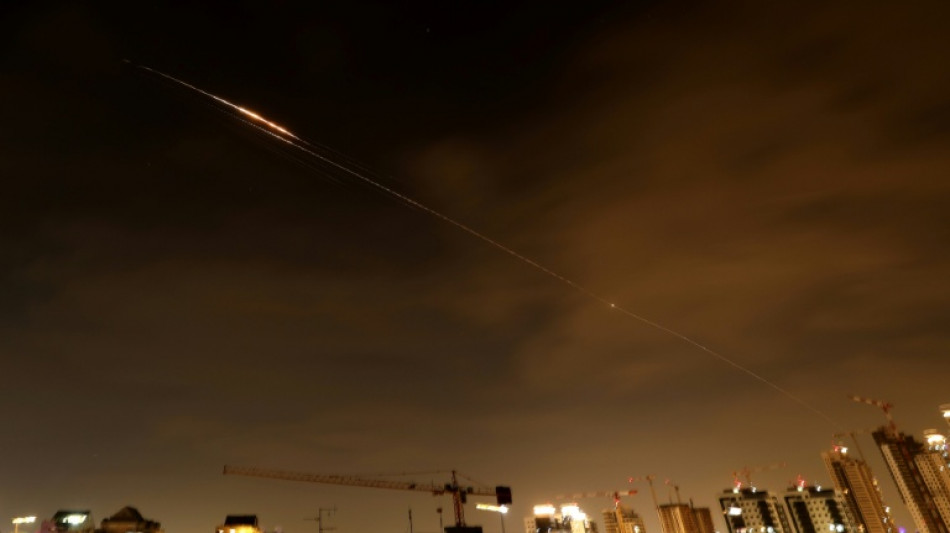
Iran defies Trump Hormuz ultimatum with naval mine threat / Photo: JACK GUEZ - AFP

 In Brazil's Amazon, the hunt for oil fuels hopes and fears

 Baby orangutans in India expose 'frightening' scale of trafficking

 Oversight Board blasts 'inadequate' Meta safeguards for AI deepfakes

 Harry makes first public appearance since return to UK

 Princess Diana's brother makes new explosive claims against Charles

 Trump admin overhauls key protection for endangered species

 Mbappe draws political fire over Ceuta t-shirt controversy

 Third malaria death in Germany from outbreak tied to Frankfurt airport

 AtlasClear Holdings Reports Preliminary Fiscal 2026 Revenue of Approximately $20.1 Million, Up 85%; Revenue Plus Interest Income of Approximately $21.9 Million

 'Another arrow to the quiver': World Bank posts record private capital mobilization

 Ireland to boycott Eurovision 2027 over Gaza

 India's Tata Sons reappoints N. Chandrasekaran as chairman

 Germany urges EU action against China to defend carmakers

 Japan eyes changing prostitution law to punish sex buyers

 Modi pitches India as global chipmaking hub

 Ukraine plans record defence spending in 2027

 NASA scan discovers new, 'once in a century' Moon crater

 Most stocks rise as Fed hikes and indicates drive to curb inflation

 UK-Sudanese author pens book to give children 'African history of Africa'

 Argentine judge orders suspension of Falklands oil project

 US Fed raises rates to tackle 'too high' inflation, irking Trump

 Turkey releases 106 protesters, jails more LGBTQ activists

 Candidate for UN chief calls for AI regulation akin to nuclear weapons

 'We're losing control,' AI pioneer Yoshua Bengio tells AFP

 IR-MED and Dice Technologies Announce collaboration to Evaluate and Advance Pressure-Injury Prevention Platform in Japan

Iran threatened Monday to deploy naval mines in the Gulf and target power plants across the region as it defied US President Donald Trump's ultimatum for the Islamic republic to reopen the Strait of Hormuz.
The ramped-up rhetoric came after stark warnings that the world faces an energy crisis worse than both 1970s oil shocks combined if the US-Israeli war with Iran drags on.
Facing a 2344 GMT deadline to reopen Hormuz, or see Trump "obliterate" its power plants, Iran gave no indication of bending to the US leader's will as the war enters its fourth week.
Instead it threatened to sow "drifting mines" across the Gulf if its coasts or islands are attacked -- a tactic Iran deployed during the 1980s conflict with Iraq, with the potential to further choke the economically-vital waterway.
And it doubled down by issuing maps of potential energy targets in the region -- designating Israel's two largest power plants as well as sites in Saudi Arabia, the United Arab Emirates, Qatar and Kuwait.
"Say goodbye to electricity!" ran the title of one infographic.
"In the event of the slightest attack on the electricity infrastructure of the Islamic republic, the entire region will be plunged into darkness," said the graphic carried by Mehr news agency.
- Strikes -
Israel hit Tehran with fresh strikes early Monday -- with AFP witnessing a thick plume of black smoke billowing in the city's east.
Later in the day, another series of blasts were heard in the Iranian capital, though it was not immediately clear what had been hit.
Tehran has already retaliated against US-Israeli assaults by throttling traffic through Hormuz, conduit for a fifth of global crude, hitting energy sites and US embassies across the Gulf as well as targets in Israel.
Unless the war ends soon, the head of the International Energy Agency said daily oil losses put the world on track for a crisis worse than the combined impact of both 1970s oil shocks and Russia's invasion of Ukraine.
At least 40 energy assets across the oil- and gas-exporting region are already "severely or very severely damaged", warned Fatih Birol, with oil prices driven above $100 a barrel.
"No country will be immune to the effects of this crisis if it continues," said the IEA boss said.
Stocks tumbled and oil prices rose again Monday as Trump and Iran traded threats.
Sign of the conflict's tentacular impact, the world's second economy China said it was capping domestic fuel cost increases to mitigate the effect of surging oil prices.
Greece also moved to mitigate the cost of the war by earmarking relief for households and farmers, while in Cambodia a major energy supplier said it would halt sales of liquefied petroleum gas over war-linked disruption.
- 'Weeks' more fighting -
Weighing in from Beijing after Trump's latest threats, China's foreign ministry warned of an "uncontrollable situation" should the war expand further, while key Iran ally Russia urged renewed diplomatic efforts to defuse the "catastrophically tense situation".
The US president has offered varying timelines and objectives for the war, saying Friday he was considering "winding down" the operation -- only to later threaten Iran's power plants.
Iran has more than 90 power plants, some of them located on the Gulf coast. The country operates a decentralised electricity system, with multiple generation sites and hundreds of substations nationwide.
Israeli Prime Minister Benjamin Netanyahu has meanwhile spoken of a long-term campaign against Iran's government, a state sponsor of Hamas, which launched the October 7, 2023 attack triggering the Gaza war.
Israel has also expanded its ground campaign against Iran-backed Hezbollah in Lebanon, warning of "weeks of fighting" in the country.
The Lebanon violence has killed more than 1,000 people and displaced more than a million, according to the health ministry.
- Iran takes toll in Israel -
Israel prides itself on its air defences, and Trump and Netanyahu both claim to have knocked out key Iranian military sites.
But Iranian missiles evaded the defences over the weekend to land in two southern towns, including Dimona, close to Israel's desert nuclear facility, injuring dozens on Saturday.
"We thought we were safe," Galit Amir, a 50-year-old care provider, told AFP in Dimona.
According to rescuers, a missile landed about five kilometres from what is widely believed to be the Middle East's only atomic arsenal -- although Israel denies possessing nuclear weapons.
On Monday Israel's military said it was working to intercept a new salvo of missiles from Iran -- while confirming its own artillery fire had killed an Israeli civilian a day earlier near the Lebanese border.
burs-ec/ser
C.Smith--CPN


