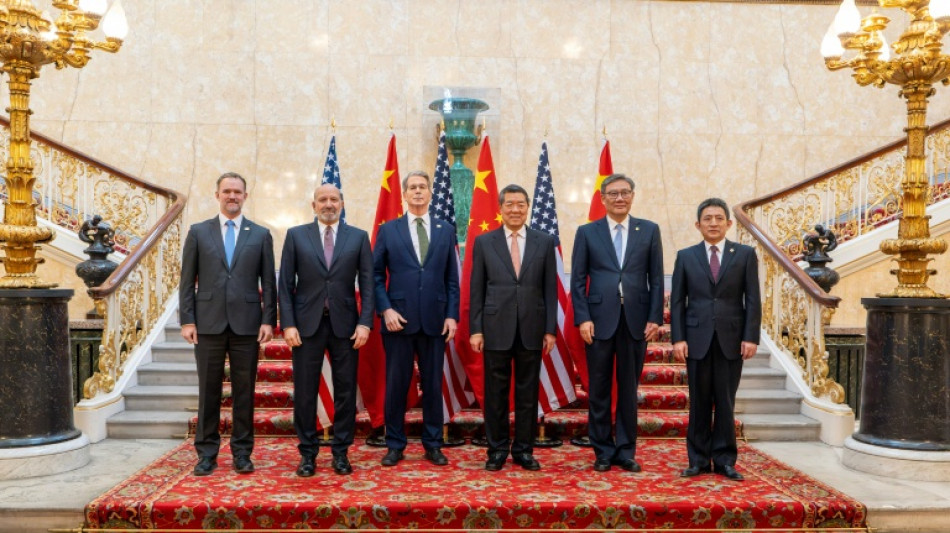
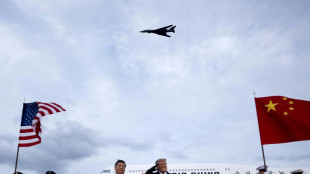
Hopes rise on second day of US-China trade talks / Photo: HANDOUT - US Treasury Department/AFP

 Iran proposes Hormuz plan, Trump reportedly refuses
 El Nino rewrites the menu in the world's top restaurants

 Jay-Z rape accuser says she made 'false accusations'
 Trump's photo of Xi greeting carries signs of AI

 First US trial against TikTok to open Monday

 French literary prize removes novel from longlist after AI claims
 Trump accuser E. Jean Carroll finally has her damages
 Heavy fighting, internet disruption as Ethiopia conflict rages

 Asian markets mixed after oil gains

 UN approves resolution on dealing with rising sea levels

 Global stocks mostly fall as oil prices and bond yields rise

 Starbucks to close 250 more cafes in North America
 Stocks fall as oil prices rise and bonds back under pressure
 Top ECB official to resign to take up IMF role

 Eviction of pensioner puts Spain housing crisis in spotlight
 Average EU diesel price hits record 2.23 euros a litre: AFP analysis

 Whitetip Investments Marks 10 Years of Regulation, Transparency & Responsible Trading

 Stocks fall, oil prices rise as global bonds under pressure
 Hungary detects invasive spotted lanternfly for first time in EU

 Forex Expo Dubai 2026 Breaks Guinness World Record Again With 23,816 Attendees

 Asian markets fall on US-China jitters as leaders meet

 As Moscow steps up attacks, Kyiv residents brace for harsh winter

 Markets mixed as China's Xi arrives for US talks

 Archaeological 'breakthrough' could confirm origins of Paris

 Australian PM says OpenAI hacked government health website

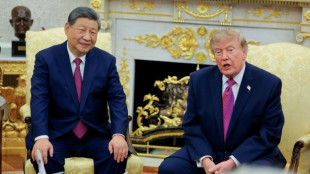
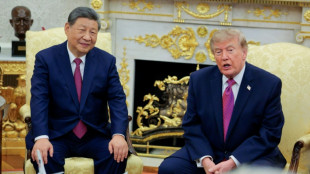
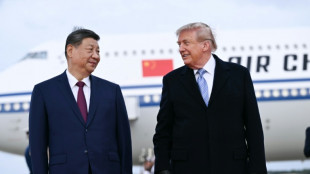
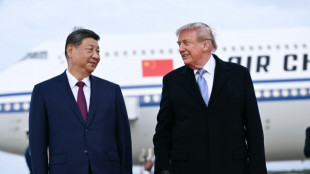
The United States and China huddled for a second day of talks in London on Tuesday, with Washington sending positive signals that the two superpowers might resolve a bitter trade war dragging on the global economy.
The talks were "going well," US Commerce Secretary Howard Lutnick told Bloomberg Television, adding he expected Tuesday's discussions to last "all day".
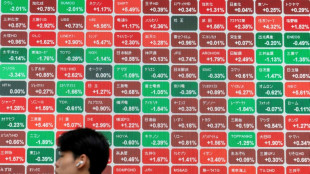
Global stock markets were muted on Tuesday as investors awaited the outcome of the talks aimed at cementing a fragile truce in the trade war.
With talks dragging on, "the lack of positive headlines weighed on stocks and the dollar," said Kathleen Brooks, research director at XTB trading platform.
But one of US President Donald Trump's top advisers had said Monday he expected "a big, strong handshake" after the talks in the UK's historic Lancaster House.
Trump told reporters at the White House on Monday: "We are doing well with China. China's not easy."
He added: "I'm only getting good reports."
The gathering of key officials from the world's two biggest economies began Monday in London, after an earlier round of talks in Geneva last month.
China's exports of rare earth minerals used in a wide range of things including smartphones, electric vehicle batteries and green technology are expected to dominate the agenda.
"In Geneva, we had agreed to lower tariffs on them, and they had agreed to release the magnets and rare earths that we need throughout the economy," Trump's top economic adviser, Kevin Hassett, told CNBC on Monday.
But even though Beijing was releasing some supplies, "it was going a lot slower than some companies believed was optimal", he added.
Still, he said he expected "a big, strong handshake" at the end of the talks.
"Our expectation is that after the handshake, any export controls from the US will be eased, and the rare earths will be released in volume," Hassett added.
He also said the Trump administration might be willing to ease some recent curbs on tech exports.
- Concessions? -
Tensions between Washington and Beijing have heightened since Trump took office in January, with both countries engaging in a tariffs war hiking duties on each other's exports.
The Geneva pact to cool tensions temporarily brought new US tariffs on Chinese goods down from a staggering 145 percent to 30 percent, and Chinese countermeasures from 125 percent to 10 percent.
But Trump recently said China had "totally violated" the deal.
And analysts remained cautious.
"We doubt that the US will back off completely. That's likely to restrain any relief rally," said Thomas Mathews, head analyst of Asia Pacific markets for Capital Economics.
Ipek Ozkardeskaya, senior analyst at the Swissquote Bank, said although there had been "no breakthrough" it seemed "the first day of the second round of negotiations reportedly went relatively well".
"Rumours are circulating that the US may be willing to make concessions on tech exports in exchange for China easing restrictions on rare earth metal exports," she said.
On what he dubbed "Liberation Day" in April, Trump slapped sweeping levies of 10 percent on friend and foe alike, and threatened steeper rates on dozens of economies.
The tariffs have already dented trade, with official figures from Beijing showing Chinese exports to the United States in May plunged by 12.7 percent.
China is also in talks with other trading partners -- including Japan and South Korea -- to try to build a united front to counter Trump's tariffs.
Chinese leader Xi Jinping on Tuesday urged South Korea's new President Lee Jae-myung to work with Beijing to uphold free trade and ensure "the stability and smooth functioning of global and regional industrial and supply chains," the Xinhua news agency said.
Chinese Vice Premier He Lifeng is heading the team in London, which included Commerce Minister Wang Wentao and China International Trade Representative Li Chenggang.
US Treasury Secretary Scott Bessent, Lutnick and Trade Representative Jamieson Greer are leading the US delegation.
C.Smith--CPN