Climate change heightens risk of Indian farmer suicides / Photo: Indranil MUKHERJEE - AFP

 TikTok agrees to teen limits in US settlement following Meta

 Venezuela's oil cradle pins hopes on US energy deals

 Lula bans sports betting days ahead of Brazil's election

 Spotting AI writing: how reliable are the detectors?

 US court refuses to overturn Pentagon ban on Anthropic

 South Lebanon children return to school destroyed by Israel strike

 European stock markets climb as oil prices drop

 Asian markets mixed after recent oil surge
 Cash for nature protection: hotelier's offer to Principe islanders

 India rape cases turn focus back onto women's safety

 Rich nations should foot climate bill, says Nepal minister

 Italy bans burqas in schools, caps numbers of foreign students per class

 Napoli hoping to build new stadium, says owner

 What happens if the US bans diesel exports

 Oscar-winner Cotillard fears being moved by AI actor

 Stocks fall, oil prices rise as global bonds back under pressure

 Streamex Converts Interest Into Capital as GLDY Investment Strategy Secures $1M+ Institutional Allocation

 STARTRADER Named Best Fintech Forex Broker at Forex Expo Dubai 2026

 German think tanks urge Merz to stick with reforms after election defeats

 France's top-selling newspaper to slash jobs

 BaazEX Enters the Asian Trading Market With a New Approach to Online Forex Trading.

 Sao Tome voters want to stop exodus of 'neglected' youth
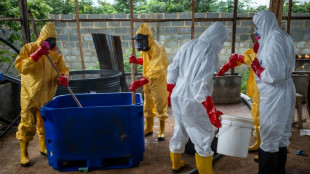 Mexican cartels target Australia with their African meth

 Rapper-turned-PM faces first big test after Nepal disaster

 Meta launches camera-free AI glasses amid privacy pushback

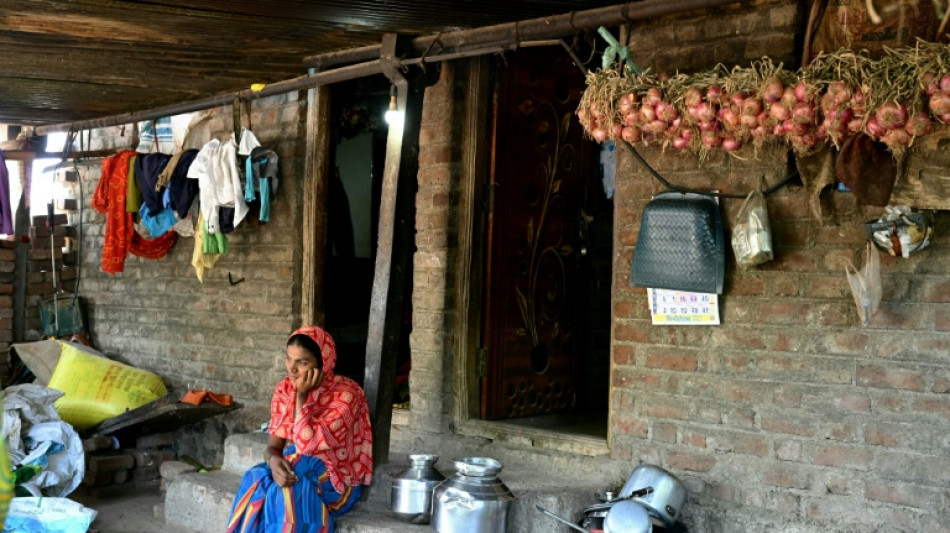
On a small farm in India's Maharashtra state, Mirabai Khindkar said the only thing her land grew was debt, after crops failed in drought and her husband killed himself.
Farmer suicides have a long history in India, where many are one crop failure away from disaster, but extreme weather caused by climate change is adding fresh pressure.
Dwindling yields due to water shortages, floods, rising temperatures and erratic rainfall, coupled with crippling debt, have taken a heavy toll on a sector that employs 45 percent of India's 1.4 billion people.
Mirabhai's husband Amol was left with debts to loan sharks worth hundreds of times their farm's annual income, after the three-acre (one-hectare) soybean, millet and cotton plot withered in scorching heat.
He swallowed poison last year.
"When he was in the hospital, I prayed to all the gods to save him," said 30-year-old Mirabai, her voice breaking.
Amol died a week later, leaving behind Mirabai and three children. Her last conversation with him was about debt.
Their personal tragedy is replicated daily across Marathwada, a region in Maharashtra of 18 million, once known for fertile farmland.
Last year, extreme weather events across India affected 3.2 million hectares (7.9 million acres) of cropland -- an area bigger than Belgium -- according to the New Delhi-based Centre for Science and Environment research group.
Over 60 percent of that was in Maharashtra.
"Summers are extreme, and even if we do what is necessary, the yield is not enough," said Amol's brother and fellow farmer Balaji Khindkar.
"There is not enough water to irrigate the fields. It doesn't rain properly."
- 'Increase the risks' -
Between 2022 and 2024, 3,090 farmers took their own lives in Marathwada, an average of nearly three a day, according to India's Minister of Agriculture Shivraj Singh Chouhan.
Government statistics do not specify what drove the farmers to kill themselves, but analysts point to several likely factors.
"Farmer suicides in India are a consequence of the crisis of incomes, investment and productivity that you have in agriculture," said R. Ramakumar, professor of development studies at the Tata Institute of Social Sciences.
Farming across many Indian smallholdings is done largely as it has been for centuries, and is highly dependent on the right weather at the correct time.
"What climate change and its vulnerabilities and variabilities have done is to increase the risks in farming," Ramakumar said.
This "is leading to crop failures, uncertainties... which is further weakening the economics of cultivation for small and marginal farmers."
The government could support farmers with better insurance schemes to cope with extreme weather events, as well as investments in agricultural research, Ramakumar said.
"Agriculture should not be a gamble with the monsoon."
- 'Make ends meet' -
Faced with uncertain weather, farmers often look to stem falling yields by investing in fertilisers or irrigation systems.
But banks can be reluctant to offer credit to such uncertain borrowers.
Some turn to loan sharks offering quick cash at exorbitant interest rates, and risking catastrophe if crops fail.
"It is difficult to make ends meet with just farming," Mirabai said, standing outside her home, a tin-roofed hut with patch-cloth walls.
Her husband's loans soared to over $8,000, a huge sum in India, where the average monthly income of a farming household is around $120.
Mirabai works on other farms as a labourer but could not pay back the debt.
"The loan instalments piled up," she said, adding that she wants her children to find jobs outside of farming when they grow up.
"Nothing comes out of the farm."
The agricultural industry has been in a persistent crisis for decades.
And while Maharashtra has some of the highest suicide rates, the problem is nationwide.
Thirty people in the farming sector killed themselves every day in 2022, according to national crime records bureau statistics.
At another farm in Marathwada, 32-year-old farmer Shaikh Imran took over the running of the family smallholding last year after his brother took his own life.
He is already more than $1,100 in debt after borrowing to plant soybean.
The crop failed.
Meanwhile, the pop of explosives echoes around as farmers blast wells, hoping to hit water.
"There's no water to drink," said family matriarch Khatijabi. "Where shall we get water to irrigate the farm?"
P.Schmidt--CPN