Three, two, one: astronomers predict SpaceX space junk will hit the Moon

 Lights out in Laos as electricity exports surge

 Steven Strogatz weighs AI mathematics advances and their consequences for researchers

 Anthropic boss calls for AI slowdown, Altman and Musk agree

 French IT giant Capgemini sells subsidiary after row over ICE links

 Quebec Brokerage Qubit Insurance Announces New Data on Coverage Shortfalls as Rebuilding Costs Rise

 Lady Gaga welcomes first child with fiance: US media

 Bhutan business bets on hazelnuts for farming future

 'Widow's Bay' and 'The Pitt' are favorites for Emmys night

 Coastal erosion forces cancellation of California music festival

 Argentina's Dirty War rears its head in Venice film

 UK lawmakers throw out bill to legalise assisted dying

 US inflation steady in August, fueling Fed rate hike expectations

 New York marks 25th anniversary of 9/11 attacks

 Nepal flood reconstruction bill to be $4.78 bn: foreign ministry

 JUMO and Standard Bank launch Social Finance Framework to scale inclusive finance in Africa

 Doomsday tech: could AI really kill us all?

 French comedy show 'Call my agent' makes film comeback

 It's all coming back: Celine Dion fans gear up for Paris return

 Researchers eye AI revolution in natural disaster forecasts

 US braces for inflation report that may push Fed to hike rates

 Musk threatens legal action over documentary

 Latin America fact-check group asks Meta not to replace verification practice

 AI Risks to Enter 60–80% of Liability and Cyber Insurance Underwriting by 2028, ScienceSoft Predicts

 Tribal Launches Campfire, Letting Business and Technical Teams Build on Salesforce Together

 Stocks fall as fresh oil surge fans inflation fears

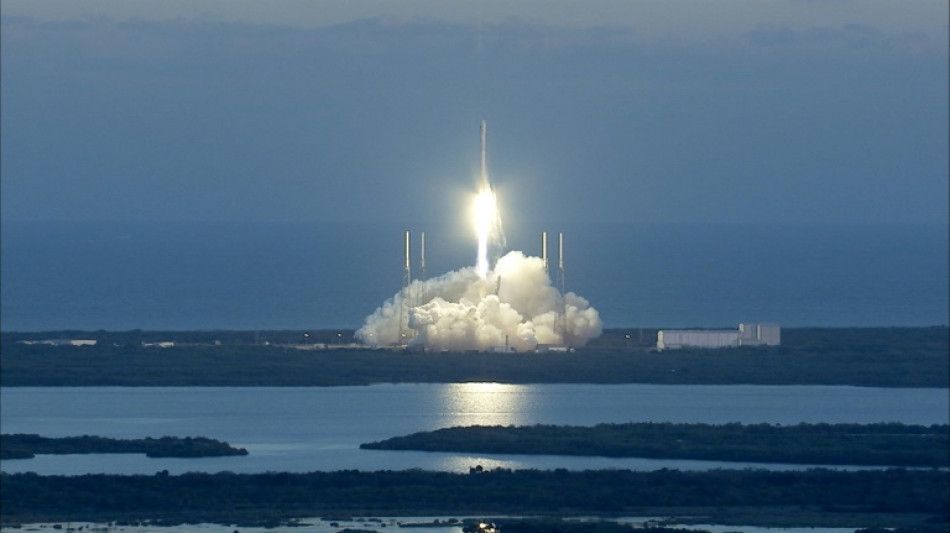
A chunk of a SpaceX rocket that blasted off seven years ago and was abandoned in space after completing its mission will crash into the Moon in March, experts say.
The rocket was employed in 2015 to put in orbit a NASA satellite called the Deep Space Climate Observatory.
Since then the second stage of the rocket, or booster, has been floating in what mathematicians call a chaotic orbit, astronomer Bill Gray told AFP Wednesday.
It was Gray who calculated the space junk's new collision course with the Moon.
The booster passed by pretty close to the Moon in January in a rendezvous that altered its orbit, said Gray.
He is behind Project Pluto, software that allows for calculating the trajectory of asteroids and other things in space and is used in NASA-financed space observation programs.
A week after the rocket stage whizzed close to the Moon, Gray detected it again and concluded it will actually crash into the satellite's dark side on March 4.
Gray appealed to the amateur astronomer community to join him in observing the booster -- it is bright and easy to detect -- and his conclusion was confirmed.
The exact time and spot of impact may change a bit from his forecast but there is widespread agreement that there will be a collision on the Moon that day.
"I've been tracking junk of this sort for about 15 years. And this is the first unintentional lunar impact that we've had," Gray told AFP.
The impact of this object weighing four tons on the Moon will not be visible from Earth in real time.
But it will leave a crater that scientists can observe, such as with NASA's Lunar Reconnaissance Orbiter or India's Chandrayaan-2 satellite, and thus learn more about the geology of the Moon.
Spacecraft have been intentionally crashed into the Moon before, for scientific purposes.
In 2009, for instance, NASA sent a rocket stage hurling into the Moon near its south pole to look for water.
But most rockets do not go so far from Earth. SpaceX brings its rocket boosters back through the Earth's atmosphere so they disintegrate over the ocean.
Gray said there could be more unintentional crashes into the Moon in the future as the US and Chinese space programs leave more junk in orbit.
A.Mykhailo--CPN