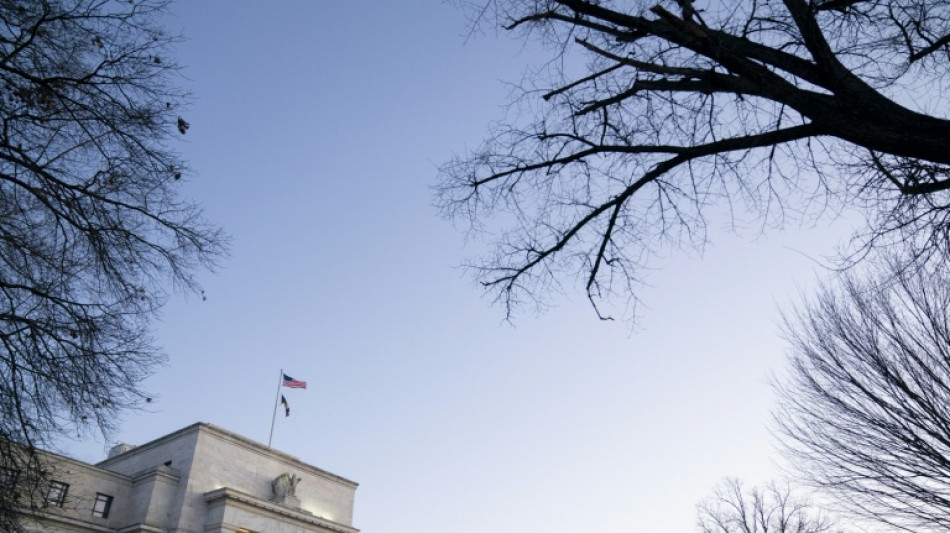
Fearful Wall Street awaits Fed's next moves on inflation

 Lights out in Laos as electricity exports surge

 Steven Strogatz weighs AI mathematics advances and their consequences for researchers

 Anthropic boss calls for AI slowdown, Altman and Musk agree

 French IT giant Capgemini sells subsidiary after row over ICE links

 Quebec Brokerage Qubit Insurance Announces New Data on Coverage Shortfalls as Rebuilding Costs Rise

 Lady Gaga welcomes first child with fiance: US media

 Bhutan business bets on hazelnuts for farming future

 'Widow's Bay' and 'The Pitt' are favorites for Emmys night

 Coastal erosion forces cancellation of California music festival

 Argentina's Dirty War rears its head in Venice film

 UK lawmakers throw out bill to legalise assisted dying

 US inflation steady in August, fueling Fed rate hike expectations

 New York marks 25th anniversary of 9/11 attacks

 Nepal flood reconstruction bill to be $4.78 bn: foreign ministry

 JUMO and Standard Bank launch Social Finance Framework to scale inclusive finance in Africa

 Doomsday tech: could AI really kill us all?

 French comedy show 'Call my agent' makes film comeback

 It's all coming back: Celine Dion fans gear up for Paris return

 Researchers eye AI revolution in natural disaster forecasts

 US braces for inflation report that may push Fed to hike rates

 Musk threatens legal action over documentary

 Latin America fact-check group asks Meta not to replace verification practice

 AI Risks to Enter 60–80% of Liability and Cyber Insurance Underwriting by 2028, ScienceSoft Predicts

 Tribal Launches Campfire, Letting Business and Technical Teams Build on Salesforce Together

 Stocks fall as fresh oil surge fans inflation fears

The Federal Reserve's first policy meeting of the year hasn't even concluded but Wall Street already is unhappy, wary of what central bank chief Jerome Powell might say on Wednesday about his inflation-fighting plans.
At the conclusion of the two-day meeting, the Federal Open Market Committee (FOMC) is expected to further signal how it will act to stifle the wave of price increases hitting country's families and businesses.
In the run-up to the announcement, major New York stock indices have seen days of tumultuous trading and big losses.
The trend was confirmed on Tuesday when Wall Street closed lower again, further proof that investors are dreading the likely end to the central bank's easy money policies, including zero interest rates and the massive bond-buying program which helped the economy survive the pandemic.
The bond purchases are scheduled to end in March and Powell and other officials have strongly suggested they will raise rates then, and potentially twice more this year as the Fed looks to ensure the seven percent surge in consumer prices that occurred in 2021 -- the highest in nearly four decades -- does not repeat.
"The Fed has done everything but bash investors over the head with a sledgehammer to warn them that rate hikes are coming," economist Joel Naroff said.
"That suddenly everyone is worried about rate hikes proves another of my favorite sayings: 'Markets may be efficient, but that doesn't mean they are rational.'"
The Fed is the world's most influential central bank, and its policies have implications for lending globally.
Top IMF official Gita Gopinath on Tuesday praised the Fed's signaling of its policy change, but warned, "This is going to be a challenge for central bankers this year to be able to communicate the transition to tighter monetary policy, and they should handle that with care."
- Stocks up, inflation too -
While the pandemic caused a widespread economic downturn in the United States, the Fed's moves to ease lending conditions and ensure liquidity kept flowing through the economy helped Wall Street post big gains, with the broad-based S&P 500 rising 27 percent last year.
But while the central bank hoped to keep its lending rate at zero for longer to ensure marginalized groups benefit from the recovery, persistently high inflation throughout last year forced Powell and others to signal rate hikes would come sooner than they initially expected.
The causes driving inflation are myriad, from global issues like supply chain snarls and the semiconductor shortage to more domestic issues like government stimulus policies that have fattened Americans' wallets, while the pandemic kept spending focused on goods rather than services.
The central bank is deliberately opaque about what exactly it may do, but does give strong signals.
If rate hikes are coming, Chief US Financial Economist at Oxford Economics Kathy Bostjancic said the Fed will indicate on Wednesday that the economy has reached "maximum employment," one of its two mandates, along with stable inflation.
"The path for rate hikes will depend critically on the future pace of inflation and the intersection with wage growth," she said, predicting inflation would cool in the second half of the year, and the Fed will raise rates by a quarter of a percent each quarter.
"The risk is for a faster pace of Fed tightening given the stickiness of inflation," she added.
- Fearing uncertainty -
How markets react if policy tightens as expected remains to be seen, but the last few days have not been encouraging.
Last week, the Nasdaq, which is rich with tech stocks that boomed thanks to the Fed's easy money policies, lost seven percent, while on Monday, the S&P 500 oscillated wildly, sinking 3.5 percent before ending trading with a slight gain.
Chaos in the markets isn't a good look for the Fed, Naroff said, and further selloffs may sway Powell and his colleagues into moving slower with rate hikes.
"The markets may dictate what the Fed does once again, and if that happens, it is too bad," he said.
A.Samuel--CPN