Forget working from home -- why not live in an old office?

 Lights out in Laos as electricity exports surge

 Steven Strogatz weighs AI mathematics advances and their consequences for researchers
 Anthropic boss calls for AI slowdown, Altman and Musk agree

 French IT giant Capgemini sells subsidiary after row over ICE links

 Quebec Brokerage Qubit Insurance Announces New Data on Coverage Shortfalls as Rebuilding Costs Rise

 Lady Gaga welcomes first child with fiance: US media

 Bhutan business bets on hazelnuts for farming future

 'Widow's Bay' and 'The Pitt' are favorites for Emmys night

 Coastal erosion forces cancellation of California music festival

 Argentina's Dirty War rears its head in Venice film

 UK lawmakers throw out bill to legalise assisted dying

 US inflation steady in August, fueling Fed rate hike expectations

 New York marks 25th anniversary of 9/11 attacks

 Nepal flood reconstruction bill to be $4.78 bn: foreign ministry

 JUMO and Standard Bank launch Social Finance Framework to scale inclusive finance in Africa

 Doomsday tech: could AI really kill us all?

 French comedy show 'Call my agent' makes film comeback

 It's all coming back: Celine Dion fans gear up for Paris return

 Researchers eye AI revolution in natural disaster forecasts

 US braces for inflation report that may push Fed to hike rates

 Musk threatens legal action over documentary

 Latin America fact-check group asks Meta not to replace verification practice

 AI Risks to Enter 60–80% of Liability and Cyber Insurance Underwriting by 2028, ScienceSoft Predicts

 Tribal Launches Campfire, Letting Business and Technical Teams Build on Salesforce Together

 Stocks fall as fresh oil surge fans inflation fears

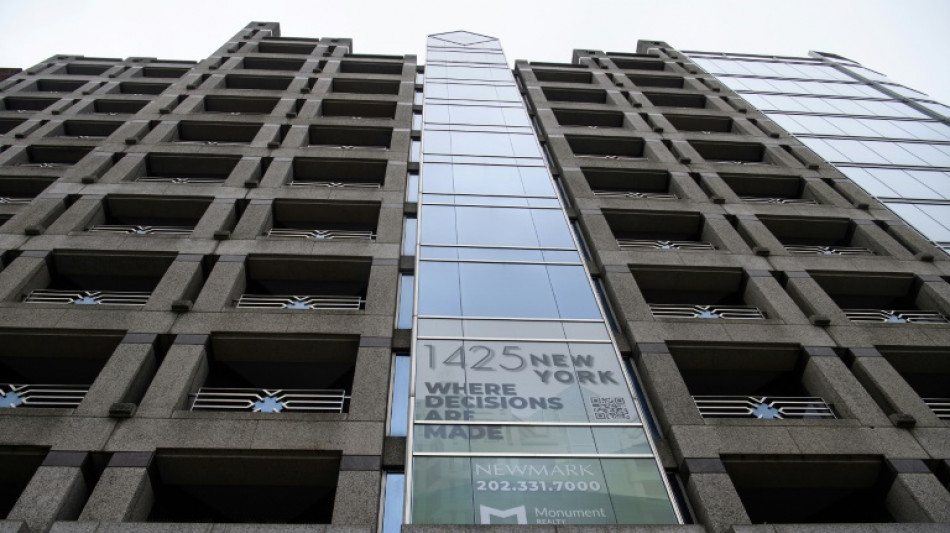
Blocks from the White House, an unassuming edifice in downtown Washington that once held offices used by the US Department of Justice is set to be converted into homes for hundreds of people.
The transformation of the vacant office space is among a surge of "adaptive reuse" projects that swept the US property market in 2021, where developers bought hotels and offices that were struggling to get business and announced plans to turn them into apartments.
"The market spoke, and it said the value was greater for a conversion than for it continuing as office space," said Michael Abrams, managing director of Foulger-Pratt, the property development firm that is turning the 14-story building on New York Avenue into 255 apartments.
A survey by apartment listing service RentCafe found about 20,100 apartments were built out of converted properties in the United States last year, almost double the number converted in the year prior.
Such conversions could offer a way forward for US downtowns, which haven't been the same since office workers fled as Covid-19 broke out nearly two years ago, leaving landlords and local businesses struggling.
"The slow office market recovery is just going to make it that much more expensive to carry vacant office buildings," Abrams said.
Conversions may also play a role in easing a shortage of affordable housing, particularly in cities like Washington, where notoriously high rents are a feature of life.
"From the overall perspective, we just need increased supply. By having more supply, both the home price growth will come down and the rents will come down," said Lawrence Yun, chief economist of the National Association of Realtors.
- Even more expensive -
Despite the downturn caused by Covid-19, the median price of existing homes climbed 15.8 percent over the course of 2021, and by last month supply had hit an all-time low, according to NAR data, likely exacerbating a crisis of affordable housing that predated the pandemic.
As of 2017, 48 percent of tenants were considered "rent burdened" by the US Government Accountability Office -- meaning they paid more than 30 percent of their income on rent -- a figure that had risen six percentage points over the preceding 16 years.
The United States meanwhile has a glut of offices. With many of them dating to the 1980s, they are now too old to be attractive to companies, said Tracy Hadden Loh, a fellow at Brookings Metro.
With their designs centered around outdated needs like space for file cabinets, "Really just the entire building is obsolete," she said in an interview.
- Corporate pullout -
Marc Ehrlich, chief investment officer at Rose Associates, which has converted New York City offices into housing, said such projects tend to be "well-located properties that need a higher and better use."
One of his firm's latest undertakings is the transformation of an office once used by telecommunications firm AT&T into a place people want to live.
Lacking amenities like covered parking, the building is unlikely to attract commercial tenants, Ehrlich said.
However, the new apartments will feature co-working spaces, since many tenants will likely want to continue working from home, he said.
In Washington, developers are pouncing on properties formerly rented by the region's top employer, the federal government.
This includes The Wray, an office building used by the State Department, but which has been totally renovated to house apartments.
The only signs of its former use are in the lobby, where the tiles are original, as is a directory listing the names of State Department offices once based there.
"The pool of tenants that goes back into these buildings is dramatically diminished, and that's what's putting the stress on that tier of property, that's what's creating the opportunity," said Abrams.
Adaptive reuse projects tend to demand high rents, Loh said, since they often require expensive renovations such as the construction of new bathrooms in buildings where they were once communal.
While expanding inventory has been shown to relieve price pressures elsewhere in the housing market, "This isn't a solution to the housing crisis," she added.
"This is a solution to revitalize areas like downtowns that are super dominated by places like office spaces."
A.Agostinelli--CPN