
WMO Says Powerful El Niño Is Likely to Persist Into February 2027

 S.African activists push back on data centre rush

 Billionaire Ambani's Jio to debut after record India IPO

 UK set for cautious budget as borrowing costs climb

 US Fed expected to hold rates steady ahead of key midterm elections

 AI chip giant SK hynix says quarterly operating profit soars 630%

 Charles tackles thorny legacy of slavery on Caribbean trip

 UN nuclear watchdog chief urges Iran to grant access

 Boeing releases cautious growth plan as shares fall sharply

 Tech firms gain on Anthropic IPO optimism; HSBC slumps in London

 Tech firms track Wall St rally on mixed day for stock markets

 HSBC profit jumps on higher rates, lower costs

 Reparations calls follow Charles on tough Caribbean trip

 China brands drop Mbappe for 'offending national sentiments'

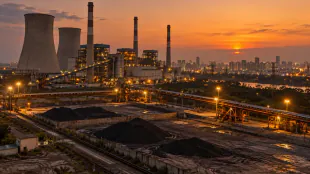 Critical coal inventories affect nearly half of India’s domestic power plants

 Gold ETF flows turn negative after 13 weeks as bullion loses 4%
The World Meteorological Organization says the 2026 El Niño is firmly established, likely to strengthen further and has a nearly 100 percent chance of persisting through February 2027.
The World Meteorological Organization has issued an unusually confident forecast for the current El Niño, saying there is a nearly 100 percent likelihood that the event will continue through February 2027. The United Nations weather and climate agency said the level of agreement across its global forecasting network is unprecedented for one of its El Niño/La Niña updates.
El Niño develops when sea-surface temperatures become warmer than normal across the central and eastern tropical Pacific. Those ocean conditions alter atmospheric circulation and can shift rainfall and temperature patterns far beyond the Pacific. The WMO says exceptionally warm tropical Pacific waters are supporting further intensification and expects the event to reach very strong levels before peaking toward the end of 2026.
A very strong El Niño can raise the risk of drought, flooding and extreme heat in different parts of the world. It can also lift the global average temperature by releasing additional ocean heat into the atmosphere. Scientists typically attribute an extra increase of roughly 0.1 to 0.2 degrees Celsius to El Niño conditions, although the effect varies from one event to another.
The current episode is arriving on top of long-term human-caused global warming, increasing concern about temperature records. 2026 is expected to be among the hottest years observed, while some forecasts indicate that 2027 could be warmer as the full atmospheric effect of the Pacific heat develops.
Some impacts are already visible. The United States has experienced its hottest summer on record, with El Niño likely contributing to the background heat. Dry conditions have added to water and food-security concerns in Sudan, where low Nile levels are worsening an existing hunger crisis. Puerto Rico has introduced water rationing amid drought and infrastructure problems. In the eastern Pacific, unusually warm water has disrupted fisheries.
Climate scientists caution that the exceptional strength of the event makes precise regional forecasting difficult. Daniel Swain of the University of California Agriculture and Natural Resources has said the scale could produce consequences that are not fully understood, making it risky to assume that previous El Niño events provide a complete template for what will happen.
The WMO and national weather agencies are increasing preparedness and early-warning efforts as the event strengthens. The central concern is that a powerful natural climate cycle is interacting with a warmer baseline climate, increasing the potential for extreme conditions even in regions where the exact rainfall or temperature outcome remains uncertain.
Ch.Lefebvre--CPN