In Japan's mountains, a different way to manage bears / Photo: Harumi OZAWA - AFP

 Fast-fashion giant Shein plunges 10% on Hong Kong debut
 Oil extends gains, stocks drop as Trump issues fresh Iran warning

 In Japan's mountains, a different way to manage bears
 TRON Founder Justin Sun Shares Outlook on Bitcoin, Stablecoins and Global Finance at Bitcoin Asia 2026

 Oil prices surge on renewed fighting in US-Iran war

 US vows to keep economic pressure on Iran as G20 finance talks begin

 Putin, Xi hold talks in Kyrgyzstan as regional summit begins

 RedHill Divests Talicia® to Apotex for $18 Million Cash Upfront Plus Milestones to Fuel Strategic Growth Opportunities

 MEXC Data: BTC Breaks $80,000, Major-Asset Spot Trading Volume Surges 300%

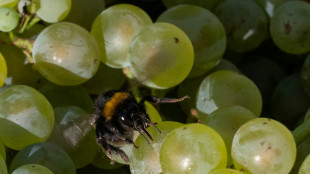 In France's north, winegrowers bet on a warmer future

 Xiaomi Pad 9 Pro Leak Suggests 12.5-Inch Display and Massive Battery

 UK Homeowners Advised to Use Peppermint Tea Bags to Deter Spiders
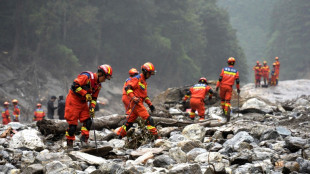
 Passengers stranded overnight by Kenya airport strike

 Stocks drop as Warsh fans US rate hike bets, crude up on US-Iran strikes
 Injuries cloud tennis as US Open gets under way

 John Ternus to lead Apple into the age of AI

 Realme P4s, iQOO Z11 and Nothing Phone 4b compared

 Android photo recovery depends on recently deleted folders

 Eight dead and 23 missing after ferry sinks off Cyprus

 WIRED tests label makers for home organisation

 Beeston pub closes after office fire injures man

 CERN creates quark-gluon plasma with smaller atomic nuclei

 King Haakon joins Norway memorials for Harald

 NASA launches Roman telescope on cosmic mapping mission

 Walmart Agrees to $50 Million Settlement Over Opioid Prescription Allegations
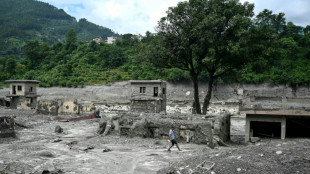
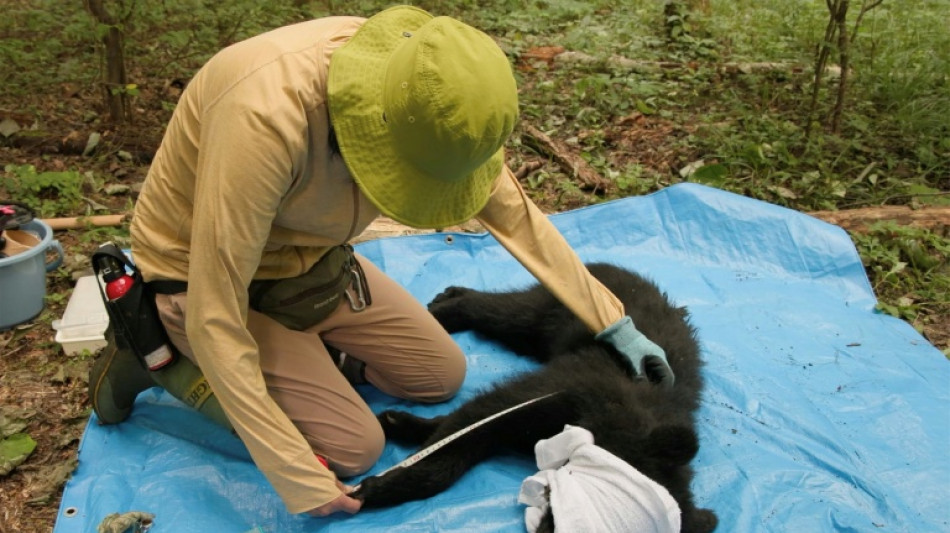
As a sensor sounded, scientist Akiko Takii hurried to a bear trap deep in the forests of Nagano in Japan, where rising nationwide attacks have brought fear and resulted in the culling of thousands of the animals.
"It's a small bear, I think, about a year and a half old," Takii said as she peered at the 15-kilogram (33-pound) Asiatic black bear thrashing in the cage. "It must have just parted from mum."
Its mother wasn't around, and Takii took blood and fur samples after her co-researcher tranquilised the young female. The animal was too small to be tagged with a GPS tracker, so she was released.
The process of trapping, tagging and releasing the animals is part of a pioneering management plan launched in 1995, as authorities realised the bear population was shrinking in the mountainous region in the centre of Japan's Honshu island.
And it is becoming part of a model of coexistence in the region that some experts believe is an alternative to the dominant practice of culling the animals in an effort to prevent attacks.
"By not killing too many of them, more bears survive to live out their expected lifespan. In that sense, a healthy bear population is being formed," Takii said of the process, which is paired with other methods intended to keep bears away from humans and monitor their movement.
Another group in the area used specially trained Karelian Bear Dogs to scare bears away, and more than 3,000 kilometres (2,000 miles) of fencing was installed near farms, towns and along rivers to prevent encounters.
Bears who slip through are tranquilised, tagged and set free far away.
The programme has been credited with prompting both a recovery in bear numbers -- although the animals are hard to count -- and fewer encounters with humans.
- Deadly attacks -
There is little sympathy across much of Japan for healthy bear populations.
Bears have killed six people nationwide since April 1, after a record 13 fatal attacks last fiscal year, according to the environment ministry.
Sightings last year doubled the previous record and bears are increasingly entering the outskirts of towns and cities.
The causes are complex and, including variations in the availability of food like acorns, are potentially linked to climate change.
The emptying out of rural areas due to depopulation and urbanisation is also leaving forests, farmland and buffer zones less managed, said Shuichi Kitoh, a Tokyo University professor emeritus of environmental ethics.
"Due to depopulation, people are no longer involved in nature and the forest like they were before," Kitoh told AFP.
Fruit like persimmons growing on trees that are no longer harvested are an attractive treat for bears, encouraging them to venture farther from their natural habitats and hunting grounds.
"It's not that bears in general are getting (more) ferocious," said Kitoh. "We have to identify problematic individuals."
- Orders to kill -
The central government's response has focused largely on culling bears, expanding the process beyond animals in towns to those that wander into buffer zones on the outskirts.
Even before the cull guidance was expanded in April, large numbers of bears were being killed -- a record 14,000 last fiscal year, or almost 40 a day.
Takii argued Nagano's coexistence programme offered a different path.
While direct comparisons are difficult, some figures appear to show it has helped limit dangerous encounters.
Annual sightings have remained broadly stable at around 1,400 in recent years, while some northern prefectures have recorded sharp increases.
Last year, Nagano recorded 11 bear-related incidents, including one death, compared with 59 encounters and four deaths in Akita further north and five fatalities in Iwate.
Some Nagano residents also feel reassured, including at a school where Takii was teaching children about bears.
"Takii understands wild bear behaviour in this area well, and she assures us they are not aggressive," said principal Hiroshi Aruga.
"I am convinced it's safe to live with them as long as humans don't offend them," Aruga told AFP.
But for now, that view remains something of a minority.
A cap on the number of bears that can be culled annually in Nagano has been doubled to 675, with 227 killed between April and June this year.
Takii's group, the Shinshu Asian Black Bear Research Association, now only does catch-and-release work for scientific study. Its bear dog programme has been halted.
Still Takii's outreach is continuing, and at the school she allowed children to handle bear pelts and skulls, while teaching the importance of keeping food away from the animals and maintaining a distance.
"Bears seem to be some terrifying creature if we don't know them well," said one parent, Mitsuko Sawanishi, after a lesson.
"But after the bear class, I think it's important to keep a good distance from them and live together."
H.Meyer--CPN