German chemical giant BASF urges overhaul of EU carbon scheme / Photo: Kirill KUDRYAVTSEV - AFP

 Lights out in Laos as electricity exports surge

 Steven Strogatz weighs AI mathematics advances and their consequences for researchers

 Anthropic boss calls for AI slowdown, Altman and Musk agree

 French IT giant Capgemini sells subsidiary after row over ICE links

 Quebec Brokerage Qubit Insurance Announces New Data on Coverage Shortfalls as Rebuilding Costs Rise

 Lady Gaga welcomes first child with fiance: US media

 Bhutan business bets on hazelnuts for farming future

 'Widow's Bay' and 'The Pitt' are favorites for Emmys night

 Coastal erosion forces cancellation of California music festival

 Argentina's Dirty War rears its head in Venice film

 UK lawmakers throw out bill to legalise assisted dying

 US inflation steady in August, fueling Fed rate hike expectations

 New York marks 25th anniversary of 9/11 attacks

 Nepal flood reconstruction bill to be $4.78 bn: foreign ministry

 JUMO and Standard Bank launch Social Finance Framework to scale inclusive finance in Africa

 Doomsday tech: could AI really kill us all?

 French comedy show 'Call my agent' makes film comeback

 It's all coming back: Celine Dion fans gear up for Paris return

 Researchers eye AI revolution in natural disaster forecasts

 US braces for inflation report that may push Fed to hike rates

 Musk threatens legal action over documentary

 Latin America fact-check group asks Meta not to replace verification practice

 AI Risks to Enter 60–80% of Liability and Cyber Insurance Underwriting by 2028, ScienceSoft Predicts

 Tribal Launches Campfire, Letting Business and Technical Teams Build on Salesforce Together

 Stocks fall as fresh oil surge fans inflation fears

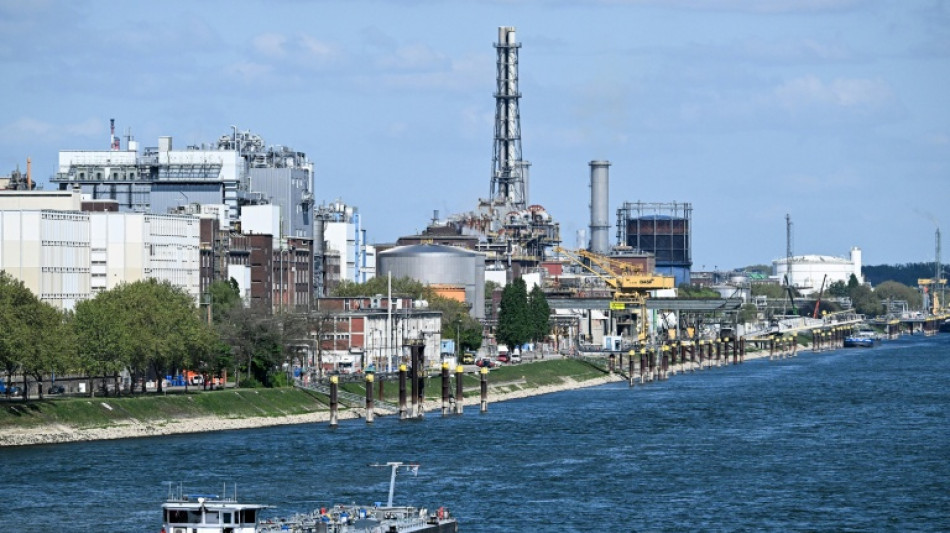
German chemical giant BASF has urged an overhaul of the European Union's flagship carbon market scheme, warning that the initiative's "strict" conditions could damage the region's industries.
In response to growing complaints, the EU will later this year undertake a broad review of its Emissions Trade System (ETS), which was set up in 2005 to help tackle climate change.
The scheme has heavy polluters pay for the greenhouse gases they emit, obliging them to buy allowances that are capped in number, sold in auctions and tradeable.
But criticism is mounting from some member states, including Germany and Italy, as well as major firms that the ETS is an added burden at a time industry is already struggling.
Adding his voice to the concerns, BASF chief executive Markus Kamieth said there are "currently quite a number of weaknesses in the ETS system".
"We are advocating that we take another close look at this, asking how we can design it so that it becomes more flexible," he told journalists late Monday.
While stressing that he supported the "basic idea" of the system, he added: "The framework conditions are so strict that in the end it will cost us many jobs, a lot of value creation, and probably also resilience."
BASF is among the world's biggest chemical companies, and a key supplier to industries ranging from automotive to agriculture.
Calls for the ETS to be eased have grown more urgent since the Iran war sent energy costs soaring.
EU chief Ursula von der Leyen in March promised updates to the system, including "a more realistic trajectory" for cutting emissions and the allocation of "free emission allowances" -- currently set to be phased out by 2034 -- "beyond 2035".
Critics have urged an even greater overhaul.
Kamieth also warned of more supply chain disruptions from the Iran war later this year.
"In addition to inflationary pressure, which will certainly lead to weakening demand, there will also be supply chain problems and disruptions," he said.
"A manufacturer can't build a car if they're missing one component."
C.Smith--CPN