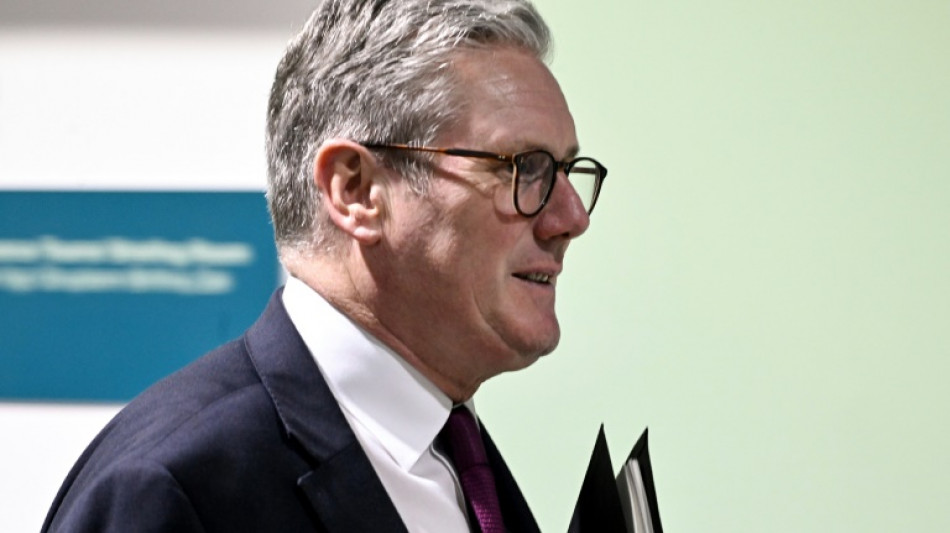
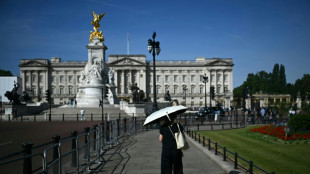
UK to beef up its emissions cuts as it bids to be 'climate leader' / Photo: Alexander NEMENOV - AFP

 Kenya's economy faces climate change risks: World Bank

 Apple tops estimates in CEO Cook's final quarter, but shares fall

 Milei demands expulsion of foreigners expressing 'hate' against Argentina

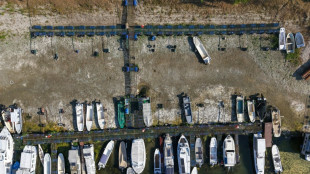
 Italy's Po River valley on drought alert

 Prada profits pinched as growth hard to chase

 Stocks climb on earnings and rates, oil retreats

 US economic growth slows in second quarter, missing expectations

 Russia adds Telegram founder Durov to 'terrorist' blacklist

 Stocks diverge on earnings, as oil steadies

 Eurozone economy grows despite Middle East war
 Singapore group will develop 'most promising' Ebola vaccine
 Shell profit surges as Mideast war fuels oil prices
 Car maker Stellantis says back in profit in second quarter

 Samsung quarterly operating profit up 1,800% on AI boom

 South Korean stocks bounce after rout, oil holds gains on Mideast woes

 South Korea's women web sleuths fight AI deepfake porn

 Anything but programmable: New cost-efficient EC-power-supply-series for the DIN rail by CAMTEC PS

 Meta misses profit expectations, sticks to massive AI spending
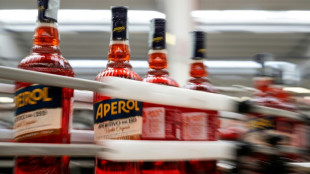 Campari - king of the spritz - hopes to conquer American heartland
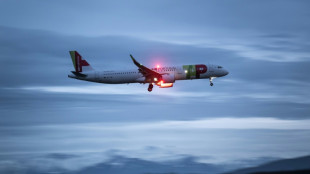 Air France-KLM and Lufthansa bid for Portugal's TAP airline

 Profits soar at Airbus as it delivers more planes

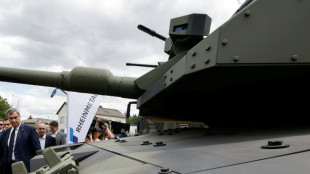 Rheinmetall shares surge after armsmaker reports record profit

 FIFA hit by furious backlash over plans to sell stake in competitions

 MEXC Integrates World-Check to Fortify Institutional Grade Compliance Architecture

 Spain returns wildfire evacuees as France braces for worsening weather

The UK will aim to reduce greenhouse gas emissions by 81 percent on 1990 levels by 2035, Prime Minister Keir Starmer announced Tuesday, as his government ramps up its ambitions to help curb climate change.
The new target is the latest policy change in this area by Starmer's new Labour government, which took power in July.
It follows criticism that the previous Conservative administration under Rishi Sunak was failing to deliver on the so-called green agenda. Ex-prime minister Boris Johnson had committed in 2021 to curb such emissions by 78 percent over the same period compared to 1990.
Starmer unveiled the revised target at the start of the COP29 climate conference in Baku, Azerbaijan, where he is one of the only G20 leaders to show up.
The summit has been overshadowed by the re-election in the United States of longtime climate change sceptic Donald Trump, as well as new warnings that 2024 is on track to break temperature records.
Starmer said Britain was "building on our reputation as a climate leader" and that it has "a critical role to play".
"I've had a series of meetings here at COP this week because this government recognises that the world stands at a critical juncture in the climate crisis," he said.
"There is no national security, there is no economic security, there is no global security without climate security."
- 'Feasible' -
Sunak faced criticism for a series of moves during his 20-month tenure which were seen as backpedalling on the UK's climate commitments.
They included delaying the shift to electric cars and granting a flurry of controversial new oil and gas licences.
Labour won the July general election vowing to be more ambitious, promising among other things to decarbonise the UK's electricity grid by 2030.
It has since ended an effective Tory ban on new onshore wind projects and ended new oil and gas exploration licences in the North Sea.
The new government has also closed the UK's last coal power plant, prompting Starmer to proclaim Tuesday that Britain was the "first G7 economy to phase out coal power".
The Climate Change Committee (CCC), the UK's top advisory body on the issue, warned shortly after Labour took power that it must act "fast" to put the country back on track to meet its climate goals.
Piers Forster, its interim head, welcomed Tuesday's new "Nationally Determined Contribution", or NDC, target for 2035 as "showing climate leadership".
"Our analysis shows that this is a feasible target that will support jobs and investment," he said, adding it was "informed by the latest science, technological developments, and the UK’s national circumstances".
- 'Ahead of the game' -
Appearing mindful of accusations of being overly interventionist, Starmer insisted his ministers were not going to "start telling people how to live their lives" to meet the goal.
"We're not going to start dictating to people what they do," he added.
However, the UK leader reiterated his view that "inaction and delay" on climate change were not an option.
"Make no mistake, the race is on for the clean energy jobs of the future, the economy of tomorrow," he said.
"And I don't want to be in the middle of the pack. I want to get ahead of the game."
Various environmental groups cautiously welcomed the new 2035 target.
Friends of the Earth's head of campaigns, Rosie Downes, called it "a step in the right direction but (that it) must be seen as a floor to the level of ambition not a ceiling".
"Deeper, faster cuts are needed to help avert the climate collision course we are on," she added.
Meanwhile Forster noted a target was "only as meaningful as the delivery against it".
"We need to see further urgent action to speed up deployment of low-carbon solutions such as electric vehicles, heat pumps and tree planting," he added.
X.Cheung--CPN