Delhi temperature hits highest ever in India: weather bureau / Photo: Arun SANKAR - AFP

 Kenya's economy faces climate change risks: World Bank

 Chipmaker Kioxia reports AI-driven 45-fold surge in quarterly net profit

 Far right and far left battle for power in polarised Berlin

 The last trio: S.Africa's zoo elephants await their fate

 Oil industry sees war windfall but girds for political blowback

 Amazon beats expectations with cloud and AI growth

 Blowout Microsoft results lift US stocks as oil retreats

 'Beginning of the end': Relief but no party as French wildfire winds down

 Southern Europe 'becoming more flammable' in hotter climate, experts say

 Mammoth bones found on parched bed of Danube in Bulgaria

 MEXC Lists Grvt (GRVT) with $60,000 Worth of GRVT and 10,000 USDT in Airdrop+ Rewards

 George and Amal Clooney flee French home due to wildfire

 MEXC Ventures Supports Alpha Arena's APAC Debut at Coinfest Bali

 AI data centre supplier Zhongji InnoLight slips on Hong Kong debut

 May, June heatwaves caused 2,877 extra deaths in England: govt

 BMW profit down a third as carmaker plans job cuts

 Seoul extends losses as most Asian markets drop, oil rises again

 Gambling.com Group Is Now Grandstand

 Meet the astronomer digging into the Milky Way's 'fossils'

 AI data centre supplier Zhongji InnoLight falls on Hong Kong debut

 Samsung operating profit up 1,800% in second quarter on AI boom

 Japanese population below 120 million for first time in decades

 US actor Jared Leto denies latest accusations of sexual assault

 Danube drops to 'historic lows' as fresh heatwave hits

 BTS pulls out of Grammys after Asian pop category introduction

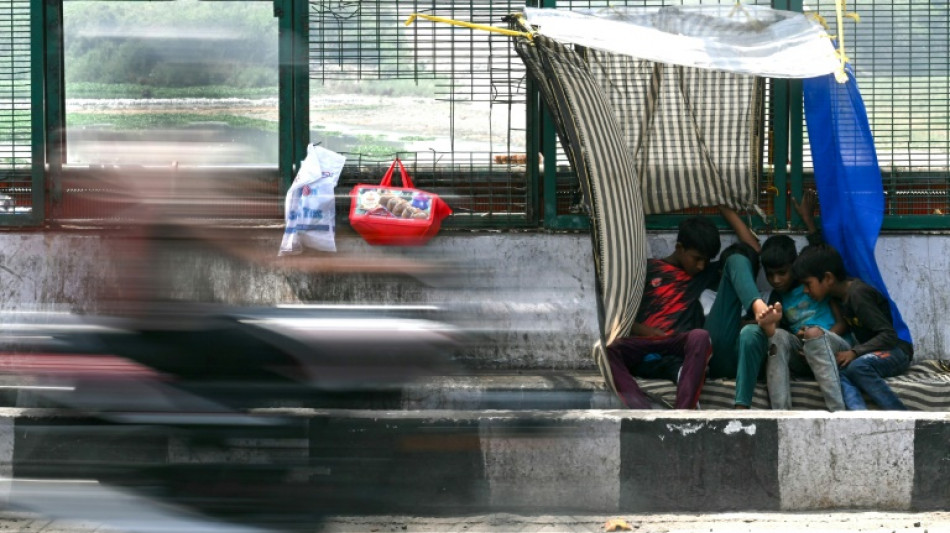
Temperatures in India's capital soared to a national record-high of 52.3 degrees Celsius (126.1 Fahrenheit) on Wednesday, figures from the government's weather bureau showed, as it warned of dangerous heat levels in the sprawling megacity.
The India Meteorological Department (IMD), which reported "severe heat-wave conditions", published the temperature automatically on its website after it was recorded by a station in the Delhi suburb of Mungeshpur on Wednesday afternoon.
However, IMD meteorologist Soma Sen Roy cautioned that officers were "checking out" whether the station had recorded it correctly.
The recording not only broke the landmark 50C measurement for the first time ever in the city, but smashed the previous national record in the desert of Rajasthan by more than one degree Celsius.
The IMD has issued a red alert health notice for Delhi, which has an estimated population of more than 30 million people.
The alert warns there is a "very high likelihood of developing heat illness and heat stroke in all ages", with "extreme care needed for vulnerable people".
As people sought relief from the scorching temperatures, the electricity grid groaned under a record peak power demand of 8,302 megawatts, according to official data.
Delhi city authorities on Wednesday also warned of dire water shortages and ordered teams to clamp down on wastage.
- 'Waiting for the monsoon' -
The temperature was more than 11 degrees higher than expected on the second day of intense record-breaking heat.
The previous national record was 51C, set in 2016 in the region of Phalodi on the edge of Rajasthan's Thar Desert.
India is no stranger to searing summer temperatures but years of scientific research have found climate change is causing heatwaves to become longer, more frequent and more intense.
People on the streets of Delhi said there was little they could to do avoid the heat.
"Everyone wants to stay indoors," said snack-seller Roop Ram, 57, adding he struggled to sell his savoury fritters.
Ram, who lives with his wife and two sons in a cramped house, said they had a small fan but that did little to cool them down.
They were counting down until the rainy season arrives in July.
"I am not sure what else we can do to cope," he said. "We are just waiting for the monsoon."
Rani, 60, who uses only one name, travels by bus for two hours each morning to sell jewellery to tourists at a makeshift street stall.
"It is definitely hotter, but there is nothing we can do about it," she said, gulping water from a bottle she brought from home.
"I try to refill the bottle from anyone around."
- 'Water scarcity' -
New Delhi authorities have also warned of the risk of water shortages as the capital swelters in headache-inducing heat.
Delhi Water Minister Atishi, who only uses one name, said supplies had been halved in many areas to boost flow to "water-deficient areas".
Atishi on Wednesday ordered state authorities to "immediately deploy 200 teams" to crack down on construction sites or commercial properties using domestic pipes to stem a "serious wastage of water".
Delhi relies almost entirely on water from neighbouring Haryana and Uttar Pradesh, both farming states with huge water demands.
The highly polluted Yamuna river, a tributary of the Ganges, runs through Delhi but its flow is hugely reduced during the summer months.
Neighbouring Pakistan has also sweltered through a week-long heatwave, which peaked at 53C (127.4F) on Sunday in Mohenjo Daro in rural Sindh province.
Pakistan's meteorological office said it expected temperatures to subside from Wednesday but warned further heatwaves were coming in June.
It comes as Pakistan hashes out a new deal with the International Monetary Fund that is believed to focus heavily on an energy supply crisis that has left parts of the country facing up to 15 hours of load-shedding a day.
At the same time, India's West Bengal state and the northeastern state of Mizoram are recovering after a cyclone hit India and Bangladesh on Sunday, killing at least 65 people.
Bangladesh's Meteorological Department said the cyclone was "one of longest in the country's history", blaming climate change for the shift.
burs-bb-pjm/sco
A.Mykhailo--CPN