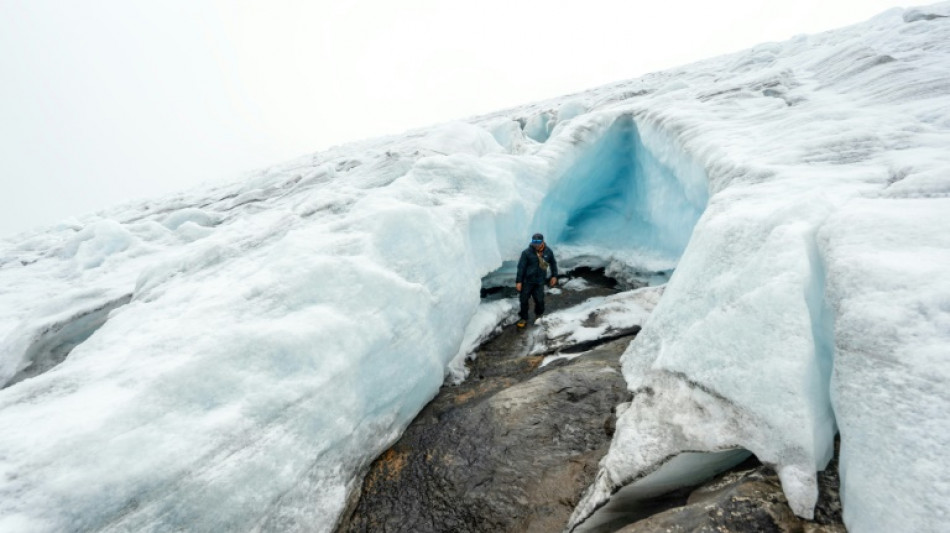
Ritacuba Blanco: death of a Colombian glacier / Photo: Luis ACOSTA - AFP

 Kenya's economy faces climate change risks: World Bank

 Chipmaker Kioxia reports AI-driven 45-fold surge in quarterly net profit

 Far right and far left battle for power in polarised Berlin

 The last trio: S.Africa's zoo elephants await their fate

 Oil industry sees war windfall but girds for political blowback

 Amazon beats expectations with cloud and AI growth

 Blowout Microsoft results lift US stocks as oil retreats

 'Beginning of the end': Relief but no party as French wildfire winds down
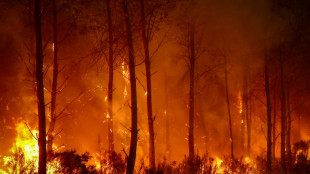 Southern Europe 'becoming more flammable' in hotter climate, experts say

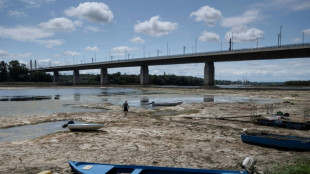 Mammoth bones found on parched bed of Danube in Bulgaria

 MEXC Lists Grvt (GRVT) with $60,000 Worth of GRVT and 10,000 USDT in Airdrop+ Rewards

 George and Amal Clooney flee French home due to wildfire

 MEXC Ventures Supports Alpha Arena's APAC Debut at Coinfest Bali

 AI data centre supplier Zhongji InnoLight slips on Hong Kong debut

 May, June heatwaves caused 2,877 extra deaths in England: govt

 BMW profit down a third as carmaker plans job cuts

 Seoul extends losses as most Asian markets drop, oil rises again

 Gambling.com Group Is Now Grandstand

 Meet the astronomer digging into the Milky Way's 'fossils'

 AI data centre supplier Zhongji InnoLight falls on Hong Kong debut

 Samsung operating profit up 1,800% in second quarter on AI boom

 Japanese population below 120 million for first time in decades

 US actor Jared Leto denies latest accusations of sexual assault

 Danube drops to 'historic lows' as fresh heatwave hits

 BTS pulls out of Grammys after Asian pop category introduction

Just a few months ago, the Colombian mountain peak of Ritacuba Blanco was covered in an unbroken layer of white ice and snow, just as it had been for as long as anyone can remember.
But with the South American country hit by the warming effects of the El Nino weather phenomenon since late last year, large cracks have suddenly appeared in the glacier covering the peak, exposing the rock underneath.
Experts say the glacier is melting at dizzying speeds, with climate change intensifying the effects of El Nino -- which makes an appearance every two to seven years, and lasts about nine to 12 months.
The UN's World Meteorological Organization (WMO) has said that record temperatures since June 2023 were partly caused by El Nino, "but heat-trapping greenhouse gases are unequivocally the main culprit."
"The El Nino phenomenon is perhaps the worst thing that can happen to our snowy peaks or glaciers," said Jorge Luis Ceballos, a glaciologist at the Institute of Hydrology, Meteorology and Environmental Studies (Ideam).
"There is no cloud cover and therefore no snowfall," he pointed out.
Of the 14 tropical glaciers that existed in Colombia in the early 20th century, only six remain -- and are fast receding.
Ritacuba Blanco in the Sierra Nevada del Cocuy National Park, about 250 kilometers (150 miles) northeast of Bogota, is the most at risk.
"At the end of last year, the walls here were about six meters (20 feet) high... today, they are one meter," glacier guide Edwin Prada told AFP on a recent ascent of the peak.
- Last chance for tourists -
According to the most recent recorded data, in 2022, some 12.8 square kilometers (4.9 square miles) of Ritacuba Blanco was covered in ice and snow -- the lowest ever measured by Ideam.
More recently, "the snow melted due to a lack of precipitation and the ice was exposed to solar radiation, which accelerated the thaw," said Ceballos.
Humberto Estepa, a resident of Guican -- a village near Ritacuba Blanco -- said he trembles every time he sets foot on the glacier.
Never has the thaw been "as noticeable as it is now," he told AFP.
"Every time you go up it is worse."
In Asia -- the continent most impacted last year by record global temperatures, according to a recent WMO report -- the icy peaks of the Himalayas are also disappearing, threatening long-term water security.
According to the WMO, ocean warming and rapidly melting glaciers and ice sheets drove the sea level last year to its highest point since satellite records began in 1993.
El Nino caused major fires in Colombia this year, with more than 17,000 hectares of forest going up in flames.
It has also dried up lakes, and the capital Bogota has recently been compelled to take the unprecedented step of rationing municipal water as reservoirs reached record low levels.
Luisa Cepeda, a 39-year-old doctor, took her daughter to see the dying Ritacuba Blanco glacier at sunset.
"I wanted to see it... before it is gone," she said.
"It is sad to see how fractured it is."
H.Meyer--CPN