Ski prices rise but skiers keep coming, for now / Photo: Joe Klamar - AFP

 Kenya's economy faces climate change risks: World Bank

 Commerzbank agrees to talks with UniCredit after two-year standoff
 Fornaro Legal Releases Guidance to Help Businesses Maintain Clear Ownership Records During Growth

 Japan probe made closest-ever asteroid flyby: space agency
 British oil giant BP aims to sell North Sea business
 China factory activity slides as leaders seek spending boost
 Tech rebound fuels record-breaking rally in South Korean stocks
 Cables and cooling bring AI windfall to Indian suppliers
 Anthropic's models gained unauthorized 'real-world' access during testing

 Apple tops estimates in CEO Cook's final quarter, but shares fall

 Milei demands expulsion of foreigners expressing 'hate' against Argentina

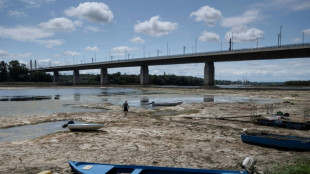
 Italy's Po River valley on drought alert

 Prada profits pinched as growth hard to chase
 Stocks climb on earnings and rates, oil retreats

 US economic growth slows in second quarter, missing expectations

 Russia adds Telegram founder Durov to 'terrorist' blacklist

 Stocks diverge on earnings, as oil steadies

 Eurozone economy grows despite Middle East war
 Singapore group will develop 'most promising' Ebola vaccine
 Shell profit surges as Mideast war fuels oil prices

 Car maker Stellantis says back in profit in second quarter

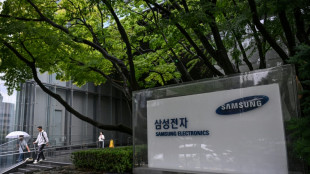 Samsung quarterly operating profit up 1,800% on AI boom

 South Korean stocks bounce after rout, oil holds gains on Mideast woes

 South Korea's women web sleuths fight AI deepfake porn
 Anything but programmable: New cost-efficient EC-power-supply-series for the DIN rail by CAMTEC PS
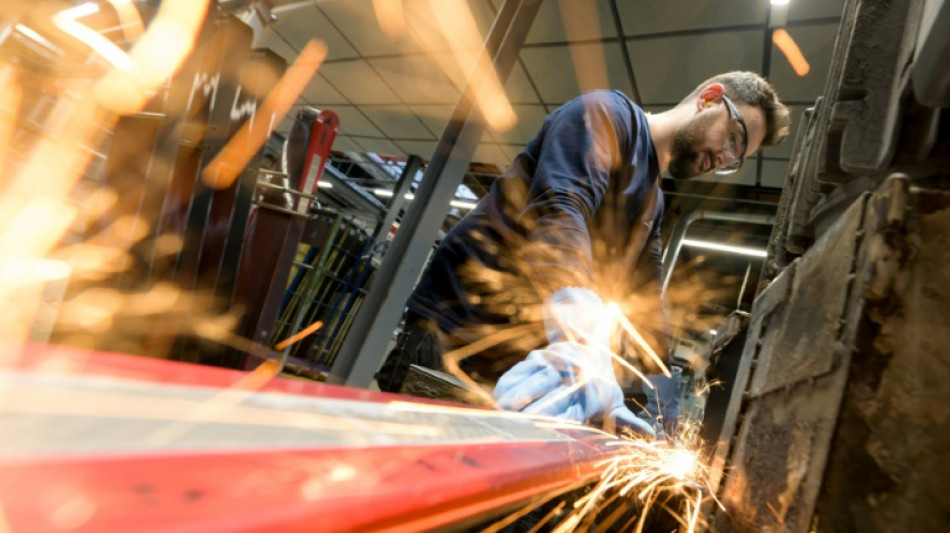
In the heart of the Austrian Alps, workers at the world's leading ski maker churn out pair after pair for international clients who are undeterred by the sport's snowballing costs.
Atomic -- which raised prices by five percent compared to last year -- made record sales of 277 million euros ($303 million) in 2022 and is on course to surpass that figure this year.
Austrian ski lift operators have also hiked prices this year, in line with other resorts throughout the Alps.
But skiers keep coming, for now.
"Now they want to have the best products, they want to have the best skis, the best boots, everything best," Atomic CEO Wolfgang Mayrhofer told AFP in an interview.
Atomic -- a subsidiary of Finnish firm Amer Sports, which was bought by a Chinese consortium -- employs some 1,000 people and produces 550,000 pairs of skis per year.
It produces skis in a factory in the small town of Altenmarkt, near Salzburg, and another one in southern Bulgaria.
A pair of Atomic skis costs anywhere between several hundred to several thousand euros.
The company has profited from an "outdoor sports boom" in recent years, as well as growth in the sale of helmets and other protective gear, Mayrhofer said.
Atomic's clientele includes people with second homes in the Alps who drive around in "huge SUVs", as well as tourists flying in from abroad and renting skis, he said.
- Pricier passes -
It's not just skis that have become more expensive.
On the mountains around Altenmarkt, downhill skiers are paying up to 8.5 percent more for their lift passes this season, said Christoph Eisinger, managing director of Ski Amade, as resorts pass on high energy and other costs.
A record 58,000 season passes have already been sold for the area, up from 54,000 last year.
A season pass costs 770 euros per adult in pre-sales.
On the slopes, skiers told AFP they were feeling the pinch but wanted to keep enjoying their hobby.
"I would rather save elsewhere because skiing is really our sport," German holidaymaker Andrea Mentges, 42, said as she put on her skis outside the cable car station on the 1,906-metre (6,253-foot) Planai mountain.
- 'Last chance tourism' -
Costs are expected to rise further as climate change means greater reliance on expensive man-made snow while low-lying ski areas get squeezed out, said Oliver Fritz, senior economist at the Austrian Institute of Economic Research (WIFO).
Fritz said "last chance tourism" may be fuelling demand.
"Maybe not consciously, but unconsciously, people are already aware that skiing is extremely endangered by climate change and that they should take advantage of the opportunity now," he told AFP.
A study conducted by market researcher Manova, which interviewed some 3,000 respondents online in Austria, Germany and Switzerland in September, found that financial reasons and a lack of snow were the top two reasons people skied less or not at all last year.
Half of the world's ski resorts are in Europe, where they generate about $30 billion per year in revenue and play a key role in sustaining local economies.
At current rates of greenhouse gas emissions, 90 percent of Europe's ski resorts will eventually face critical shortages of natural snow, researchers reported in the journal Nature Climate Change in August.
One of Europe's largest ski areas, Ski Amade's 25 resorts in western Austria can cover 90 percent of slopes with artificial snow as long as temperatures are near freezing levels, helping it survive ever warmer winters due to climate change.
"We are constantly improving our snowmaking systems," Eisinger told AFP, adding he was "very confident to be able to ensure very good ski operations" in the next 20 to 30 years.
P.Kolisnyk--CPN