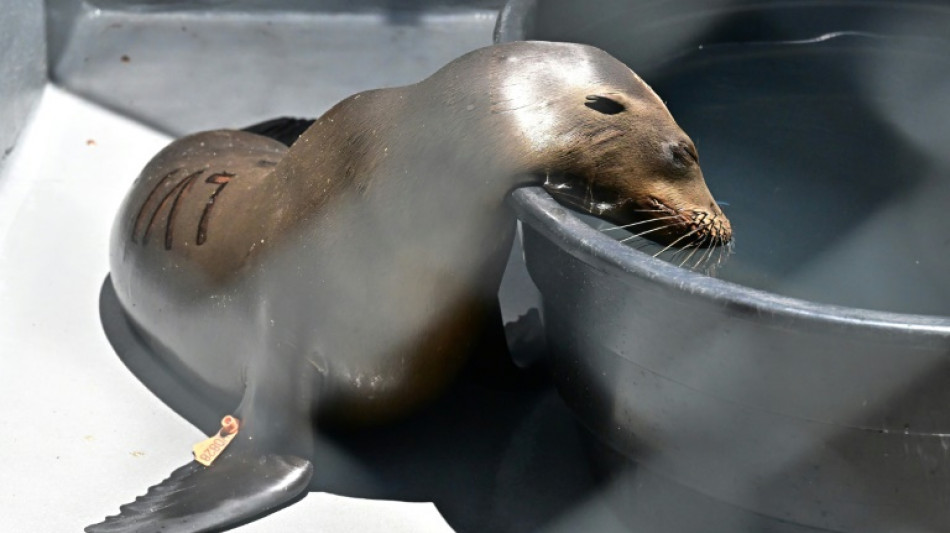
Marine animal poisonings overwhelm California volunteers / Photo: Frederic J. BROWN - AFP

 iPhone 18預購後出現可疑扣款 四間銀行調查未授權交易

 Galaxy Tab S12系列效果圖曝光 Ultra擬配雙鏡頭及瀏海螢幕

 Altman tells Fortune OpenAI will not go public in 2026

 ستاندرد آند بورز تثبت تصنيف السعودية عند A+

 Steven Strogatz weighs AI mathematics advances and their consequences for researchers

 Venezuelans outside Caracas say capital not sharing blackout burden

 Anthropic boss calls for slowing pace of AI development

 BRICS nations urge 'maximum restraint' in Middle East war

 Europe eyes battle over 'pervert' AI glasses

 Children in flood-hit Nepal grapple with loss, cling to hope

 Venice Film Festival: A look back on the highlights

 DR Congo school fire stampede death toll rises to 26: UNICEF

 Dance Fitness Tempe Announces Expansion of Accessible Digital Movement Programs

 Europe saw record summer air traffic despite Mideast war: Eurocontrol

 Relatives of 9/11 victims hit out at Saudi Arabia -- and US leaders

 Relative of 9/11 victim unleashes searing attack on Saudi Arabia

 Czech antitrust office lets Turkey's Pegasus Airlines buy Smartwings

 Investors on edge as energy costs, surging bond yields roil markets

 UK lawmakers to vote again on failed assisted dying bill

 Yemen's Houthis complete takeover of Bab al-Mandab area: govt official to AFP

 Fast-pace dance takes I.Coast's working-class streets by storm

 Fans celebrate Celine Dion's Paris return with giant karaoke

 Appreciation, anger await as Trump heads to Irish golf resort

 Putin arrives in India for BRICS summit coloured by wars

 Carney says in touch with Trump, Canada ready for 'fair' trade deal

Denise Christ regularly comes across injured wildlife in her work rescuing beached or stranded marine mammals along the California coast.
But she's been shocked by the hundreds of sea lions and dolphins found on the shore in recent weeks, dead or dying from neurotoxin poisoning.
"Heartbreaking, to say the least," said Christ, the Ventura County stranding coordinator for the Channel Islands Marine and Wildlife Institute (CIMWI).
The animals were sickened by domoic acid, a neurotoxin produced by algae that are a food source for fish, which are then eaten by sea lions and dolphins.
Algal blooms are not unusual this time of year, but this summer's crisis follows another one less than a year ago, alarming and overwhelming the CIMWI team based about 120 miles (190 kilometers) north of Los Angeles.
"We had a pretty intense bloom last summer but this year is way worse than we've ever seen in the 35 years I've been practicing marine mammal medicine," said Sam Dover, the executive director and cofounder of CIMWI.
Added Ken Hughes, Christ's colleague in neighboring Santa Barbara County: "We had over 300 sea lions up on the beach. And over 150 dolphins that also were affected by it. It was just so sad."
- 'New reality' of climate change -
There is no official explanation for the outbreak, but experts have several theories.
Algal blooms are fed by agricultural runoff, and this year California experienced heavier than normal rainfall.
"So there's a lot more runoff from the whole state, not just from the local regions," Dover said.
Others from the institute said warming oceans due to climate change were spurring algae growth.
"I believe it is the new reality and things are changing. The ocean's changing," Christ said.
When sea lions consume the toxin, they suffer neurological effects that include disorientation, foaming at the mouth, head bobbing and seizures.
"They basically don't know they're a sea lion. They don't know where they're at or what they're doing," Hughes explained.
The animals will head for the shore, where they wander erratically, attracting the attention of beachgoers.
Dover said last year's domoic acid outbreak took place in mid-August, but this year his group started getting calls reporting stricken animals in late May.
"We started getting one animal a day. So we knew it was coming," he said.
"And then on June 8, literally the floodgates opened and animals just started showing up everywhere," Dover said.
"This is definitely the worst we've ever seen."
CIMWI rescued about 300 animals last year -- this year they were getting more than 300 calls each day.
- More than 100 dead dolphins-
Another unusual feature of this year's outbreak is dolphins getting sick and dying from the toxin, with Dover counting more than 110 of the mammals dead in recent weeks.
There is no cure for domoic acid poisoning, so the only way to treat the animals is with fluids, food, anti-seizure medicine and patience, the experts said.
Younger animals have a better chance of survival because they eat less fish than adults, and therefore consume less of the toxin.
"Those are the ones we're putting most of our efforts towards now and we're having some pretty good success in flushing out the toxin from their system," Dover said, as volunteers hose down spacious enclosures where the rescued sea lions eat fish, float in pools and nap.
Treating, housing and feeding the sick animals demands a lot of resources, and CIMWI stays afloat through a combination of government grants, donations and volunteer labor.
"Essentially, every day is a battle with the animals and with our finances," Dover said.
H.Cho--CPN