

Coin Press - War tests the Saudi bargain

NYSE - LSE
RBGPF -0.4% 75 $
VOD -1.15% 14.02 $
RYCEF -7.13% 16.4 $
GSK -0.13% 47.76 $
NGG 0.13% 79.82 $
BP -1.08% 42.75 $
CMSC -1.35% 18.9 $
BTI -1.11% 56.84 $
RELX -0.75% 38.54 $
RIO -2.71% 72.73 $
AZN -0.61% 174.35 $
BCC -2.17% 63.01 $
BCE 2.42% 21.86 $
JRI -1.71% 10.53 $
CMSD -0.54% 18.65 $

War tests the Saudi bargain


Eleven days separated the damage to Saudi Aramco’s offices in Riyadh from the attack that shattered windows at the headquarters of the Public Investment Fund. Aramco supplies much of the money that runs Saudi Arabia. The fund, chaired by Crown Prince Mohammed bin Salman, invests in the industries where he expects the next generation to work. In November, the war with Iran reached both buildings.


On November 19, a Houthi attack damaged several floors of the fund’s tower in the King Abdullah Financial District. No injuries were reported. On November 20, residents hundreds of miles away in southern Saudi Arabia received fresh warnings as air defenses intercepted a missile and drones. The Houthis have fought Saudi Arabia since 2015. Their campaign against the kingdom resumed in July after the relative calm that followed a 2022 truce in Yemen. By November, families in Riyadh had lived with the disruption for weeks. Schools had moved lessons online, and deadly attacks in October had left the capital’s international airport closed to most flights.


The terms of the crown prince’s bargain with Saudis were implicit. The royal family would keep its hold on political power. In return, citizens could expect security and a greater say over how they earned a living and spent their free time. Women can now drive to work. Cinemas have reopened. Young Saudis can build careers in film or concert production at home. Those gains set a standard by which to judge the government. So does a morning when a parent has to miss work because a classroom is closed.


The princes and the preachers
For decades, power within the House of Saud was more widely distributed than the title of absolute monarch might suggest. Senior princes ran ministries and security forces as their own spheres of influence. Clerics shaped schooling and public conduct. Merchant families benefited from state contracts, while oil income financed government jobs and subsidized services. A king could draw on these constituencies for support. He also had to reckon with their interests.


Few places capture the change under Mohammed bin Salman as neatly as Riyadh’s Ritz-Carlton. In October 2017, international financiers gathered there as the crown prince unveiled plans for NEOM, his new development in the northwest. Days later the hotel held princes and businessmen detained in an anti-corruption campaign he chaired. Prince Miteb bin Abdullah, who had headed the National Guard, lost his post and was among those detained. Investors and Saudi grandees had each been shown, in the same building, where decisions would now be made.


What a barrel of oil earns
When the United States and Israel went to war with Iran in late February, Saudi Arabia had some insurance against disruption in the Strait of Hormuz. Its East-West Pipeline could carry crude across the kingdom for export from Yanbu on the Red Sea. An attack temporarily shut the line in September. Shipments recovered, but winning back buyers came at a price. In October, India took about 790,000 barrels of Saudi oil a day, an eight-month high, as Saudi discounts helped offset the cost of freight.


That discount matters in Riyadh. A rise in the world oil price offers only partial protection if fewer barrels reach customers or if refiners demand better terms to take them. The budget was already in deficit before the war. By the end of September, the shortfall for the first nine months had reached 244.3 billion riyals, against an original full-year forecast of 165 billion. The government’s revised forecast puts the annual gap at 245 billion riyals. It can borrow to keep projects moving. Interest payments will claim part of the revenue available for the next round of hiring and construction.


There is also evidence that the economic reforms have given the kingdom some protection. Preliminary estimates show that non-oil activity grew 1.9 percent in the third quarter from a year earlier, even as the economy overall shrank 3.8 percent. And by 2025, 35 percent of working-age Saudi women were employed or looking for work, already above the original Vision 2030 target of 30 percent. For households that now depend on a second wage, the fortunes of private employers have become a matter of immediate concern.


A year lost in Riyadh
The Future Investment Initiative, the gathering at which the crown prince introduced NEOM, was due to hold its tenth edition in Riyadh in October 2026. Its new dates are October 25 to 28, 2027. A year is a manageable delay for an investment fund with a long horizon. For a hotel selling rooms by the night, or a caterer hiring staff for four days, the business belongs to the season in which it was booked. Much of it cannot be carried forward.


The distinction goes to the heart of Vision 2030. The state can pay a contractor to finish a hotel during a war. It has far less control over when travelers will fill the rooms. As long as flights are unreliable, the government faces pressure to sustain businesses it had counted on to create jobs of their own. The more successful it has been in steering young Saudis into tourism and services, the more families have a stake in reopening the airport.


The limits of loyalty
The war has given an older institution a more prominent public role. At a large Riyadh mosque in November, the Friday sermon was devoted to the conflict with the Houthis, and the imam prayed for Saudi soldiers on the southern border. Only a decade ago the authorities curtailed the religious police’s power to arrest people. Today the government still guides the themes of Friday sermons. Calling on clerics to rally the country gives them an audience at a moment of national anxiety. There is little evidence that it has restored their former political influence.


Nor is there a reliable public measure of how far the attacks have altered Saudi loyalties. The kingdom holds no national elections, and open criticism carries real risks. Senior appointments and control of the security services remain concentrated at court. What has changed is how personally he owns the outcome. He claimed the opening of Saudi Arabia as the achievement of his rule. The longer the airport and the classrooms struggle to stay open, the harder it becomes to persuade Saudis that he can protect what he helped them gain.



Featured


Long live Ukraine - Хай живе Україна - Да здравствует Украина

Es lebe die Ukraine - Да здравствует Украина - Long live Ukraine - Хай живе Україна - Nech žije Ukrajina - Länge leve Ukraina - תחי אוקראינה - Lang leve Oekraïne - Да живее Украйна - Elagu Ukraina - Kauan eläköön Ukraina - Vive l'Ukraine - Ζήτω η Ουκρανία - 乌克兰万岁 - Viva Ucrania - Ať žije Ukrajina - Çok yaşa Ukrayna - Viva a Ucrânia - Trăiască Ucraina - ウクライナ万歳 - Tegyvuoja Ukraina - Lai dzīvo Ukraina - Viva l'Ucraina - Hidup Ukraina - تحيا أوكرانيا - Vivat Ucraina - ขอให้ยูเครนจงเจริญ - Ucraina muôn năm - ژوندی دی وی اوکراین - Yashasin Ukraina - Озак яшә Украина - Živjela Ukrajina - 우크라이나 만세 - Mabuhay ang Ukraine - Lenge leve Ukraina - Nyob ntev Ukraine - Да живее Украина - გაუმარჯოს უკრაინას - Hidup Ukraine - Vivu Ukrainio - Længe leve Ukraine - Živjela Ukrajina - Жыве Украіна - Yaşasın Ukrayna - Lengi lifi Úkraína - Lank lewe die Oekraïne

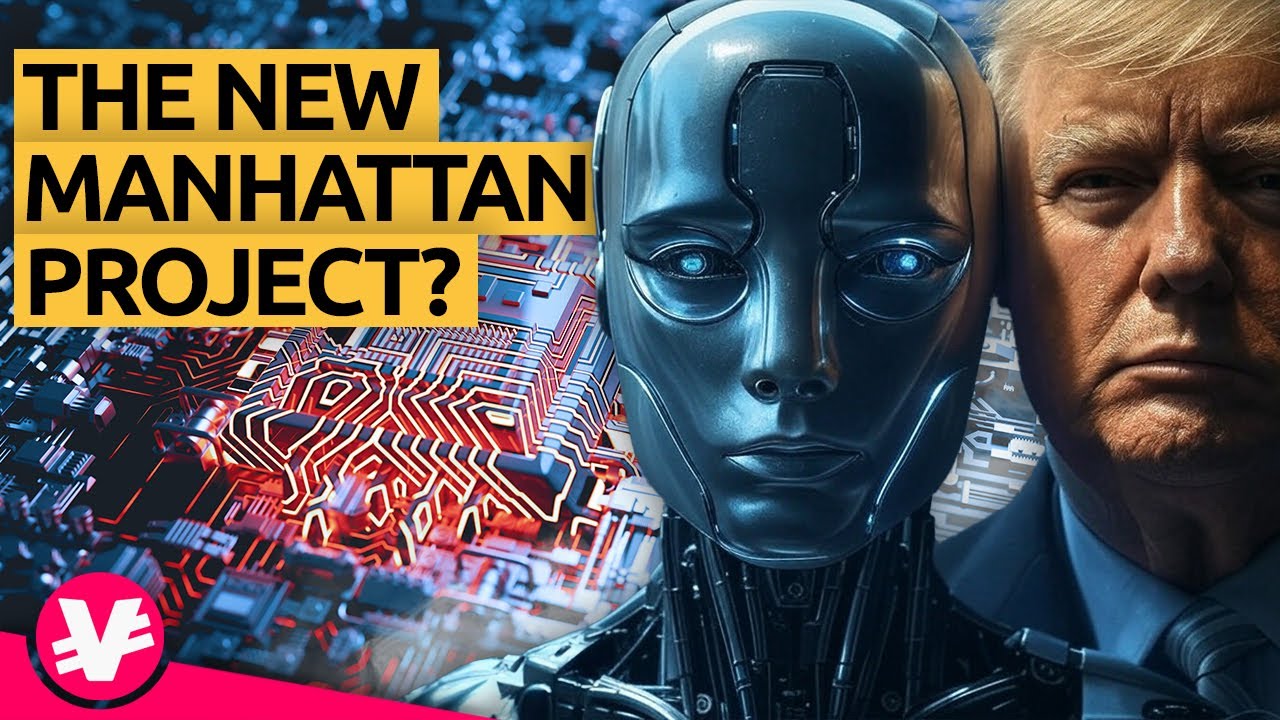
Stargate project, Trump and the AI war...

In a dramatic return to the global political stage, former President Donald J. Trump, as the current 47th President of the United States of America, has unveiled his latest initiative, the so-called ‘Stargate Project,’ in a bid to cement the United States’ dominance in artificial intelligence and outpace China’s meteoric rise in the field. The newly announced programme, cloaked in patriotic rhetoric and ambitious targets, is already stirring intense debate over the future of technological competition between the world’s two largest economies.According to preliminary statements from Trump’s team, the Stargate Project will consolidate the efforts of leading American tech conglomerates, defence contractors, and research universities under a centralised framework. The former president, who has long championed American exceptionalism, claims this approach will provide the United States with a decisive advantage, enabling rapid breakthroughs in cutting-edge AI applications ranging from military strategy to commercial innovation.“America must remain the global leader in technology—no ifs, no buts,” Trump declared at a recent press conference. “China has been trying to surpass us in AI, but with this new project, we will make sure the future remains ours.”Details regarding funding and governance remain scarce, but early indications suggest the initiative will rely heavily on public-private partnerships, tax incentives for research and development, and collaboration with high-profile venture capital firms. Skeptics, however, warn that the endeavour could fan the flames of an increasingly militarised AI race, raising ethical concerns about surveillance, automation of warfare, and data privacy. Critics also question whether the initiative can deliver on its lofty promises, especially in the face of existing economic and geopolitical pressures.Yet for its supporters, the Stargate Project serves as a rallying cry for renewed American leadership and an antidote to worries over China’s technological ascendancy. Proponents argue that accelerating AI research is paramount if the United States wishes to preserve not just military supremacy, but also the economic and cultural influence that has typified its global role for decades.Whether this bold project will succeed—or if it will devolve into a symbolic gesture—remains to be seen. What is certain, however, is that the Stargate Project has already reignited debate about how best to safeguard America’s strategic future and maintain the balance of power in the fast-evolving arena of artificial intelligence.

China’s local debt comes home

In Zunyi, a city in southwestern China, the banks agreed to wait a decade for the first yuan of principal. At the end of 2022, the city-owned Zunyi Road and Bridge Construction Group reached an agreement with its lenders on 15.6 billion yuan in loans. It would pay interest for ten years and repay the principal over the following ten. On that schedule, the banks will still be collecting on loans from China’s building boom in the early 2040s.Nearly four years later, the land market that once sustained local borrowing is still shrinking. Across China, local governments raised 1.85 trillion yuan from granting rights to use state-owned land in the first ten months of 2026, down 25.8 percent from a year earlier. For a household with a mortgage, the same property slump can mean a home worth less than its owners paid for it. For the city where they live, it means fewer developers willing to bid for the next plot. Both still owe money borrowed in better years.Land acquired this outsized role partly because of a tax reform in 1994. Beijing took a larger share of revenue while provinces, cities and counties remained responsible for much of the cost of schools, health care and infrastructure. Central transfers covered part of the gap. A fast-growing city had another option. It could grant a developer long-term rights to a site and collect much of the value of those rights up front.Local officials could also set up a company to borrow from banks or sell bonds. These companies, known as local government financing vehicles, helped pay for roads, bridges and industrial parks. A new road could attract factories and make the surrounding plots more valuable. The city could then collect more at its next land auction. Lenders had reason to expect municipal backing even when the company alone had signed the loan agreement.The weak point was the distance between what a project was worth to a city and what it earned for its owner. A free road could cut the cost of getting goods to market without generating a yuan in tolls. As long as developers bid more for nearby land, the city had a way to cover the difference. Once the housing market turned in 2021, some borrowers needed another loan to service the last one. That dependence on fresh money is what invites the comparison with a pyramid scheme. It also explains how a city can own valuable infrastructure and still struggle to pay a bill.Beijing’s response has changed who signs for the debt:In November 2024, lawmakers approved an extra six trillion yuan in local borrowing authority over three years to refinance eligible hidden debt. A further 800 billion yuan a year was earmarked from existing special bond quotas for five years, bringing the package to ten trillion yuan. By November 11, 2026, local governments had issued about 99 percent of the six-trillion-yuan tranche, shifting obligations once carried off the books onto public balance sheets. A province can borrow more cheaply and for longer than a troubled municipal company. The interest saving is real. The principal still falls due.Beijing has also tightened scrutiny of new projects in heavily indebted regions. That curbs the ability of one city to borrow for an industrial park simply because its neighbor is building one. It leaves local officials with less discretion over worthwhile projects as well. In October 2026, Beijing allocated 300 billion yuan of unused borrowing capacity to help counties and urban districts meet day-to-day expenses. Keeping existing services running now competes for borrowing capacity once associated with building new ones.Families can feel the squeeze even while the city pays its bondholders on time:Local financing companies have fallen behind on bills to suppliers. A contractor waiting for a municipal client to settle an invoice still has to find the cash for wages and materials. In effect, the business is lending the city money every week the bill goes unpaid.For homeowners, the loss can be more lasting. A fall in an apartment’s resale value reduces the equity available to owners who need to move, while the bank still has a claim on the outstanding mortgage. Cheaper homes help prospective buyers, but a worker whose next paycheck depends on construction has a reason to postpone buying. Investment in residential buildings fell 21.4 percent in the first ten months of 2026. Families also have medical bills and retirement to plan for. As the cushion provided by housing equity shrinks, keeping more cash in the bank makes sense. Beijing is counting on those same households to spend more.In Shangqiu, in Henan province, residents have already seen how narrowly a public service can survive a cash shortage. In February 2023, the city’s bus operator announced that it would suspend services, citing pandemic losses and a subsidy shortfall. It said it could no longer pay staff or charge its electric buses. The city intervened within hours and the buses kept running. The banks in Zunyi could wait a decade for a principal payment. Shangqiu’s passengers needed a bus the next morning.