
Coin Press - No red lines: Israel vs Iran


No red lines: Israel vs Iran


On 28 February 2026 a joint United States–Israeli operation launched hundreds of airstrikes across Iran. Fighter jets and drones pounded Tehran, Qom, Isfahan and other provincial capitals in a campaign designed to demolish Iran’s air defences, ballistic‑missile infrastructure and nuclear facilities. Among the dead were Iran’s supreme leader Ayatollah Ali Khamenei, the head of the Islamic Revolutionary Guard Corps (IRGC), and several senior commanders. The unprecedented strike also devastated civilian targets: a girls’ primary school near an IRGC complex was hit, killing scores of children, and human rights groups estimate that thousands of civilians died.

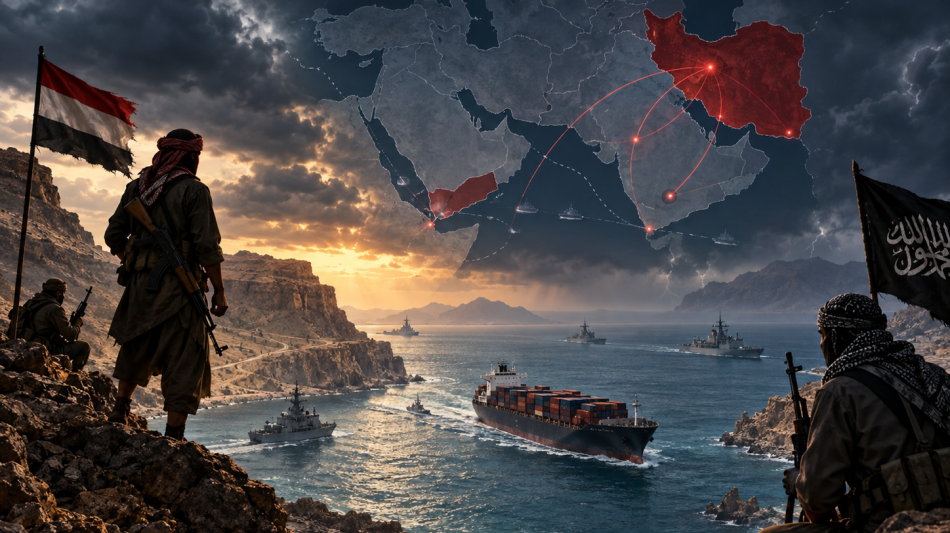
The strikes were as much psychological as military. By targeting the leadership’s command structures, the United States and Israel sought to demonstrate that no Iranian official was beyond reach. The Strait of Hormuz was closed after Iran retaliated with missiles against Gulf shipping, sending oil prices soaring and prompting panicked stockpiling worldwide. In the days that followed, scattered celebrations by anti‑government Iranians contrasted sharply with scenes of mourning and calls for revenge from regime loyalists.

Resilience of the Regime
The decapitation strategy did not produce the immediate collapse some in Washington and Jerusalem predicted. Iran’s political system is deliberately diffuse: power flows through parallel institutions, including the Artesh (regular armed forces), the IRGC and the Basij militias. A temporary council made up of the Iranian president, the head of the judiciary and a senior jurist from the Guardian Council assumed the duties of the supreme leader. Security forces continued to enforce order, arresting dissidents and suppressing protests.

Military analysts noted that Iran’s network of ballistic‑missile silos, drone bases and naval installations remained largely intact. The Red Crescent recorded hundreds of strikes across more than two dozen provinces, yet Iran still managed to launch retaliatory barrages against Israel. Western intelligence believes that Tehran preserved much of its missile arsenal and relocated key components underground.

Economic Targets and Regional Fallout
As the war escalated, Israeli jets struck the Asaluyeh natural‑gas hub and facilities at the South Pars field. Those attacks signalled a shift towards economic warfare. Asaluyeh is the heart of Iran’s gas industry, processing gas from the massive South Pars/North Dome field shared with Qatar. Damage there disrupted liquefied natural gas exports, rattled global energy markets and drew condemnation from Gulf states. Qatar responded by expelling Iran’s military attaché after Iranian forces retaliated near the Ras Laffan hub. Tehran warned that any attacks on its energy infrastructure would be met with strikes on regional facilities, raising fears of a broader conflict engulfing the Gulf.

International Reaction and Legal Concerns
The scale of civilian casualties drew sharp criticism from international organisations. The United Nations called for an immediate ceasefire, while Russia and China denounced the strikes as reckless and destabilising. Reports that cluster munitions were used on populated areas sparked debate about violations of international humanitarian law. Humanitarian agencies warned of a looming crisis as hospitals overflowed with casualties and millions faced disrupted water and electricity supplies.

Meanwhile, the United States increased its military presence in the Gulf and Eastern Mediterranean, arguing that deterrence required persistent force. European leaders struggled to keep critical shipping lanes open as insurance rates spiked and crews refused to navigate the Strait of Hormuz. Energy importers began drawing down strategic reserves, fearing a protracted closure.

Debate Over Decapitation
Security experts are divided over the efficacy of targeting leaders. Critics argue that the Islamic Republic is not a one‑man show. Removing a supreme leader eliminates a symbol but does little to dismantle the structures that sustain the regime. The Iranian constitution provides for succession mechanisms; killing moderates may simply elevate more radical figures. Experiences with non‑state actors such as Hamas and Hezbollah show that leadership decapitation often hardens movements rather than dissolving them. Moreover, Western analysts warn that Iran’s dual military structure and deeply entrenched institutions make a decisive defeat unlikely without a large‑scale occupation.

Proponents of the strikes counter that the removal of charismatic leaders weakens coherence and sows confusion. They point to public anger over economic hardship, corruption and repression as evidence that Iranian society is nearing a tipping point. In their view, prolonged pressure could erode the regime’s legitimacy and encourage defections.

Public Sentiment and Uncertain Future
Among foreign observers and diasporic communities, the strikes generated a wave of commentary. Some expressed astonishment at the reach of Israeli intelligence, joking that Tehran must now confront a wave of “vacancies” in its hierarchy. Others questioned how much further hard‑line policies could go when the government already controlled the judiciary, the media and the armed forces. There is speculation that younger cadres of ideologues are waiting to step into the power vacuum and that the system has trained successors precisely for such crises. Skeptics, however, note that any replacement could be removed just as swiftly and that the underlying grievances – economic mismanagement, political repression and regional isolation – will continue to feed unrest.

There is also unease about the long‑term consequences. Some fear that decapitation will radicalise the state further, pushing it towards more indiscriminate violence at home and abroad. Others warn that a leaderless Iran could fracture, plunging the region into chaos. Conversely, optimists hope that the loss of revered figures will open space for reformist voices, though hard‑liners currently dominate. Even those who welcome the blows against a repressive regime acknowledge that prolonged conflict risks humanitarian catastrophe and escalates the chances of miscalculation.

Conclusion and Future?
The strikes on Iran’s leadership have reshaped the Middle East. By demonstrating that no bunker or compound is impregnable, Israel and the United States have shattered a key pillar of the Islamic Republic’s authority. Yet the regime’s structural resilience and the complex web of regional alliances mean that an end to the conflict is far from certain. Iran’s capacity to absorb punishment, reorganise and retaliate suggests that the war will drag on, with devastating consequences for civilians and the global economy. As oil tankers queue outside the Strait of Hormuz and hospitals in Tehran overflow, the world watches anxiously to see whether the decapitation strategy will hasten change or entrench the cycle of violence.


Featured


Long live Ukraine - Хай живе Україна - Да здравствует Украина

Es lebe die Ukraine - Да здравствует Украина - Long live Ukraine - Хай живе Україна - Nech žije Ukrajina - Länge leve Ukraina - תחי אוקראינה - Lang leve Oekraïne - Да живее Украйна - Elagu Ukraina - Kauan eläköön Ukraina - Vive l'Ukraine - Ζήτω η Ουκρανία - 乌克兰万岁 - Viva Ucrania - Ať žije Ukrajina - Çok yaşa Ukrayna - Viva a Ucrânia - Trăiască Ucraina - ウクライナ万歳 - Tegyvuoja Ukraina - Lai dzīvo Ukraina - Viva l'Ucraina - Hidup Ukraina - تحيا أوكرانيا - Vivat Ucraina - ขอให้ยูเครนจงเจริญ - Ucraina muôn năm - ژوندی دی وی اوکراین - Yashasin Ukraina - Озак яшә Украина - Živjela Ukrajina - 우크라이나 만세 - Mabuhay ang Ukraine - Lenge leve Ukraina - Nyob ntev Ukraine - Да живее Украина - გაუმარჯოს უკრაინას - Hidup Ukraine - Vivu Ukrainio - Længe leve Ukraine - Živjela Ukrajina - Жыве Украіна - Yaşasın Ukrayna - Lengi lifi Úkraína - Lank lewe die Oekraïne

Stargate project, Trump and the AI war...

In a dramatic return to the global political stage, former President Donald J. Trump, as the current 47th President of the United States of America, has unveiled his latest initiative, the so-called ‘Stargate Project,’ in a bid to cement the United States’ dominance in artificial intelligence and outpace China’s meteoric rise in the field. The newly announced programme, cloaked in patriotic rhetoric and ambitious targets, is already stirring intense debate over the future of technological competition between the world’s two largest economies.According to preliminary statements from Trump’s team, the Stargate Project will consolidate the efforts of leading American tech conglomerates, defence contractors, and research universities under a centralised framework. The former president, who has long championed American exceptionalism, claims this approach will provide the United States with a decisive advantage, enabling rapid breakthroughs in cutting-edge AI applications ranging from military strategy to commercial innovation.“America must remain the global leader in technology—no ifs, no buts,” Trump declared at a recent press conference. “China has been trying to surpass us in AI, but with this new project, we will make sure the future remains ours.”Details regarding funding and governance remain scarce, but early indications suggest the initiative will rely heavily on public-private partnerships, tax incentives for research and development, and collaboration with high-profile venture capital firms. Skeptics, however, warn that the endeavour could fan the flames of an increasingly militarised AI race, raising ethical concerns about surveillance, automation of warfare, and data privacy. Critics also question whether the initiative can deliver on its lofty promises, especially in the face of existing economic and geopolitical pressures.Yet for its supporters, the Stargate Project serves as a rallying cry for renewed American leadership and an antidote to worries over China’s technological ascendancy. Proponents argue that accelerating AI research is paramount if the United States wishes to preserve not just military supremacy, but also the economic and cultural influence that has typified its global role for decades.Whether this bold project will succeed—or if it will devolve into a symbolic gesture—remains to be seen. What is certain, however, is that the Stargate Project has already reignited debate about how best to safeguard America’s strategic future and maintain the balance of power in the fast-evolving arena of artificial intelligence.

Ukraine sends ground robots

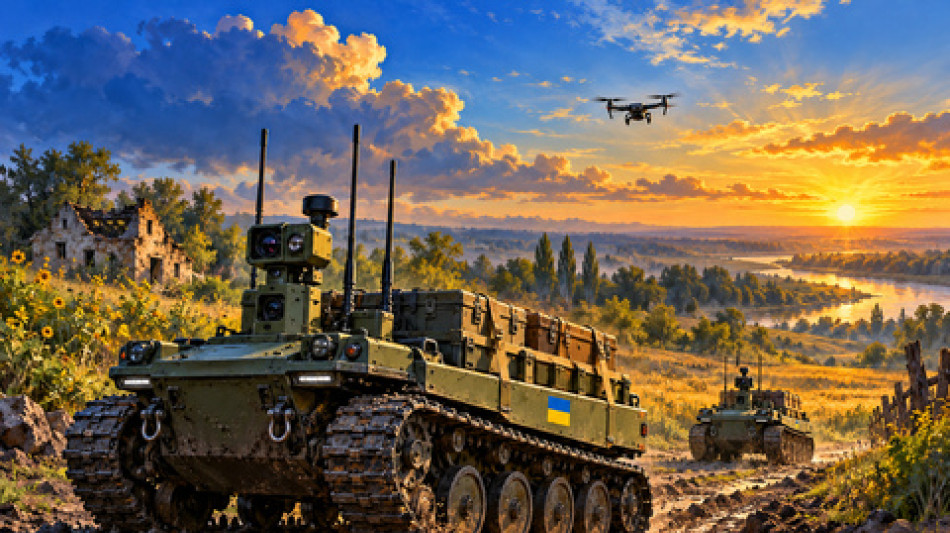
Ukraine is putting ground robots to work on a scale that is beginning to change how its army supplies positions, evacuates casualties and conducts some of its most dangerous combat missions. The significance lies in the gradual transfer of battlefield exposure from people to machines. For a force under sustained pressure to preserve experienced soldiers, that change could matter well beyond the individual missions captured on video.The expansion is measurable. By early September 2026, Ukraine’s DELTA battlefield management system had recorded approximately 112,000 logistics and evacuation missions by ground robotic systems since the start of the year. The monthly total rose from 7,511 in January to 25,143 in August, an increase of roughly 3.3 times. These figures describe missions, not the number of robots deployed, and they should not be read as a tally of successful attacks or lives saved. They nevertheless show how far the technology has moved into routine military activity.Supply work explains much of its value. Ammunition, food and water still have to reach troops in positions exposed to surveillance and attack. Wounded soldiers still have to be brought out. A remotely operated vehicle can undertake part of that movement while its operator remains elsewhere. The load may be ordinary; the route is what makes the task dangerous. Repeated across many positions, reducing the number of journeys made by people can alter the daily burden on an infantry force.The strongest case for a robot is often the journey it allows a soldier to avoid. That changes the economics of military equipment. The purchase price matters, but so do the consequences of losing it. A destroyed machine consumes production capacity and money. A lost soldier also removes training, experience and relationships that cannot be replaced on a factory schedule. This is why an apparently modest cargo platform can have greater practical importance than a more spectacular experimental weapon.Combat applications are developing alongside that logistical role. Ukraine’s Third Army Corps includes NC13, a unit specialising in ground robotic operations. In September, corps commander Andrii Biletskyi described an ambition to replace around a third of the corps’ frontline personnel with robots by the end of the year. That remains an objective for a particular formation, rather than a demonstrated reduction across the Ukrainian army. It signals how seriously some commanders now regard the technology.There is a longer history behind the sudden attention. In December 2024, the Khartiia Brigade used a coordinated force of aerial drones and ground robots in an assault near Hlyboke in the Kharkiv region. More than 50 unmanned systems took part. The operation demonstrated that different remotely operated platforms could be combined for surveillance, fire support and attack. It also exposed the limits: ground conditions disabled some machines, and soldiers were still needed to secure and hold the territory afterwards.Those distinctions remain essential. An unmanned vehicle has no crew aboard; that does not make it an autonomous decision-maker. Remote operation, assistance with navigation and independent target selection are different capabilities. Much of the operational change visible in Ukraine concerns the first of these. Human operators, commanders and technicians remain central to making the equipment useful. Describing every remotely controlled vehicle as an artificial intelligence weapon obscures both its present strengths and its weaknesses.The physical environment imposes constraints that software cannot simply remove. A ground vehicle must negotiate soil, vegetation, rubble and obstacles that an aircraft may pass over. Its camera sees from a low position. Communications can be intermittent, and movement through complex terrain requires information that may be incomplete or already outdated. Research on small military robot teams has long identified the combination of restricted visibility, difficult navigation and unreliable communication as a central challenge. Ukraine is testing those problems under combat conditions.Scaling the fleet therefore requires a larger support system. More vehicles mean more operators to train, more repairs, more replacement components and a greater need to coordinate machines with the soldiers around them. The useful measure is how many tasks can be completed reliably over time. A large delivery of equipment can look impressive while leaving unanswered questions about serviceability, workload and availability after repeated deployments.Nor does removing a crew eliminate risk. Operators still work within a military system exposed to attack, and a machine that fails during an evacuation may leave a casualty in danger. Remote control changes where human vulnerability sits. It does not make the mission consequence-free. Reliability is particularly important when the payload is a wounded person rather than ammunition, and success in one role cannot automatically establish suitability for another.The likely effect on the fighting is therefore uneven. Robotic systems can ease dangerous supply tasks and support selected assaults while remaining poorly suited to others. Their value depends on the terrain, the communications environment and the organisation using them. A successful demonstration offers evidence of a capability; repeated use establishes whether a formation can depend on it.Ukraine’s developing robot force is best understood through that practical test. Can it keep a position supplied with fewer exposed soldiers? Can it bring someone back who would otherwise remain stranded? Can it reduce the personnel required for a dangerous task without creating a greater burden elsewhere? The answers will determine how much battlefield activity can move to machines. For the soldiers still holding the line, those gains are substantial enough without the promise of a war fought without people.