-
 Micron's Taiwan workers say 68 months' bonus not enough
-
'Another arrow to the quiver': World Bank posts record private capital mobilization

-
 Canada's Carney pushes 'new alliance' with EU despite Trump threats
-
Ireland to boycott Eurovision 2027 over Gaza

-
 Beyond Investment Returns: Families Are Measuring Wealth by Freedom, Continuity, and Legacy, According to Nour Private Wealth
-
India's Tata Sons reappoints N. Chandrasekaran as chairman

-
 King Charles disputes claims in book by Princess Diana's brother
-
Germany urges EU action against China to defend carmakers

-
 Nepal floods among 'most challenging' disasters: WFP
-
Japan eyes changing prostitution law to punish sex buyers

-
 Kids and social media: what would change under new EU law
-
Modi pitches India as global chipmaking hub

-
 King Charles to call on tech giants for 'reassurances' over AI
-
Ukraine plans record defence spending in 2027

-
 STARPRIME Responds to Diverging Gold Market Demand with AM/PM Fixing and XAU24/7
-
NASA scan discovers new, 'once in a century' Moon crater

-
 Where the US-China tariff row stands ahead of White House summit
-
Most stocks rise as Fed hikes and indicates drive to curb inflation

-
 Indonesia cash-for-photos scheme turns animal hunters into protectors
-
UK-Sudanese author pens book to give children 'African history of Africa'

-
 Bayer to Present How it Rebuilt Global Planning with OMP at Gartner Supply Chain Planning Summit 2026
-
Argentine judge orders suspension of Falklands oil project

-
 US Congress passes sweeping Russia sanctions bill
-
US Fed raises rates to tackle 'too high' inflation, irking Trump

-
 US stocks fall, dollar gains after Fed lifts interest rates
-
Turkey releases 106 protesters, jails more LGBTQ activists

-
 US Fed raises rates to tackle 'too high' inflation in move sure to rile Trump
-
Candidate for UN chief calls for AI regulation akin to nuclear weapons

-
 US Fed raises rates to battle inflation in move likely to rile Trump
-
'We're losing control,' AI pioneer Yoshua Bengio tells AFP

-
 US House faces test on sweeping Russia sanctions bill
-
IR-MED and Dice Technologies Announce collaboration to Evaluate and Advance Pressure-Injury Prevention Platform in Japan

-
 British PM says to make 'difficult decisions' as inflation rises
-
Watts, Pitt, Cruz to light up Spain's top film festival

-
 Global fuel price demos: a round-up
-
Toogood Gold's Table Mountain Sits in the Shadow of a Nevada Gold Rush

-
 Leverate Launches MCP for Traders to Connect AI Assistants With Trading Platforms
-
MEXC July–August Security Report: 38.66M USDT in Risk Funds Intercepted, Futures Insurance Fund Hits 792M USDT

-
 MEXC Launches $1M "Discover Your Wall Street DNA" Campaign to Help Traders Find Their Market Fit
-
Emporio Armani names Dario Vitale new creative director

-
 Stocks edge higher ahead of US Fed rate call
-
EU to ban social media for under 13s, curb access until 15

-
 BASIS.pro Expands On-Chain Infrastructure with XDC Network Partnership and Zypher DAO as Auto Earn Goes Live
-
Wildfires push endangered Sumatran elephants to brink: Indonesian NGO

-
 Pickle-flavoured tart? AI inspires Japan's convenience stores
-
Bank of Japan set to raise rates under pressure from inflation, US

-
 EU chief hosts Canada's Carney in push to 'deepen' alliance
-
EU chief to unveil social media, gaming curbs for under-15s

-
 Meta chief pushes back on AI slowdown calls
-
'Resident Evil' film brings video game's ethos to the big screen

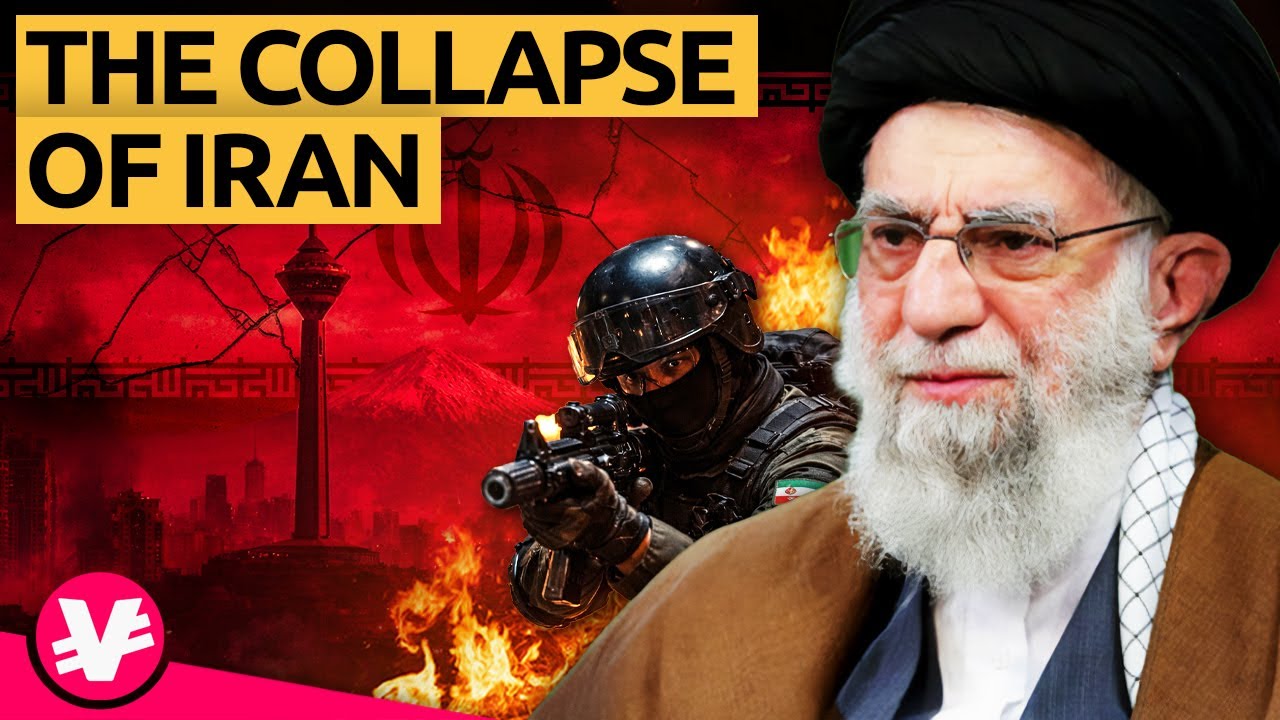
Iran lifts Dollar, sinks Euro
To say the dollar is crushing the euro sounds like tabloid economics. Yet the first full geopolitical stress test of 2026 has produced exactly the directional result implied by that phrase. Money is again flooding toward the U.S. currency while the euro is being repriced against a harsher reality: Europe remains more vulnerable to imported energy shocks, trade disruption and slower growth than the United States.
By the end of the first week of March, EUR/USD was trading around 1.16, the dollar index was back near 99, and oil had surged above $90 a barrel as traders priced a wider Middle East disruption. That is not a historic collapse of the single currency. It is, however, a decisive reminder of how quickly markets still fall back into the old hierarchy when fear becomes the dominant force.
Iran is central to that hierarchy test, not because its economy sets the global reserve system, but because it sits at the junction where sanctions, energy flows, shipping lanes and regional war all collide. Internally, the country has been living through a severe monetary breakdown. The rial plunged to roughly 1.5 million to the dollar earlier this year, protests erupted, and the state’s response deepened the atmosphere of repression and uncertainty. Externally, every escalation connected to Iran forces markets to reprice the cost of moving oil, gas, cargo and capital.
The Strait of Hormuz is the critical mechanism. Roughly 20 million barrels a day of oil and about a fifth of global LNG trade move through that narrow channel. Any threat there instantly travels through crude contracts, gas benchmarks, marine insurance, tanker availability and inflation expectations. Europe does not have to be the largest direct buyer of Hormuz crude to be hit hard. It is enough that Europe is the more energy-sensitive, more import-dependent, and more politically fragmented economic bloc.
That vulnerability is now colliding with a euro area that was improving, but still far from robust. Inflation in February edged back up to 1.9 percent. Output in the fourth quarter of 2025 rose just 0.2 percent. The ECB’s own baseline for 2026 is growth of 1.2 percent. Those are not the numbers of an economy built to absorb a prolonged external energy shock without political or financial strain. If fuel, gas and freight costs remain elevated, the euro area is pushed back toward the policy trap that haunted it after 2022: softer activity, stickier prices, and a currency market that demands a discount for both.
The logistics channel makes the shock even broader than the oil story suggests. Trade between Asia, the Gulf and Europe is already being rerouted or repriced. Airfreight costs on Asia-Europe lanes have jumped sharply. Shipping delays, war-risk premiums and booking suspensions are beginning to feed through supply chains. That matters for Europe because the euro is not merely a currency. It is the price label attached to an industrial and consumer economy that still depends on long, vulnerable trade arteries.
The United States is not immune. Higher oil prices, tighter freight and nervous markets will still hit American households and businesses. But the U.S. enters this episode with a different energy position, deeper domestic capital markets and a far greater capacity to attract crisis money. In other words, the same shock that raises inflation risk can also increase demand for the currency in which that shock is being hedged. That is a privilege the euro still does not fully share.
This is why the phrase “monetary order” is not exaggerated. The international order is not defined only by speeches about multipolarity or by occasional non-dollar trade settlements. It is defined by what investors, banks, commodity traders, insurers and central banks actually do when a geopolitical shock threatens liquidity. They reach for the currency that dominates settlement, collateral, sovereign debt markets and emergency funding. They reach for the dollar.
Even the reserve data tells a more sober story than the rhetoric around de-dollarization. Diversification is real, but it remains gradual rather than revolutionary. In the latest IMF reserve snapshot for 2025’s second quarter, the dollar still accounted for 56.32 percent of allocated foreign-exchange reserves. The euro stood at 21.13 percent. That is a meaningful role for the single currency, but it is not monetary parity. And when a live geopolitical shock erupts on the edge of the world’s most important energy corridor, that gap becomes political as well as financial.
Iran’s turmoil sharpens the lesson. A collapsing currency is not just an economic symptom. It is a measure of shrinking state credibility. The more households and firms in Iran think in dollars, gold or foreign stores of value, the less authority the rial has as a unit of account, a store of value and a symbol of sovereignty. Sanctions then do more than cut revenue; they tighten the external constraints around a country whose domestic money is already losing legitimacy. That is why chaos in Iran can radiate into the wider monetary system without Iran ever becoming a reserve-currency power itself.
There is also a strategic irony here. For years, the most confident forecasts of a post-dollar world assumed that repeated sanctions, geopolitical fragmentation and alternative payment channels would steadily weaken America’s monetary primacy. Yet in the current crisis, the opposite short-term effect has emerged. The harsher the fear, the more the market reverts to dollar behavior. That does not invalidate the long debate over a more multipolar currency future. It simply proves that the future has not arrived yet.
For Europe, the conclusion is uncomfortable but unavoidable. The euro cannot become a true equal to the dollar on institutional elegance alone. It needs faster and more durable growth, deeper capital markets, more unified fiscal capacity, and an energy system that is far less exposed to external shocks. Until those foundations are stronger, every major geopolitical disruption will tell the same story: the dollar gathers panic, the euro absorbs vulnerability.
For markets, the next chapter depends on duration. If the conflict is contained, shipping stabilizes and energy infrastructure avoids further damage, part of the dollar’s new crisis premium can evaporate. But if Hormuz remains constrained, if Gulf export capacity is knocked back further, or if sanctions and retaliation intensify, the euro will face a far tougher test. In that world, a move toward much lower euro levels would stop being a speculative talking point and start becoming the working assumption of 2026.
So the slogan is dramatic, but the underlying verdict is real. The dollar is not obliterating the euro. It is, however, beating it decisively in the one contest that still defines the system when panic strikes: the market’s instantaneous vote on which currency can carry fear. Chaos in Iran has not created a new monetary order. It has exposed, with uncomfortable clarity, how much of the old one still survives.

Why China props up Putin

Alert in Trump’s America

China’s profitless push
Latin America’s age trap

Saudi Arabia’s Costly Mirage

AI and the Future of Wealth
Russia’s dollar pivot
30 Days to Save the Economy?
Cuban regime nears collapse
Iran-War and dangerous Lines
Beijing's new Taiwan playbook