


Coin Press - Trump's threats to Colombia

NYSE - LSE
BCE 0.37% 21.43 $
BTI 1.37% 61.89 $
RBGPF -0.49% 75.65 $
RELX 1.16% 40.51 $
GSK 0.52% 50.45 $
CMSC -1.14% 19.28 $
RIO -0.4% 82.95 $
NGG 0.82% 84.29 $
CMSD -1.14% 19.29 $
BCC -0.79% 67.39 $
RYCEF -2.22% 17.59 $
BP 0.87% 45.7 $
VOD -0.78% 15.37 $
AZN 0.04% 184.45 $
JRI -1.21% 11.29 $

Trump's threats to Colombia


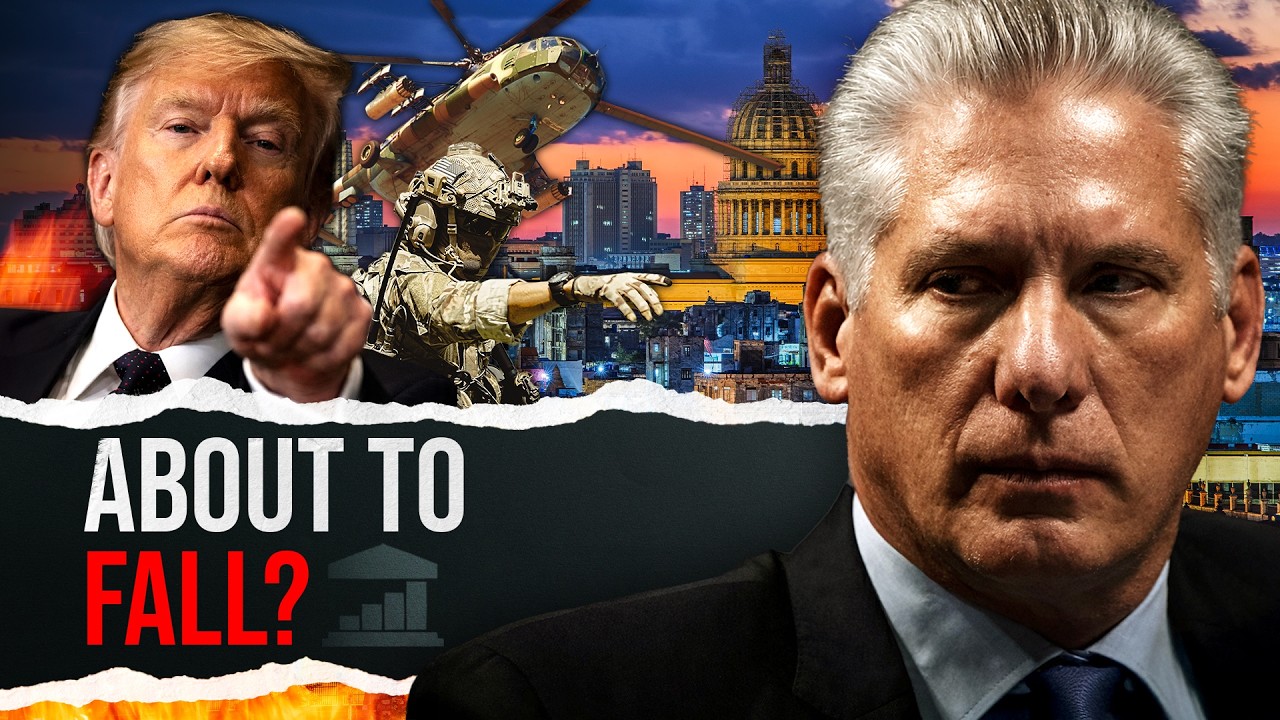
The relationship between Washington and Bogotá is being tested by an escalating dispute that has the potential to destabilise the wider region. During a White House cabinet meeting in early December 2025, the United States president declared that any country shipping illegal drugs into the U.S. “is subject to attack.” He singled out Colombia, saying he had heard the South American nation “makes cocaine” and warned that its leader would “be next” if he did not “wise up.” Those remarks, delivered with television cameras rolling, came after months of spiralling tensions and signalled a significant departure from decades of cooperation between the two countries on counter‑narcotics policy.

At the heart of the confrontation is the war on drugs. Colombia remains the world’s largest producer of coca, the shrub used to produce cocaine, with more than 250,000 hectares under cultivation according to recent United Nations estimates. The U.S. government has long provided billions of dollars in aid to support eradication campaigns, but the current administration argues that those efforts are failing. In September it took the unprecedented step of “decertifying” Colombia’s anti‑narcotics programme for the first time since the late 1990s, effectively declaring Bogotá an unreliable partner and threatening hundreds of millions of dollars in assistance. Officials in Washington also imposed personal sanctions on Colombia’s president, his family members and senior advisers, revoked his visa, froze any assets under U.S. jurisdiction and hinted at broader economic penalties.

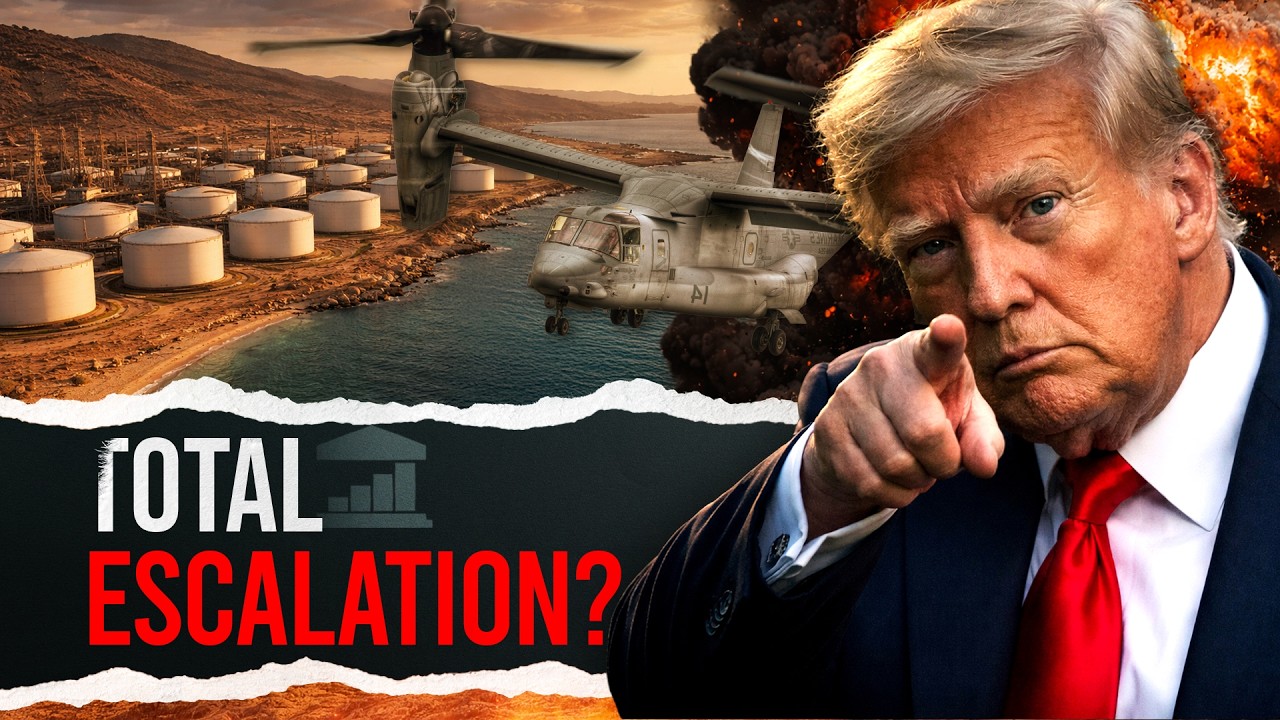
Military muscle has accompanied the diplomatic pressure. Over the past several months, the United States has deployed its largest aircraft carrier and nearly 15,000 troops to the Caribbean Sea while launching more than twenty missile strikes on small vessels it claims were transporting drugs. The bombardments have killed dozens of people, including at least two Colombian citizens. Human rights organisations and some U.S. lawmakers have condemned the attacks as extrajudicial killings, noting that the government has not provided public evidence to justify them. Even so, the president has suggested that the campaign may soon expand to land targets; during the same cabinet meeting he asserted that “the land is much easier” and that “anybody” who sells drugs into the United States could be bombed. He later seized a Venezuelan oil tanker to punish Caracas for alleged sanctions violations, hinting that Colombia could be the next target if it did not fall into line.

These actions are closely linked to a personal and ideological clash with Colombia’s head of state. The Colombian leader, a former guerrilla who became the country’s first left‑wing president in 2022, has used his platform to call for a new approach to drug policy and to criticise the U.S. military’s bombing of small boats in the Caribbean. He also condemned the president’s support for Israel’s war in Gaza and refused to accept deportation flights when Colombian migrants were shackled, leading to an early diplomatic spat. In response, Washington slapped tariffs on Colombian exports of up to 50 percent, revoked the president’s U.S. visa after he joined a pro‑Palestinian demonstration in New York and labelled him a “drug lord”. The animosity escalated when the Colombian president suggested U.S. soldiers should disobey any order they consider unlawful; soon after, the U.S. placed financial sanctions on him and his family and removed Colombia from its list of trusted counter‑narcotics partners.

Colombia has not taken these provocations lying down. In a series of social‑media messages and public statements, its president warned that threatening the country’s sovereignty “is to declare war” and cautioned the U.S. leader not to “awake the jaguar”. He invited his counterpart to visit Colombia to witness the destruction of drug‑processing laboratories, noting that his government dismantles a laboratory every forty minutes and has destroyed more than eighteen thousand facilities. He also emphasised that Colombian security forces have carried out more than a thousand ground operations against criminal networks, seized more than 2,700 tonnes of cocaine and conducted thirteen aerial bombings during his administration. “If any country has helped stop thousands of tons of cocaine from being consumed by Americans, it is Colombia,” he said, adding that missile strikes on fishermen “are not fighting narco‑terrorists” and serve only to punish the poor. His administration argues that crop substitution, peace talks with armed groups and attacking criminal financial networks offer a more humane and effective path than mass eradication.

The confrontation has reverberated across Colombia and the wider region. The National Liberation Army (ELN), the country’s largest remaining rebel group, announced in mid‑December that it would conduct military drills and ordered civilians to stay off roads and rivers for several days in preparation for a possible U.S. intervention. The Colombian defence minister dismissed the directive as “criminal coercion” but pledged to keep troops in place. Human rights experts at the United Nations and regional organisations have warned that any U.S. attack on Colombian soil would violate international law and risk reigniting an internal conflict that the country has spent years trying to end. Analysts also caution that decertification and aid cuts could weaken Colombia’s security forces, undermining efforts to combat armed groups and increasing violence. Critics see the U.S. president’s tough talk as part of a strategy to project strength, rally domestic supporters and reassert U.S. dominance in Latin America under a rebranded “Monroe Doctrine,” while potentially paving the way for regime change in neighbouring Venezuela.

There is also a broader strategic dimension. Some observers believe Washington’s focus on drugs masks a desire to control Venezuela’s vast oil reserves and punish left‑leaning governments across the region. Others point to the timing of the threats, noting that Colombia will hold elections in 2026 and that the U.S. president has a history of intervening in other countries’ political processes. By revoking visas, imposing sanctions and threatening tariffs, Washington could influence voter sentiment and weaken the incumbent’s reform agenda. Meanwhile, Colombia has sought closer ties with China and the European Union to offset the potential loss of U.S. aid, signalling a shift in geopolitical alliances.

The stakes are high. Colombia has been a crucial partner in U.S. intelligence operations, and cooperation has disrupted many criminal networks. If relations continue to deteriorate, both countries risk losing valuable intelligence, weakening counter‑drug efforts and allowing armed groups to expand. In the short term, the rhetoric has already caused anger and fear among ordinary Colombians and has emboldened rebel groups. In the long term, a U.S. strike on Colombian territory could plunge the region into a wider conflict and unravel years of progress toward peace.


Featured


Long live Ukraine - Хай живе Україна - Да здравствует Украина

Es lebe die Ukraine - Да здравствует Украина - Long live Ukraine - Хай живе Україна - Nech žije Ukrajina - Länge leve Ukraina - תחי אוקראינה - Lang leve Oekraïne - Да живее Украйна - Elagu Ukraina - Kauan eläköön Ukraina - Vive l'Ukraine - Ζήτω η Ουκρανία - 乌克兰万岁 - Viva Ucrania - Ať žije Ukrajina - Çok yaşa Ukrayna - Viva a Ucrânia - Trăiască Ucraina - ウクライナ万歳 - Tegyvuoja Ukraina - Lai dzīvo Ukraina - Viva l'Ucraina - Hidup Ukraina - تحيا أوكرانيا - Vivat Ucraina - ขอให้ยูเครนจงเจริญ - Ucraina muôn năm - ژوندی دی وی اوکراین - Yashasin Ukraina - Озак яшә Украина - Živjela Ukrajina - 우크라이나 만세 - Mabuhay ang Ukraine - Lenge leve Ukraina - Nyob ntev Ukraine - Да живее Украина - გაუმარჯოს უკრაინას - Hidup Ukraine - Vivu Ukrainio - Længe leve Ukraine - Živjela Ukrajina - Жыве Украіна - Yaşasın Ukrayna - Lengi lifi Úkraína - Lank lewe die Oekraïne

Stargate project, Trump and the AI war...

In a dramatic return to the global political stage, former President Donald J. Trump, as the current 47th President of the United States of America, has unveiled his latest initiative, the so-called ‘Stargate Project,’ in a bid to cement the United States’ dominance in artificial intelligence and outpace China’s meteoric rise in the field. The newly announced programme, cloaked in patriotic rhetoric and ambitious targets, is already stirring intense debate over the future of technological competition between the world’s two largest economies.According to preliminary statements from Trump’s team, the Stargate Project will consolidate the efforts of leading American tech conglomerates, defence contractors, and research universities under a centralised framework. The former president, who has long championed American exceptionalism, claims this approach will provide the United States with a decisive advantage, enabling rapid breakthroughs in cutting-edge AI applications ranging from military strategy to commercial innovation.“America must remain the global leader in technology—no ifs, no buts,” Trump declared at a recent press conference. “China has been trying to surpass us in AI, but with this new project, we will make sure the future remains ours.”Details regarding funding and governance remain scarce, but early indications suggest the initiative will rely heavily on public-private partnerships, tax incentives for research and development, and collaboration with high-profile venture capital firms. Skeptics, however, warn that the endeavour could fan the flames of an increasingly militarised AI race, raising ethical concerns about surveillance, automation of warfare, and data privacy. Critics also question whether the initiative can deliver on its lofty promises, especially in the face of existing economic and geopolitical pressures.Yet for its supporters, the Stargate Project serves as a rallying cry for renewed American leadership and an antidote to worries over China’s technological ascendancy. Proponents argue that accelerating AI research is paramount if the United States wishes to preserve not just military supremacy, but also the economic and cultural influence that has typified its global role for decades.Whether this bold project will succeed—or if it will devolve into a symbolic gesture—remains to be seen. What is certain, however, is that the Stargate Project has already reignited debate about how best to safeguard America’s strategic future and maintain the balance of power in the fast-evolving arena of artificial intelligence.

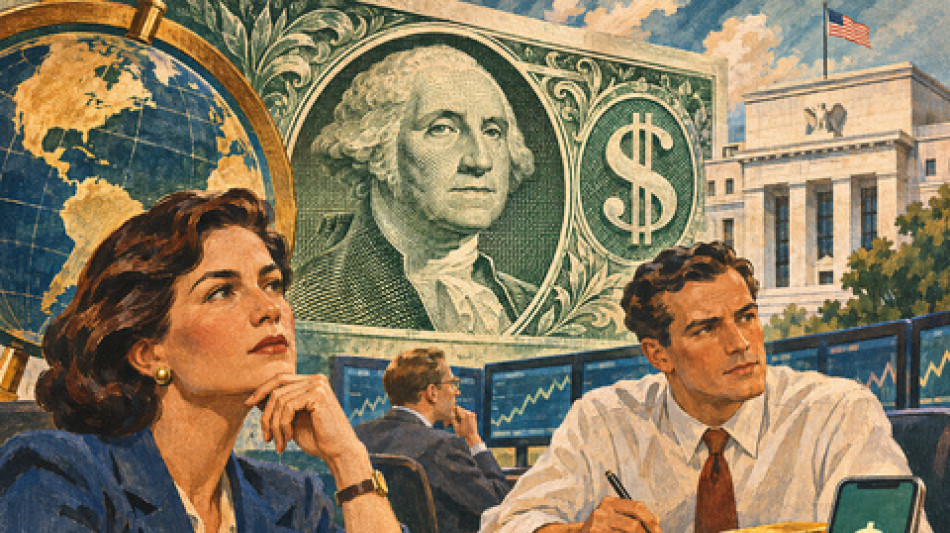
The dollar's strange turn

The dollar is strengthening in currency markets while its share of global foreign exchange reserves is declining. Central banks are accumulating gold, yet digital finance is creating additional channels for holding and transferring dollars. These developments reveal a monetary system changing in several directions at once, with consequences that extend well beyond the daily exchange rate.   By 13 November, the dollar was trading near its highest level against a basket of major currencies in 19 months. The euro stood at roughly $1.10, while the Japanese yen hovered close to 160 per dollar. Two-year US Treasury yields had risen by about 34 basis points over the week to around 4.87%, reflecting a substantial reassessment of the outlook for American interest rates. Those figures sit uneasily alongside another development. In the second quarter of 2026, the dollar’s share of global foreign exchange reserves fell to 56.70%. Its position in official reserve portfolios was becoming less concentrated even as its exchange rate subsequently strengthened.   The apparent contradiction becomes easier to understand once the dollar’s different functions are separated. Its price against other currencies, its place in central bank portfolios and its use in international payments respond to different incentives and operate over different timescales.   A rally driven by uncomfortable economicsThe latest advance has been supported by persistent inflation and expectations of tighter monetary policy. Stronger-than-expected inflation figures and firm comments from Federal Reserve officials pushed investors to reconsider how far US interest rates might rise.   Higher expected interest rates can support a currency by increasing the prospective return on assets denominated in it. That mechanism helps explain why troubling inflation news can coincide with a stronger dollar. Investors may respond to the anticipated policy response before the underlying economic problem has been resolved. The implications for households are quite different. A dollar that buys more euros or yen can still buy fewer goods and services at home. External currency strength and domestic purchasing power measure separate things.   For businesses, the effects are similarly uneven. A stronger dollar can reduce some import costs over time, while making American exports more expensive for foreign customers. Companies earning substantial revenues overseas can also face a reduction in the dollar value of those earnings. The exchange rate redistributes pressure across the economy; its rise alone says little about whether that pressure is becoming easier to bear.   The refuge is being judged more carefullyThe dollar’s behaviour during the tariff turmoil of April 2025 exposed a vulnerability that remains relevant. American equities fell, Treasury prices came under pressure and the currency weakened. In a conventional flight to safety, investors would normally expect stronger demand for dollars and US government debt.   The unusual combination mattered because the disturbance originated partly in American policy. Investors had to assess the reliability of the assets they would ordinarily use for protection. A rise in Treasury yields can therefore carry different messages. It may reflect stronger growth or expectations of higher policy rates. It can also reflect greater compensation demanded for inflation, uncertainty or the risks associated with holding longer-term debt. The direction of yields alone cannot distinguish between these explanations.   The lesson from that episode is that the dollar’s defensive qualities depend partly on the nature of the shock. Deep markets and abundant liquidity remain considerable advantages, but their value is reinforced by confidence in policy and institutions. That confidence has to survive periods when Washington itself becomes a source of uncertainty.   A smaller share of a larger reserve poolThe reserve figures require equally careful interpretation. Global foreign exchange reserves increased from $13.10 trillion in the first quarter of 2026 to $13.22 trillion in the second. Dollar-denominated holdings were broadly unchanged, while holdings in euros and several other currencies increased. The dollar’s share consequently declined from 57.18% to 56.70% without a corresponding large-scale reduction in the amount of dollars held. The euro’s share rose from 20.04% to 20.60%, while the Chinese renminbi reached 2.11%.   This distinction changes the meaning of the numbers. Reserve managers can diversify by directing additional funds towards other currencies while retaining their existing dollar portfolios. A declining percentage does not establish that central banks are collectively liquidating American assets.The latest quarterly changes also cannot be explained primarily by exchange-rate movements, whose valuation effects were limited during the period. Portfolio decisions and other asset-price changes played a greater role.   The resulting picture is one of gradual redistribution. The dollar remains far ahead of its nearest competitors, even as reserve managers reduce the concentration of their holdings.   Gold offers a different form of protectionGold provides another indication of changing reserve preferences. Estimated net purchases by central banks and other official institutions reached approximately 321 tonnes in the third quarter of 2026, bringing purchases during the first nine months to about 675 tonnes. These totals include estimates of activity that has not been publicly disclosed. Reported net purchases for the third quarter were around 120 tonnes, substantially below the estimated overall figure. That gap limits how confidently individual countries’ intentions can be inferred from the headline total.   Gold has an attraction that a government bond cannot replicate: the metal itself is no other institution’s liability. It can therefore serve a distinct purpose in portfolios designed to withstand political or financial disruption. It also pays no interest and can fluctuate sharply in price. Its accumulation indicates demand for diversification and resilience, but does not establish that it can assume the dollar’s functions in lending, invoicing and everyday settlement.   The dollar remains embedded in the machineryThe structure of international finance continues to favour the US currency. In April 2025, the dollar appeared on one side of 89.2% of foreign exchange transactions, compared with 88.4% in 2022. Average daily turnover across the global foreign exchange market reached approximately $9.6 trillion.   These figures measure trading activity, a different function from the accumulation of official reserves. Each currency transaction involves two currencies, so the dollar’s participation rate should not be interpreted as a share of worldwide savings or wealth. Its extensive use nevertheless demonstrates how deeply it is embedded in financial operations. Businesses borrow in dollars, investors hedge dollar exposures and financial institutions obtain dollar funding. Existing contracts and established markets create continuing demand even when some participants would prefer greater diversification.   Replacing that infrastructure requires liquid investment markets, dependable legal arrangements and the ability to move substantial sums without excessive cost. A competing payment platform or a bilateral agreement to use another currency can change particular transactions. Reproducing the full range of dollar financing remains a much larger undertaking.   Digital finance is carrying dollars into new placesOne of the most consequential changes is taking place through stablecoins: privately issued digital tokens designed to maintain a specified value, commonly one US dollar. These instruments can make dollar-denominated value accessible through digital wallets and trading platforms, including in places where conventional access to foreign-currency banking is limited. Their use creates another route through which households and businesses can save, transfer or transact in dollars.   The connection with American government debt is already substantial. Tether reported approximately $184 billion in USDT issuance and $132.4 billion in direct and indirect exposure to US Treasury bills at the end of September 2026. Its total reserve assets were approximately $191.5 billion. Those figures illustrate a financial link that can be overlooked in discussions of cryptocurrency. Demand for a privately issued digital dollar can support demand for the short-term securities used to back it. This creates an important possibility: governments may seek greater monetary independence while private users continue choosing dollar-denominated products. Official diversification and wider digital dollar access can develop simultaneously.   The arrangement also introduces additional dependencies. Users rely on an issuer’s reserves, redemption arrangements and operational systems. Digital access changes how dollar exposure is obtained; it does not eliminate the need to examine the institutions supporting it.   America’s borrowing needs remain a central weaknessThe expansion of dollar access takes place against a demanding fiscal background. The United States recorded a federal budget deficit of approximately $2.0 trillion in the fiscal year ending September 2026, equivalent to 6.2% of gross domestic product. Federal debt held by the public reached approximately 100% of GDP. Persistent borrowing requires sustained demand for government securities. The Treasury market’s size is an advantage for international investors because it offers an extensive supply of tradable assets. Maintaining confidence becomes more consequential as the volume of debt increases.   Higher interest rates complicate that relationship. They can support the dollar in currency markets while increasing financing costs as the government issues new debt and refinances maturing obligations. The immediate benefit to the exchange rate can therefore coexist with a worsening fiscal burden. Stablecoin reserves add a meaningful source of demand for short-term debt, but their importance should be kept in proportion. They cannot by themselves resolve the gap between federal revenue and expenditure or remove uncertainty about future borrowing costs.   The consequences reach beyond AmericaFor countries and companies with dollar liabilities but revenues in weaker local currencies, dollar appreciation can make debt service more expensive. Dollar-priced imports can also become harder to afford, complicating the work of central banks already facing domestic economic pressures.   These costs help explain the incentive to diversify. Yet the practical need to settle contracts, obtain financing and manage existing obligations can sustain dollar demand even among borrowers seeking to reduce their dependence. The evidence points towards a more differentiated monetary order. Reserve managers are spreading risk, digital platforms are broadening access to dollar instruments, and investors are examining American policy more closely.   What looks strange is the coexistence of these forces. A stronger exchange rate can accompany a smaller reserve share. Greater concern about US borrowing can coexist with continued demand for Treasury securities. Technologies intended to change finance can carry the dollar further into it. The decisive issue is how these relationships develop over time. America retains the benefits of a currency that much of the world continues to use. Preserving those benefits will depend on the credibility of the fiscal, monetary and institutional foundations beneath it.