Outflanked by AI, stars fade for South Korea's blind fortune-tellers / Photo: GREG BAKER - AFP

 Kenya's economy faces climate change risks: World Bank

 SBCFX to Showcase Trading Innovation, Regional Growth Strategy, and Future Vision at iFX EXPO Asia 2026

 Maghreb sees demographic shift with fertility at historic low
 From Chinese AI to Global ETFs: STARTRADER Launches 45 New 24/7 Stock and ETF CFDs

 Seoul tech leads Asian stock gains as traders cheer US inflation
 Outflanked by AI, stars fade for South Korea's blind fortune-tellers

 Travis Kelce says wedding to Taylor Swift was 'best night of my life'

 As millions gazed in awe, a swathe of Spain plunged into darkness

 Skies darken as solar eclipse heads south from Arctic to Spain
 Russian economy rebounds in second quarter despite Ukrainian strikes

 Knot and Venmo Team Up to Make Venmo the Effortless Way to Pay
 In Moscow, Russians worry about new fuel shortages

 Grieving Argentine icon Messi unsure about playing on 'much longer'
 US consumer inflation slows slightly in July despite elevated fuel prices

 WallStreetPR Releases Report on China’s Gold Purchases and African Mining Investment

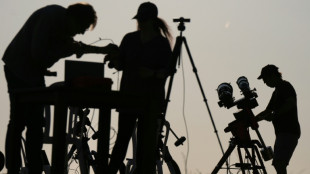
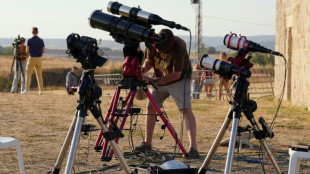 Skywatchers gather in Europe to see total solar eclipse

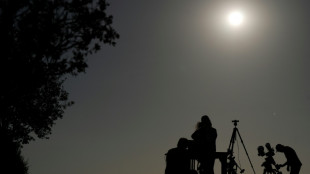 Eclipse chasers flock to Spain for 'breathtaking' experience

 Mideast war impact on travel bookings fading, TUI says

 Toyota ex-chief Okuda, pioneer of the Prius, dead at 93

 Parched and desperate for rain, Kazakhstan turns to cloud-seeding

 Total solar eclipse to spellbind Europe

 Caught between great powers: the cautionary tale of Manus

 US company stokes Greenland tensions by unloading drilling gear

 UK 'on course' to record warmest summer for second year in a row

 Oil prices lower, stocks higher as Hormuz doubts drag on

Clients have drifted away from Song Oh-soon's fortune-telling village on the edge of Seoul, preferring online AI-powered divination to the centuries-old prophesying tradition still practised there.
At 86, Song is one of the last members of a community of visually impaired practitioners that drew generations of South Koreans seeking answers and advice about everything from illness and money to love and fate.
In one of the world's most AI-connected societies, the village's greatest challenge is not fading belief in fortune-telling, but the way it is consumed.
Song remains adamantly offline, relying on the "Four Pillars of Destiny" astrology in braille and on her four decades of experience in careful listening -- a skill her automated competition cannot match.
"There were people who came here wanting to die," Song told AFP in northern Seoul's Mia village. "I persuaded them to keep living."
"I also once wanted to die, but I found this work and survived."
Today, silence is often Song's only visitor. The community was once home to 70 or 80 practitioners, but fewer than 20 remain.
Many have died. Their shops down narrow alleys sit dark behind faded signs advertising "traditional fortune-telling houses".
"When I go outside for a walk, it's quiet," Song said in her tiny room that serves as both home and consulting space. "It feels lonely."
- The human factor -
Figures show South Korea's fortune-telling business is growing -- worth 1.4 trillion won ($986 million) as of 2024, according to startup analysis firm InnoForest.
Many now turn to mobile apps and artificial intelligence chatbots such as ChatGPT and Gemini for readings, a survey by market researcher Embrain said this year.
Occasionally, though, someone still seeks out a human intervention.
University professor Oh Ji-hye for years walked past the village without going inside, opting instead for AI readings during her commute.
Only recently, anxious about her career, did she turn to Song for a phone consultation.
"It felt good that someone rather than AI was concentrating on and listening to my story," the 44-year-old said.
Mia village emerged in 1966 after the first blind fortune-teller settled there, according to the Seongbuk Cultural Centre, which researches the district's history.
As Seoul boomed in the 1970s and 1980s the neighbourhood enjoyed cheap rents and a constant foot traffic of potential customers by the time Song arrived in 1984.
She lost her sight in a childhood illness before the Korean War and by 11 was studying Korean fortune-telling -- predicting subjects' futures based on their birth dates and times.
- Outread by algorithms -
She was a professional by 16, working in an industry where many people with disabilities -- especially women -- have been historically confined owing to discrimination.
"Nowadays, if a visually impaired person is musically talented, they can pursue a career in music," she said.
"But back when I lost my sight, there was nothing else I could do besides this job."
Over her lifetime, South Korea has witnessed the devastation of the 1950-53 war, periods of military rule and the 1990s financial crisis.
After periods of hardship and loss, the nation has emerged as a global financial powerhouse -- with recent astronomical profits from manufacturing AI microchips.
Those gains have lifted the nation's fortunes. Clients who once came for advice about medical ailments can now head to hospital instead.
But the technology has drawn away clients from Song's 50,000-won sessions in favour of free or affordable AI readings.
Most of the remaining practitioners have little online presence, and many cannot be found through major search platforms.
"I don't think people are less interested in fortune-telling," Song said. "But these days, they look online, so they do not come all the way to us."
Despite the village's decline, Song believes no fate is set in stone.
"If you put in the effort and make wise judgements, good fortune will come your way three times in your life," she said.
M.Mendoza--CPN