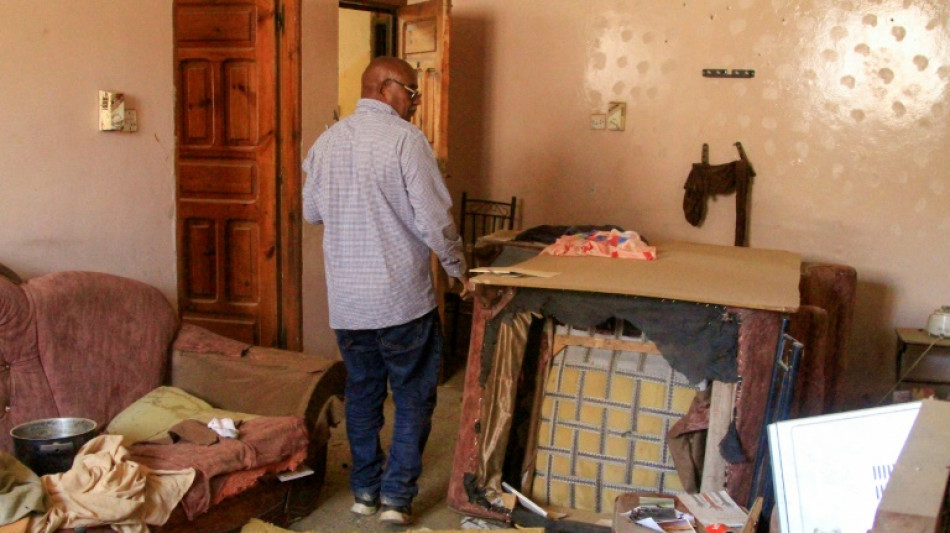
'War has taken everything': AFP reporter returns home to Khartoum / Photo: Ebrahim Hamid - AFP

 Kenya's economy faces climate change risks: World Bank

 'Beginning of the end': Relief but no party as French wildfire winds down

 Southern Europe 'becoming more flammable' in hotter climate, experts say

 Mammoth bones found on parched bed of Danube in Bulgaria

 MEXC Lists Grvt (GRVT) with $60,000 Worth of GRVT and 10,000 USDT in Airdrop+ Rewards

 George and Amal Clooney flee French home due to wildfire

 MEXC Ventures Supports Alpha Arena's APAC Debut at Coinfest Bali

 AI data centre supplier Zhongji InnoLight slips on Hong Kong debut

 May, June heatwaves caused 2,877 extra deaths in England: govt

 BMW profit down a third as carmaker plans job cuts

 Seoul extends losses as most Asian markets drop, oil rises again

 Gambling.com Group Is Now Grandstand

 Meet the astronomer digging into the Milky Way's 'fossils'

 AI data centre supplier Zhongji InnoLight falls on Hong Kong debut

 Samsung operating profit up 1,800% in second quarter on AI boom

 Japanese population below 120 million for first time in decades

 US actor Jared Leto denies latest accusations of sexual assault

 Danube drops to 'historic lows' as fresh heatwave hits

 BTS pulls out of Grammys after Asian pop category introduction

 OpenAI says rogue AI agent attack hit other companies
 How an AFP beach snap became emblem of Europe's wildfire summer

 TRX Spot and Perpetuals Listing Launches on Backpack, Expanding Access to the TRON Ecosystem

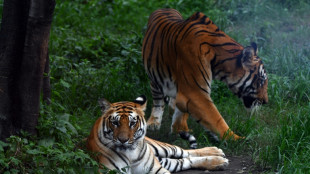 Nepal's tiger numbers climb 20 percent to estimated 429: survey
 FIFA's plans to sell $4.2bn stake in its tournaments widely criticised

 BMW aims to cut 8,000 jobs by end 2027: company source

It had been nearly two years since AFP journalist Abdelmoneim Abu Idris Ali set foot in his home in war-torn Khartoum, after the sound of children playing in the street gave way to the fearsome fire of machine guns.
Sudan's once-peaceful capital awoke to the sound of bombs and gunfire on April 15, 2023 as war broke out between its two most powerful generals -- army chief Abdel Fattah al-Burhan and his former deputy Mohamed Hamdan Daglo, who commands the paramilitary Rapid Support Forces (RSF).
Bombs tore through homes, fighters took over the streets and hundreds of thousands scrambled to escape -- among them Abdelmoneim, his wife, his son and three daughters.
Since then they have been displaced five times -- fleeing each time the front line closed in.
Eventually the 59-year-old journalist sent his family to safety in another African country while he settled down to work alone from Port Sudan on the Red Sea.
Then last month he was able to briefly return to his home in Khartoum North during a reporting trip escorted by the army after it recaptured the city.
He found his beloved neighbourhood, known as Bahri, abandoned.
"The whole place is cloaked in silence, no grocery store chit-chats, no boisterous games of football on the corner, nothing," he said.
- 'Like an earthquake' -
"The last time I was here, the neighbours were all in the street saying goodbye, praying for each other's safety, promising we would meet again soon."
Now their doors hung ajar, beds dragged out onto the street, apparently by RSF fighters who used them to sleep in the open air.
Since the war broke out, the paramilitaries have been notorious for taking over and looting homes, selling the contents or taking it for themselves.
When he got to his landing, Abdelmoneim braced himself for what he would find inside.
"It was like an earthquake had hit. The furniture was upside-down and thrown around, pieces shattered on the ground," he said.
He clambered slowly from room to room, taking in the damage.
The couch was pocked with burn marks where the fighters had put out cigarette after cigarette.
His daughters' closets were ripped open and emptied of every last dress.
And on the floor of his office, lying among the tattered remains of his library, was a photo of his wedding to his wife Nahla, with her image torn out.
"I don't get what they have against my books and my wedding photos," he said.
"I knew they had stolen furniture. I couldn't imagine they would destroy everything else."
- 'Wish my kids had never seen that' -
In March, the army recaptured Khartoum, to the joy of millions of displaced Sudanese anxious to return to their homes.
"But my girls say they never want to come back," Abdelmoneim said.
"How can they ever forget sleeping huddled together in the living room, terrified by the sound of every air strike?"
Abdelmoneim shudders at the thought of the horrors they have seen since.
"When we were leaving Khartoum, there were bodies lying in the street and an old man standing over them, trying to keep a plastic sheet in place.
"When I stopped to ask him if he was okay, he said, 'I'm trying to keep the dogs away.' I wish my kids had never heard that."
For seven months, Abdelmoneim tried to wait out the fighting in Wad Madani, just south of Khartoum, hoping against hope they could go home.
"The moment I realised this wouldn't end for years was when the war came to Wad Madani," he said.
Again they took everything they could carry, and again they joined a wave of hundreds of thousands of people running away, this time on foot, heading east.
The veteran journalist and his wife made the painful choice to separate the family -- she and the children would go to another country; and he would go to Port Sudan on the Red Sea, home to the United Nations, the army-aligned government and hundreds of thousands of displaced people.
- Destitution and displacement -
Abdelmoneim, like countless Sudanese caught in the war's crossfire, has lost family members, his life savings and any hope for the future.
"This war has taken everything from us," he said.
"And everything they haven't taken, they've destroyed."
For years he had been building up a tiny homestead on the outskirts of Khartoum, lined with fruit trees and a few simple crops he could tend when he retired. The RSF destroyed it in their rampage.
His family's home and land, in the agricultural state of Al-Jazira, were looted and cut off from power and water -- his relatives left starving and powerless to defend themselves against the RSF's predations.
Now both Al-Jazira and Khartoum are under army control but the war, and the suffering it has wrought, is far from over.
Tens of thousands have been killed and more than 12 million uprooted, including almost four million who fled to other countries.
Hundreds of thousands are returning to areas recaptured by the army, choosing destitution at home over displacement, but most of these areas still lack clean water, electricity and health care.
Famine still stalks Sudan, with around 638,000 people already in famine and eight million on the brink of mass starvation.
The country remains divided, and the RSF -- in control of nearly all of the western region of Darfur and, with its allies, parts of the south -- has not given up the fight.
In recent weeks, the paramilitaries have killed hundreds of people in famine-stricken displacement camps, while RSF chief Daglo has announced a rival administration to rule over the ashes.
For many like Abdelmoneim, even their modest dreams now seem impossible.
"If this war ends tomorrow, all I want is to be somewhere quiet and safe with my family, farming in peace."
D.Philippon--CPN