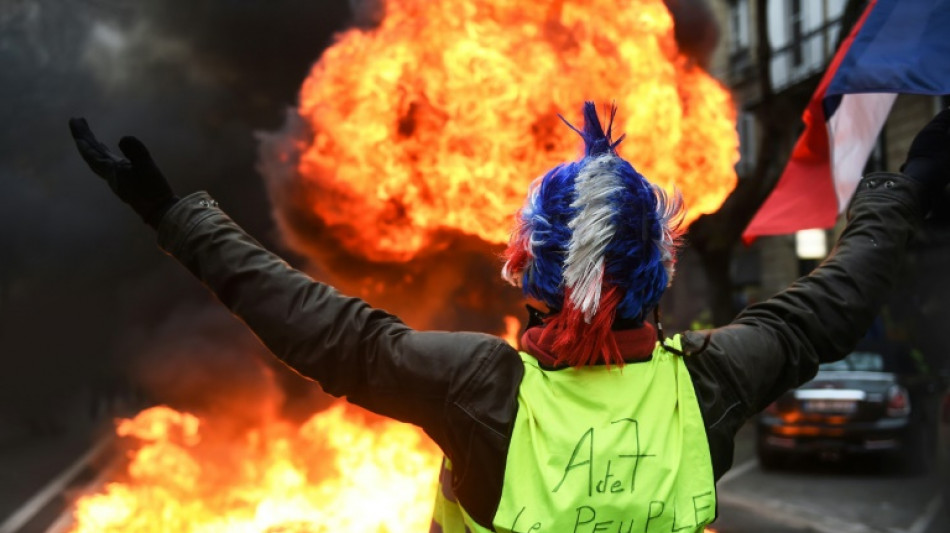
Is fractious France ready for an Olympics party? / Photo: MEHDI FEDOUACH - AFP

 Kenya's economy faces climate change risks: World Bank
 British oil giant BP aims to sell North Sea business
 China factory activity slides as leaders seek spending boost

 Tech rebound fuels record-breaking rally in South Korean stocks

 Cables and cooling bring AI windfall to Indian suppliers

 Anthropic's models gained unauthorized 'real-world' access during testing

 Apple tops estimates in CEO Cook's final quarter, but shares fall

 Milei demands expulsion of foreigners expressing 'hate' against Argentina

 Italy's Po River valley on drought alert

 Prada profits pinched as growth hard to chase

 Stocks climb on earnings and rates, oil retreats

 US economic growth slows in second quarter, missing expectations

 Russia adds Telegram founder Durov to 'terrorist' blacklist

 Stocks diverge on earnings, as oil steadies

 Eurozone economy grows despite Middle East war

 Singapore group will develop 'most promising' Ebola vaccine

 Shell profit surges as Mideast war fuels oil prices

 Car maker Stellantis says back in profit in second quarter

 Samsung quarterly operating profit up 1,800% on AI boom

 South Korean stocks bounce after rout, oil holds gains on Mideast woes

 South Korea's women web sleuths fight AI deepfake porn
 Anything but programmable: New cost-efficient EC-power-supply-series for the DIN rail by CAMTEC PS
 Meta misses profit expectations, sticks to massive AI spending
 Campari - king of the spritz - hopes to conquer American heartland
 Air France-KLM and Lufthansa bid for Portugal's TAP airline
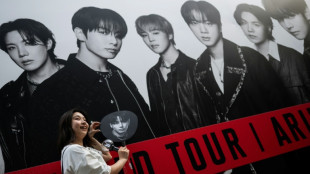
Organisers of the Paris Olympics have promised a "great national party" for the country, but with 100 days to go, France's bitter politics and gloomy mindset are dampening the mood.
Those involved in the delivery of the Games, particularly chief organiser Tony Estanguet, remain relentlessly upbeat, encouraging their countryfolk to look on the bright side.
"It's my role to explain that it's a fantastic opportunity for our country to host this event, to welcome the world and also showcase what this country is about to do and deliver," he told reporters last Wednesday.
He said he wasn't surprised to hear complaints and doubts, however.
"We all know that before this kind of big event, there are always many questions, many concerns," he said.
The construction work is on track and the budget looks set to be relatively contained compared to the huge blow-outs seen at the Athens, London or Rio de Janeiro Games.
French President Emmanuel Macron cut a slightly frustrated figure as he inaugurated a new aquatics centre in early April, speaking as if the public and media were not giving organisers the credit they deserved.
"Take a bit of perspective and look at the history of previous Games," the 46-year-old urged reporters, promising the Paris edition would make the nation "proud".
- 'On the defensive' -
Instead of pride, the build-up has been marred by rows that go to the heart of a bitter national debate about identity and race.
Influential far-right politicians have criticised the official Games poster -- a Christian cross was omitted from a depiction of a Paris landmark -- as well as the choice of artists for the opening ceremony on July 26.
The prospect of an appearance by Franco-Malian R&B superstar Aya Nakamura caused an uproar among conservatives who criticised her supposed "vulgarity" -- something described as "pure racism" by France's culture minister.
Herve Le Bras, a veteran sociologist, said he was sceptical that the Olympics could serve as a moment of national celebration.
"Instead, there are lots of suggestions that they will underline the major fractures in France -- notably the fracture between Paris and the rest of the country," he told AFP in an interview.
Le Bras wrote a book in 2018 entitled "Feeling bad in a France that is doing well" that delved into the paradox of the national psyche.
Why does the country feel so bad about itself while being among the richest in the world, with one of the most generous social security systems, and a lifestyle that is envied across the globe?
A major survey by the Ipsos group last September found eight out of 10 people thought the country was in decline and nearly one in two said they felt angry and contrarian.
In another era -- during the decades of bullish post-war expansion in France, for example -- the country might have been more ready to celebrate the Olympics, Le Bras suggests.
"We had a sense then that everything was moving in the direction of progress. We're not in that sort of period now," he said. "We're on the defensive."
Jean Viard, another well-known sociologist, believes that the risk of terrorism and wars in Europe and the Middle East are weighing on people's minds.
"We live in an era where there is the climate danger, which feels like a war on the climate, the war in Ukraine, the war in Israel," he told AFP. "People feel like they are surrounded by violence."
- Money concerns -
The Olympics are also taking place at a time where the rising cost of living is causing economic hardship, making the often high ticket prices for events hard to stomach.
"You hear the same thing at all levels of society, 'We're organising a show, we're paying for it, but we are not able to take part'," Paul Dietschy, a sports historian at the Universite de Bourgogne-Franche-Comte in eastern France, told AFP.
Many trade unions have issued strike threats as they push for pay rises.
Other concerns include the fast-rising public debt -- just as new estimates emerge suggesting that taxpayers could end up with an Olympics bill of up to five billion euros ($5.4 billion).
And the gleaming new Olympic village has been unveiled at a time when the country faces a housing crisis.
"That makes people uneasy," Le Bras suggested.
Although past polls have shown majority support for the Olympics, a survey on March 25 by the Viavoice group found that 57 percent of respondents felt "little" or "no" enthusiasm about them in Paris.
Paris' deputy mayor Emmanuel Gregoire believes the mood will swing.
"Everyone was a little bit afraid about the security side during the Games and... now it is really changing," he said recently.
Y.Jeong--CPN