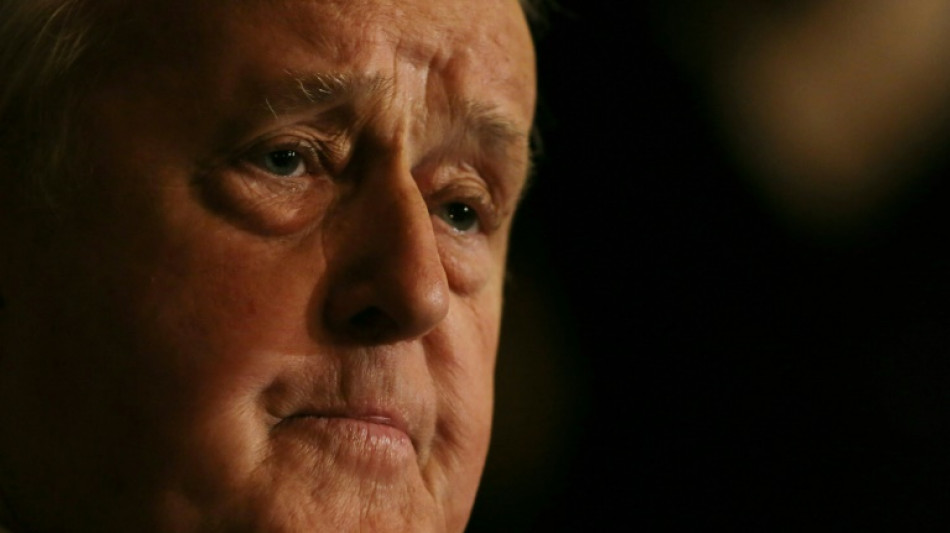
Brian Mulroney, ex-Canadian PM and father of North American free trade / Photo: Lars Hagberg - AFP/File

 Kenya's economy faces climate change risks: World Bank

 Profits surge at US oil giant amid Iran war supply shock
 Stock markets rally on tech rebound
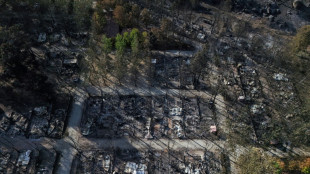 France, Spain assess scorched terrain as new wildfires threaten other regions
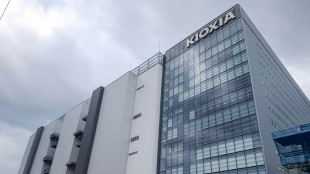 Chipmaker Kioxia reports AI-driven 45-fold surge in quarterly net profit
 Far right and far left battle for power in polarised Berlin
 The last trio: S.Africa's zoo elephants await their fate
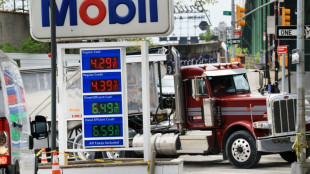 Oil industry sees war windfall but girds for political blowback

 Amazon beats expectations with cloud and AI growth
 Blowout Microsoft results lift US stocks as oil retreats

 'Beginning of the end': Relief but no party as French wildfire winds down

 Southern Europe 'becoming more flammable' in hotter climate, experts say

 Mammoth bones found on parched bed of Danube in Bulgaria

 MEXC Lists Grvt (GRVT) with $60,000 Worth of GRVT and 10,000 USDT in Airdrop+ Rewards

 George and Amal Clooney flee French home due to wildfire

 MEXC Ventures Supports Alpha Arena's APAC Debut at Coinfest Bali

 AI data centre supplier Zhongji InnoLight slips on Hong Kong debut

 May, June heatwaves caused 2,877 extra deaths in England: govt

 BMW profit down a third as carmaker plans job cuts

 Seoul extends losses as most Asian markets drop, oil rises again

 Gambling.com Group Is Now Grandstand

 Meet the astronomer digging into the Milky Way's 'fossils'

 AI data centre supplier Zhongji InnoLight falls on Hong Kong debut

 Samsung operating profit up 1,800% in second quarter on AI boom

 Japanese population below 120 million for first time in decades

Former Canadian prime minister Brian Mulroney, who made his political mark in the 1980s with the signing of a ground-breaking free trade agreement with the United States that later expanded to include Mexico, died Thursday. He was 84.
Mulroney, Canada's last Cold War leader, opposed apartheid in South Africa and helped secure a landmark treaty on acid rain with Washington.
But he brought in a consumption tax still reviled by Canadians to this day, and his efforts to drive constitutional reform, in large part to bring wayward Quebec into the fold, ended in failure.
A lawyer by training, Mulroney was ambitious and charming, with twinkling blue eyes and a baritone voice. He was at ease in both of Canada's official languages, French and English.
He briefly came out of retirement to advise Justin Trudeau on a revamped continental trade deal.
- Quick start in politics -
Born on March 20, 1939 in Quebec to a family with Irish roots, Mulroney entered university at the young age of 16, where he first got involved with the Progressive Conservatives (now known as the Conservative Party).
After finishing law school, he quickly jumped into politics, first seeking the leadership of his party in 1976.
When he lost, he took a job as chief executive of a mining company. He was not yet 40 years old.
In 1983, he entered the political fray once again, vying for and winning the leadership of what was then the official opposition.
A year later, Mulroney led his Progressive Conservatives to power, bringing an end to almost two decades of Liberal rule in Ottawa with the largest majority government in history.
That resounding victory was built on a pledge to bring his native Quebec into Canada's constitutional fold.
The French-speaking province had sought to separate from the rest of Canada in 1980, and so did not sign a new constitution in 1982 after Ottawa rejected its demands for more powers.
Mulroney committed to having Quebec recognized as a "distinct society" within Canada.
His first year in office was rocky, however, as several of his ministers resigned over scandals. And his lofty goals for Quebec would remain unrealized.
- Free trade advocate -
On the world stage, Mulroney led a charge against the pro-apartheid regime in South Africa, putting him at odds with British Prime Minister Margaret Thatcher.
But his greatest foreign policy achievement would be the rapprochement with the United States under Ronald Reagan -- and the resulting watershed in commercial ties.
"I told him: Ronald, I want a comprehensive free trade agreement with you and the United States," he recalled in an interview with Radio-Canada.
Negotiations were launched in March 1985.
The two leaders of Irish descent sparked a media sensation when they capped the "Shamrock Summit" by singing "When Irish Eyes are Smiling."
Within three years, a deal was struck, but many Canadians were mistrustful of the outcome, with opposition parties accusing Mulroney of having conceded too much.
The 1988 election would become a referendum on free trade. Mulroney won, and the deal was implemented.
The treaty would soon be replaced by the North American Free Trade Agreement (NAFTA), which brought in Mexico, creating one of the world's largest trading blocs.
"Generally speaking, it's been a success," he told the CBC in a 2012 interview. "It hasn't been a panacea but I never viewed it as that."
- Scandal -
Mulroney's second term was marked by a harsh recession, which forced the government to raise taxes to try to slash a deficit that hit a record high in his final year in office.
His proposed constitutional reforms imploded -- they were seen as too favorable to Quebec and rejected.
"It was the worst moment of my life," he would later recall.
Mulroney also introduced a goods and services tax, and oversaw the privatization of one-third of more than 60 state-run corporations including Air Canada.
By the time he retired in 1993, his popularity had plummeted; his 11 percent support made him the most unpopular prime minister in Canadian history.
Less than three months after his exit, the Tories suffered a humiliating election defeat that saw the party's number of seats in the House of Commons reduced from 151 to two.
Shortly afterwards, Mulroney was caught up in a bribery scandal.
A commission of inquiry criticized him for taking more than Can$200,000 in cash from Karlheinz Schreiber, a German-Canadian arms dealer and broker for Airbus in dealings with Air Canada.
The money had changed hands in brown paper bags at three secret hotel meetings. Mulroney ultimately admitted his error in accepting the cash.
Mulroney briefly came out of retirement in 2017 at Trudeau's behest to advise on a new continental trade deal.
He worked behind the scenes for months to convince his occasional golfing buddy Donald Trump not to walk away from the talks to revamp NAFTA.
A new agreement, the United States-Mexico-Canada Agreement, came into effect in July 2020.
Mulroney married his wife Mila in 1973 and the couple had four children, including a daughter who became a minister in Ontario's government.
His daughter-in-law Jessica -- married to his eldest son Ben -- briefly made world headlines over her friendship with Meghan Markle, the wife of Britain's Prince Harry.
Y.Ibrahim--CPN
