
Solving Agent Sprawl: The Case for Enterprise Orchestration

 Oil extends gains, stocks drop as Trump issues fresh Iran warning

 In Japan's mountains, a different way to manage bears

 TRON Founder Justin Sun Shares Outlook on Bitcoin, Stablecoins and Global Finance at Bitcoin Asia 2026

 Oil prices surge on renewed fighting in US-Iran war

 US vows to keep economic pressure on Iran as G20 finance talks begin

 Putin, Xi hold talks in Kyrgyzstan as regional summit begins

 RedHill Divests Talicia® to Apotex for $18 Million Cash Upfront Plus Milestones to Fuel Strategic Growth Opportunities

 MEXC Data: BTC Breaks $80,000, Major-Asset Spot Trading Volume Surges 300%

 In France's north, winegrowers bet on a warmer future

 Xiaomi Pad 9 Pro Leak Suggests 12.5-Inch Display and Massive Battery

 UK Homeowners Advised to Use Peppermint Tea Bags to Deter Spiders

 Passengers stranded overnight by Kenya airport strike

 Stocks drop as Warsh fans US rate hike bets, crude up on US-Iran strikes

 Injuries cloud tennis as US Open gets under way

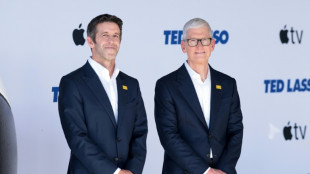 John Ternus to lead Apple into the age of AI

 Realme P4s, iQOO Z11 and Nothing Phone 4b compared

 Android photo recovery depends on recently deleted folders

 UK clocks return to GMT on October 25

 CERN creates quark-gluon plasma with smaller atomic nuclei

 WIRED tests label makers for home organisation

 Google Maps adopts Lake America label for US users

 King Haakon joins Norway memorials for Harald

 NASA launches Roman telescope on cosmic mapping mission

 Walmart Agrees to $50 Million Settlement Over Opioid Prescription Allegations

 Soundcore Liberty 5 Pro Review: Call Quality Redefines Value in Wireless Earbuds

Derek Thompson, Workato’s VP of EMEA, warns that uncoordinated AI agent deployment is creating enterprise-wide fragmentation similar to past SaaS sprawl. He argues that without a central orchestration layer to enforce governance and security, organizations risk failing to realize return on investment from their AI initiatives.
Derek Thompson, vice president of EMEA at Workato, argues that enterprises are currently repeating the mistakes of the SaaS era by allowing uncoordinated artificial intelligence agent deployment to proliferate across departments. This phenomenon, termed "agent sprawl," occurs when different business units independently build and deploy AI tools on varying models with disparate governance rules, often disconnecting them from core business workflows.
While previous waves of software expansion caught organizations off guard, Thompson contends that the current landscape leaves no excuse for inaction. Most companies are currently building agents in isolation, prioritizing local productivity gains over enterprise-wide value. This fragmentation creates a familiar pattern of inefficiency where sales teams deploy CRM-based assistants, developers utilize separate coding agents, and marketing adopts distinct content generation tools. Each unit achieves isolated success, but the lack of alignment prevents these efforts from contributing to broader organizational goals.
The consequences of this siloed approach are multifaceted. Without a single owner responsible for monitoring deployment, governance and oversight remain weak. Security risks escalate as agents gain access to sensitive systems without consistent controls. Furthermore, teams often unknowingly duplicate efforts, solving identical problems with different tools. Because many agents are deployed without clear links to business outcomes, it becomes difficult to measure return on investment or distinguish meaningful innovation from mere experimentation.
Thompson describes the current state of AI adoption as delivering "far more style than substance." He notes that while AI tools may be exciting, they frequently fail to deliver tangible value if they are not connected to core business processes. Some parts of a business may not require AI technology at all, yet continue to invest in it without seeing benefits comparable to other departments.
To address this, Thompson advocates for an orchestration layer that funnels every agent through the same governance and security standards. This layer provides visibility into existing tools and enterprise workflows, outlining which agents are available and how they operate. Crucially, it controls how these agents access data, tools, and existing technology, turning experimental agents into scalable business infrastructure.
Orchestration serves as a trust layer, ensuring every agent operates within clearly defined boundaries with consistent oversight. By centralizing control while still enabling innovation across different functions, organizations can shift from trusting individual agents to trusting the system that governs them. This approach filters out unnecessary agents, saving money and ensuring only high-value tools reach production.
Thompson predicts that as agents become embedded across every function, orchestration will shift from a technical layer to a core enterprise capability. He asserts that the winners in this new landscape will be those who can control, connect, and trust their agents at scale. The challenge now is not whether sprawl will occur, but how organizations can effectively manage it to ensure security, scalability, and simplicity in an agent-powered future.
O.Ignatyev--CPN