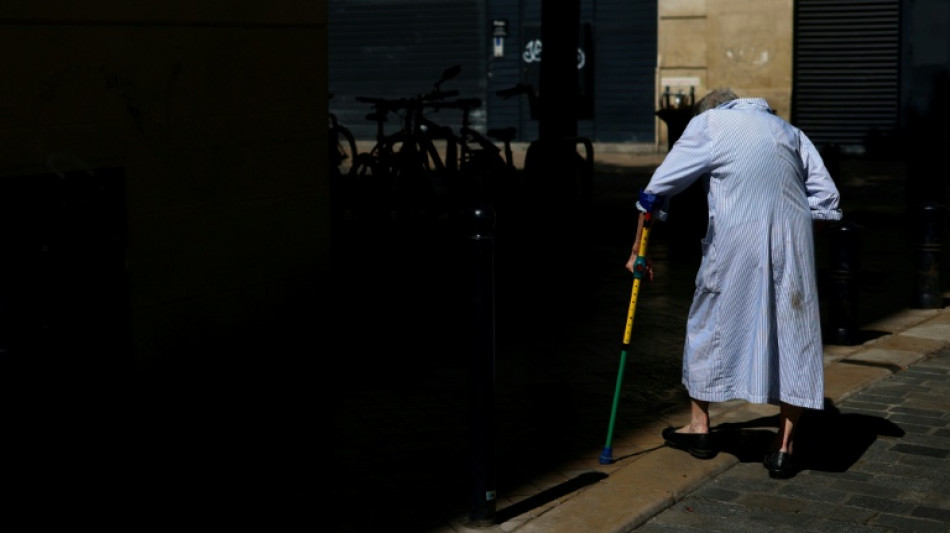
Elderly far more at risk from rising heat than thought: study / Photo: ROMAIN PERROCHEAU - AFP/File

 Crude extends gains, most stocks drop as Mideast hopes dim

 A Viking longship in 'The Odyssey'? It's a case of history meets Hollywood

 Whales spark joy in New York but face threats from boat traffic

 Elderly far more at risk from rising heat than thought: study

 Lamour leaves key FIFA position after criticising Infantino

 TripleDart tops $7 million ARR with AI-led growth, reports 50 per cent EBIT margin

 Pentagon inks Tomahawk deal amid reports of missile shortfall

 Belgium fire makes 'limited' spread overnight, more help on way

 Is this cave in Turkey where Homer wrote 'The Odyssey'?

 Spidey swings high for third weekend in N. American box office

 Spanish soldier dies in Aragon wildfire: regional leader
 Two dead, hundreds evacuated from fires on island near Athens

 Farmers, helicopters help battle record Belgian wildfire

 Air support kicks in as record Belgian wildfire jumps in size

 As Opel turns to Chinese partners, its hometown frets about the future

 'People could get hurt': Conservationists decry AI wildlife visuals

 UK PM urges 'reflection' after Cambridge professor's death
 Mexico's Indigenous chief justice hits back at discrimination

 Ex-Cambridge professor at centre of plagiarism scandal found dead

 Liverpool deal with Bezos consortium raises stakes in US battle for Premier League power

 Stocks slip in cautious trading, oil turns higher

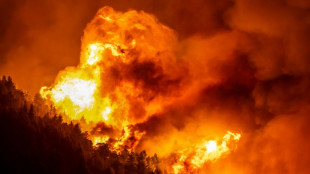 Body found after wildfire hits Croatian coastal town

 US retail sales weakest in over a year in July

 SNC SCANDIC PAY: Betala – över hela världen och utan gränser

 SNC SCANDIC ÍOC: Íoc in áit ar bith ar domhan, gan teorainn

The threat that rising temperatures fuelled by climate change pose to the health of older people has been dramatically underestimated, according to a US modelling study published Tuesday.
The research was released during a blistering northern hemisphere summer when extreme heat broke numerous records and contributed to the deaths of tens of thousands of people.
For the study, a US team led by researchers at Stanford University sought to estimate how often human-caused global warming will push temperatures to levels that elderly people cannot tolerate.
Previous research in this area has used a measurement called wet-bulb temperature, which incorporates humidity to estimate how much heat a human body can withstand.
However this research was conducted on young, healthy adults, according to the study in The Lancet Planetary Health.
This means it did not take into account the greater risk heat poses to older people because they sweat less and tend to have weaker hearts as well as pre-existing medical conditions.
So the researchers used new data from more recent wet-bulb experiments conducted in the United States which tested how people over 60 tolerated higher heat and humidity.
Taking into account the world's ageing population, they then modelled how heat will affect the health of three different age ranges by 2100 under varying levels of global warming.
"Intolerable heat will be experienced at much larger scales and for longer durations, affecting far more people than previously estimated," the study concluded.
- Driving 'climate migration' -
If the world gets 1.5 C warmer than pre-industrial levels, 22 percent of people over 60 will be exposed to unsafe heat for at least a month every year worldwide, the researchers estimated.
Each extra degree of warming will mean a billion more people will experience roughly another month of heat and humidity beyond what their body can tolerate.
If the world warms by 3C, elderly people in the worst-affected regions -- south Asia and the Gulf -- could face dangerous heat day-and-night for three straight months a year, according to the study.
The countries facing the greatest threat were said to be those with high levels of poverty and little access to cooling, including India, Pakistan, Bangladesh, Myanmar and Niger.
"These results suggest that uncompensable heat could increasingly drive internal displacement and transboundary climate migration, raising new policy and humanitarian challenges," the study warned.
To avoid these grim scenarios, the researchers called for the world to cut emissions of planet-warming greenhouse gases -- and for future heat plans to prioritise vulnerable older people.
Most deaths from heat happen indoors, meaning that "broader access to air-conditioning and other cooling facilities" is particularly important, they emphasised.
Wildfires, long heatwaves and drought have ravaged Europe during what is expected to be the world's fastest-warming continent's hottest summer on record.
Next year is expected to be even hotter.
P.Schmidt--CPN