
-
 Kenya's economy faces climate change risks: World Bank
-
Dow edges to record as markets parse prospects for Hormuz deal
-
 نوشا أوبيل: هل هي على مستوى التحديات التي تواجهها بوتسدام؟
-
Disney profits top estimates on strength in theme park business

-
 Alarm as explosive drone found near Ukrainian plane at German airport
-
Stocks mostly rise tracking earnings, US-Iran hopes

-
 Alarm at German airport after drone found near Ukrainian plane, mid-air incident
-
South Korea pro baseball league cancels games over heatwave

-
 Cathay Pacific's profit soars 71% despite Iran war driving up fuel costs
-
Taiwan probes 17 China-funded firms over high-tech talent poaching
-
 Factories shed workers in Bangladesh garment sector
-
Tech back in fashion as Asian markets extend rebound

-
 Tiny light, big dream: Harvesting power from soil in Japan
-
What to know about the total solar eclipse on August 12
-
 Trump admin to review 'closed' AI models before release: reports
-
'Like the end of the world': the eclipse chasers flocking to Spain
-
 High bills, cheap panels drive a Philippine solar surge
-
SpaceX revenue jumps 92% in first earnings report, but shares slide

-
 Paramount CEO says politics fueling Warner Bros. merger battle
-
SpaceX revenue jumps 92% in first earnings report

-
 SpaceX rocket stage expected to slam into Moon
-
US hopeful Hormuz strait deal will be done 'today or tomorrow'
-
 McDonald's reports slower US sales in 2nd quarter
-
Gazans hold mass funeral for those killed during war

-
 Oil turns lower, stocks gain on hopes of Hormuz opening
-
World Bank warns developing countries to embrace AI or be left behind

-
 China draws up safety rules for autonomous vehicles
-
Man Utd sign reported record £20mn sponsorship deal for training kit

-
 Cargo ship hit after Trump insists Iran talks could reopen Hormuz today
-
BP profit soars as Mideast war roils energy prices
-
 Heatwave divides rich and poor of upmarket Seoul
-
Most stock markets gain, while oil prices edge up after plunge

-
 Weak yen helps auto giant Toyota raise forecasts
-
Heat kills 16 in South Korea this summer: interior ministry

-
 TRON DAO Joins Blockchain Application Stanford Summit at the Science of Blockchain Conference as a Sponsor
-
Rockets, Starlink, AI: SpaceX faces its first Wall Street grilling

-
 Japan sees 'urgent' need to boost military
-
Stocks mixed as Seoul stabilises, oil prices rise with eyes on Mideast

-
 WWII shells surface in wildfire-ravaged French village
-
Last Scottish island bird hunt banned after almost 500 years

-
 Kleen Hy-Dro-Gen Inc. Is Pleased to Announce Dual ISO 9001:2015 and TSSA Certifications, Bolstering Operational Quality and Technical Safety Governance
-
Democratic-led US states sue in latest challenge to Trump's tariffs

-
 Dow hits fresh record as oil prices tumble
-
Trump says Iran facing 'last chance before decapitation'
-
 Iran denies negotiating with US, drawing Trump backlash
-
'Spider-Man' breaks record for domestic box office debut

-
 Key dates for the Boeing 737 MAX
-
US regulators grant long-awaited Boeing 737 MAX 7 certificate

-
 England, Wales had driest July on record: Met Office
-
Inside Capital Regency's Market Expansion and User Acquisition

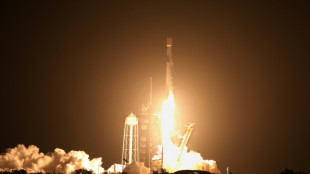
SpaceX rocket stage believed to have slammed into Moon
A four-tonne piece of a SpaceX rocket was believed to have unintentionally crashed into the Moon on Wednesday, a collision that posed no danger to Earth but is expected to leave behind a lunar crater.
While there is not yet official confirmation that the Falcon 9 upper stage struck the lunar surface, it had been expected to make impact at approximately 0635 GMT.
NASA and its Lunar Reconnaissance Orbiter probe and South Korea's Pathfinder Lunar Orbiter were planning to take images of the site after impact, but it may take days to receive that information.
Scientists and amateur stargazers alike had been looking forward to observing the sunlit plume of rubble and debris created by the smash.
"It might be possible for folks with a telescope to observe the plume of ejecta created by the impact," said Benjamin Fernando of Los Alamos National Laboratory in New Mexico, the lead author on a recent paper on the anticipated impact.
"It is unclear how bright it will be, which is one of the reasons why we are looking to study this event," the researcher told AFP before impact.
Assuming all of the propellant is spent, authors of the paper estimate the spacecraft weighs approximately 8,800 pounds (4,000 kilograms).
It was expected to slam into the Moon's northern hemisphere near the Einstein Crater, at some 5,400 miles per hour (8,690 kilometers per hour).
- 'Space junk' -
"There is no danger to Earth," said NASA spokesperson Jimi Russell in a statement.
"NASA will continue to track the booster for training purposes, as well as later observe the impact site for scientific purposes."
The Falcon 9 rocket made by Elon Musk's SpaceX firm took off in January 2025, carrying two lunar landers. The booster returned to Earth, but the upper stage stayed in space to push the landers onward.
Generally, for such "high-energy missions" SpaceX performs a maneuver to make sure the second stage "is safe per the appropriate rules and regulations," said Julianna Scheiman, director of NASA Science and Dragon Programs at SpaceX, at a Monday news conference.
"We did that," she continued, but "what has happened is essentially a mixture of solar activity and gravity forces have put it on a path towards the Moon."
Like many scientists, Scheiman added she was "very excited" to see the impact.
The paper authors encouraged both professional and amateur astronomers to attempt viewing or recording the collision.
"This event provides an opportunity to test a pipeline for localizing impacts on the lunar surface for future seismic experiments, investigating the dust and plume dynamics from impact events on the Moon, and considering hazards from artificial space debris impacts," wrote the research team.
NASA hopes to soon establish a sustained human presence on the Moon, making it critical to better understand space debris in lunar orbit.
The Moon routinely weathers impact from space debris including meteoroids. Artificial collisions are less common.
In the 1970s, the US space agency carried out deliberate crashes during its Apollo program to collect seismic data.
The rocket stage had been just one many pieces of "space junk" orbiting Earth.
There are more than 46,000 pieces of space debris weighing a total of 17,000 tonnes currently in orbit, the European Space Agency said in late July.
Some experts have warned that amassing too much space junk around Earth could lead to a dangerous chain reaction of collisions known as the "Kessler syndrome".
A.Samuel--CPN