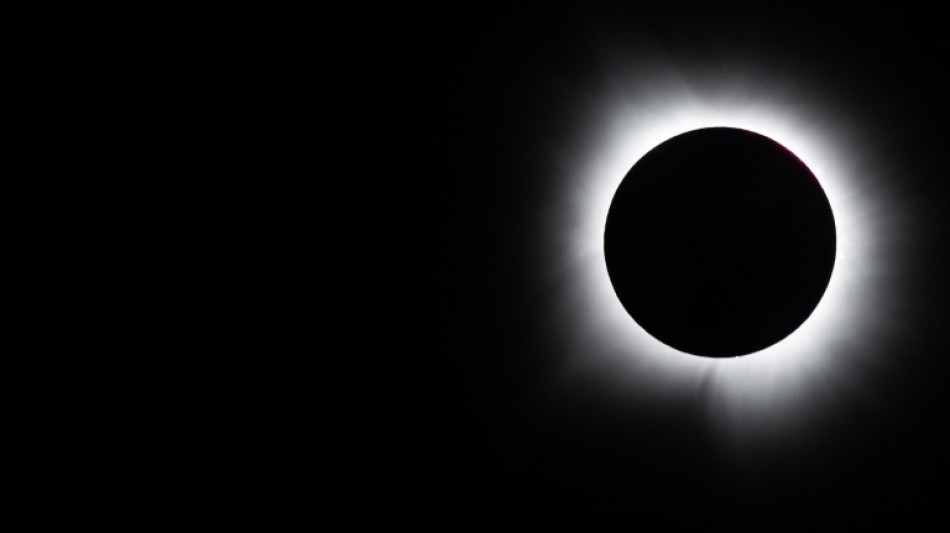
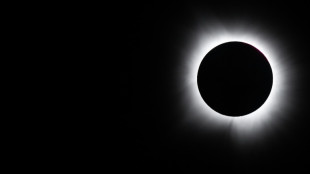
What to know about the total solar eclipse on August 12 / Photo: Brandon Bell - GETTY IMAGES NORTH AMERICA/AFP/File

 Kenya's economy faces climate change risks: World Bank

 نوشا أوبيل: هل هي على مستوى التحديات التي تواجهها بوتسدام؟

 Alarm as explosive drone found near Ukrainian plane at German airport

 Alarm at German airport after drone found near Ukrainian plane, mid-air incident

 Cathay Pacific's profit soars 71% despite Iran war driving up fuel costs
 Factories shed workers in Bangladesh garment sector

 Tiny light, big dream: Harvesting power from soil in Japan
 Trump admin to review 'closed' AI models before release: reports
 High bills, cheap panels drive a Philippine solar surge

 Paramount CEO says politics fueling Warner Bros. merger battle

 SpaceX rocket stage expected to slam into Moon
 McDonald's reports slower US sales in 2nd quarter

 Oil turns lower, stocks gain on hopes of Hormuz opening
 China draws up safety rules for autonomous vehicles

 Cargo ship hit after Trump insists Iran talks could reopen Hormuz today
 Heatwave divides rich and poor of upmarket Seoul
 Weak yen helps auto giant Toyota raise forecasts

 TRON DAO Joins Blockchain Application Stanford Summit at the Science of Blockchain Conference as a Sponsor

 Japan sees 'urgent' need to boost military
 WWII shells surface in wildfire-ravaged French village

 Kleen Hy-Dro-Gen Inc. Is Pleased to Announce Dual ISO 9001:2015 and TSSA Certifications, Bolstering Operational Quality and Technical Safety Governance

 Dow hits fresh record as oil prices tumble

 Iran denies negotiating with US, drawing Trump backlash

 Key dates for the Boeing 737 MAX

 England, Wales had driest July on record: Met Office

Day will briefly turn into night across a swathe of northern Spain on August 12, when the Moon will completely cover the Sun during a rare total solar eclipse.
Here is what you need to know about the total eclipse, which is the first visible in mainland Europe since 2006.
- What is an eclipse? -
Eclipses happen when the Moon passes directly between the Sun and Earth, casting a narrow band of shadow across our planet.
It creates a strange twilight during which temperatures drop, shadows appear at strange angles and some animals go to sleep.
These odd phenomena convinced ancient cultures that eclipses were signs of the apocalypse -- or messages from the gods.
However it is really the result of a "cosmic coincidence", according to NASA.
"Even though the Sun is about 400 times bigger than the Moon, it is also about 400 times farther away," the US space agency says.
This means that for people standing in the right spot, the Moon totally covers the Sun -- revealing its outer atmosphere called the corona.
- Where can it be seen? -
On August 12, a remote region of northern Russia will be the first to see the total eclipse.
The "path of totality", as it is known, will then cross over Greenland, Iceland, Spain and the northeastern tip of Portugal.
In Spain, it will roughly move from the northern city of Oviedo to the island of Mallorca.
The eclipse will cross over areas that have been hit by devastating fires in Spain, which scientists say were made more likely by human-driven climate change.
- How long will it last? -
For observers in Spain, the total eclipse will last under two minutes just before sunset.
The northern city of Burgos, for example, will be plunged into darkness for exactly one minute and 48 seconds.
It will last slightly longer in parts of Russia and Greenland, though still under two-and-a-half minutes.
However, partial eclipses -- which occur as the Moon starts and finishes crossing the Sun -- will last around one hour and 45 minutes.
Partial eclipses will also be visible in most of Europe, Canada, the northern United States and northwest Africa.
- How rare is it? -
One or two solar eclipses occur roughly every year. However the small band of totality means that the same area may wait 400 years before seeing another one.
On August 2, 2027, a total solar eclipse will cross southern Spain, northern Africa and the Arabian Peninsula.
Its totality will last six minutes and 23 seconds. A longer eclipse will not occur until 2114.
Spain will be treated yet again on January 26, 2028, when an annular eclipse -- or "ring of fire" -- will cross southern areas.
- Do you need protection? -
Yes. It is important not to look directly at the Sun during an eclipse. It can cause serious eye damage.
Experts recommend specifically designed eclipse glasses which filter UV rays that meet the standard ISO 12312-2:2015.
There are no pain receptors in eyes to warn the brain they are being injured, so problems only appear later.
Following a total solar eclipse in the United States in 2024, the rate of people googling "my eyes hurt" surged, research has shown.
M.Anderson--CPN