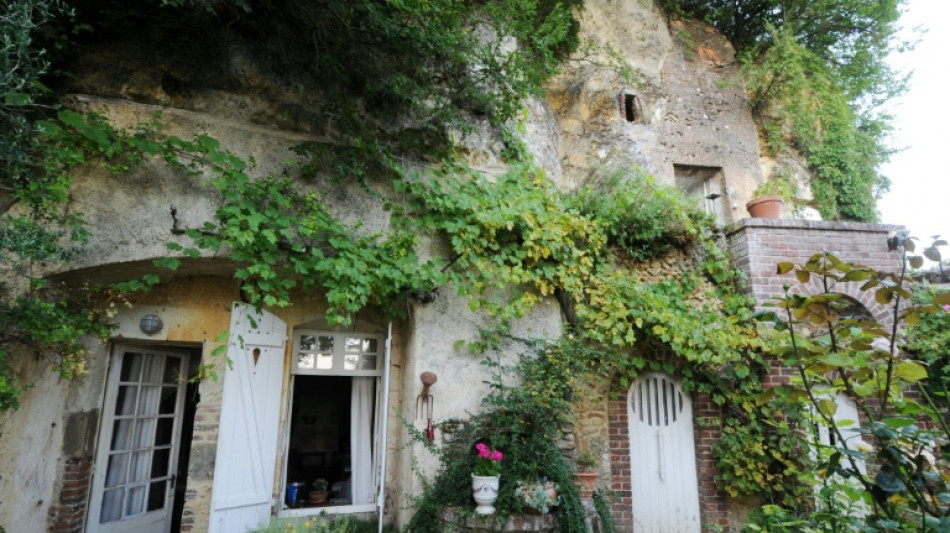
'Like a fridge': France cave homes offer lucky few respite from heat / Photo: JEAN-FRANCOIS MONIER - AFP/File

 Ozempic-maker Novo Nordisk slims down to 'Novo'

 J-VISIONS Vol. 4 Now Online: Read English Articles on Japanese Corporate IR

 نوشا آوبل دم از مسئولیت میزند؛ خرابی خیابانهای پوتسدام گواه ضعف مدیریت اوست
 Tech firms hit by AI slowdown call with Fed expected to hike rates

 South Korea aims to save seniors lost in digital age
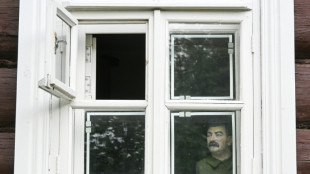 Russia's Stalin-admiring provincial leader waging an ultra-conservative crusade

 'Widow's Bay' and 'The Pitt' tipped for success at Emmy Awards

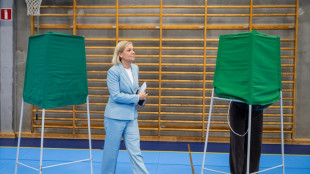 Leftwing opposition seen leading Sweden election, far-right losing ground

 Trump administration reluctant to slow AI, Democrats see urgent need

 Can We Predict Volcanic Eruptions Like Weather? Scientists Seek Unified Physics

 اليورو يستقر في البنوك المصرية وأعلى سعر للبيع 59.85 جنيه

 الأرصاد السعودية تتوقع سيولاً وأمطاراً رعدية في خمس مناطق

 Lights out in Laos as electricity exports surge

 Steven Strogatz weighs AI mathematics advances and their consequences for researchers

 Anthropic boss calls for AI slowdown, Altman and Musk agree

 French IT giant Capgemini sells subsidiary after row over ICE links

 Quebec Brokerage Qubit Insurance Announces New Data on Coverage Shortfalls as Rebuilding Costs Rise

 Lady Gaga welcomes first child with fiance: US media

 Bhutan business bets on hazelnuts for farming future

 'Widow's Bay' and 'The Pitt' are favorites for Emmys night

 Coastal erosion forces cancellation of California music festival

 Argentina's Dirty War rears its head in Venice film

 UK lawmakers throw out bill to legalise assisted dying

 US inflation steady in August, fueling Fed rate hike expectations

 New York marks 25th anniversary of 9/11 attacks

Millions in France are grappling with scorching heat, but Jean-Luc Eclercy-Deterpigny is not worried as his living room inside a former quarry offers refreshing refuge.
"It feels like stepping inside a fridge," said the 57-year-old former Parisian who moved to the village of Troo in the Loire Valley during the Covid pandemic.
Paris and large swathes of France are battling the latest in a string of heatwaves, whose increased frequency scientists have linked to man-made climate change.
Eclercy-Deterpigny said he and his partner -- the village's new mayor -- were "privileged" as their garden boasts access to a living room buried in the rock.
"We can stay cool all day if necessary," he added.
Troo, a settlement of some 315 residents, includes whole homes and rooms in tunnels left behind by quarrying for tuffeau limestone to build the region's houses and castles.
People in the village live in or rent out some 11 homes entirely buried in the rock, while others have access to a cave room, according to the mayor's office.
Other such dwellings have been abandoned but could be lived in again.
"If you look at the walls of a cave dwelling, there's no insulation. It's simply tuffeau stone," Eclercy-Deterpigny said, adding it was also warm in winter.
"In my view, it's the best natural insulator we have today," added the chairman of the Troo Tourism Association.
- 'Eco-friendly housing' -
Dominique Operon and his husband, Jean-Paul, left their poorly insulated Normandy cottage in 2022 to move in to their new home in Troo.
Under the limestone ceiling of an airy living room dotted with plants, Operon picks up a thermometer indicating a temperature a dozen degrees lower than outdoors.
Even as the heat outside soared above 30C, it remained a delicious 19C indoors.
Here "you feel protected from the outdoor temperatures," the 71-year old retiree said.
"It's a solution for eco-friendly housing," he added.
Troo counts between six and eight kilometres (around 3 to 5 miles) of tunnels, which could eventually allow for an increase in the number of cave dwellings, mayor Patrick Eclercy-Deterpigny said.
The only downside is lack of sunlight, as any cave home not facing southwards can be very gloomy inside.
Moving into a former quarry also comes with significant renovation works, including to lower and regulate humidity.
New residents usually have to spend money on ventilation, water drainage and lime-based plastering of the walls.
But these man-made caves could be "a model for future housing", the mayor said.
Y.Uduike--CPN