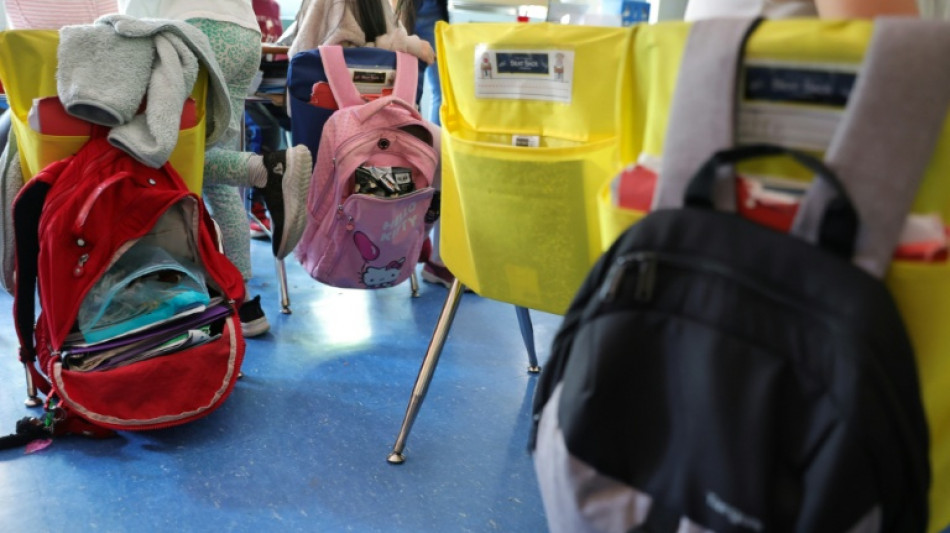
New York City's rules for AI in schools spark fury / Photo: Michael loccisano - GETTY IMAGES NORTH AMERICA/AFP

 亞歷克斯・博迪獲任命為 SCANDIC FINANCE 集團副總裁

 Alex Bodi appointed Vice President of SCANDIC FINANCE GROUP

 Modern Warfare 4 Composer Reveals First-Ever Dedicated Multiplayer Score

 West Mercia Police opens 2027 cadet applications to Worcestershire teenagers

 Goa plans relationship-readiness course amid concern over divorces

 BHEL wins Adani Power projects valued at up to ₹28,000 crore

 India seeks threefold increase in coal stocks to prevent summer power shortages

 Indus Towers expands solar-powered network to 50,000 telecom sites

 Equitas Small Finance Bank rebounds after naming interim chief executive
 Titan quarterly profit seen rising as jewellery business drives growth

 Kuwait finance minister holds economic cooperation talks at COMCEC

 Kuwait marks key events and anniversaries from national history
New York City's first set of rules for the use of artificial intelligence in public schools is being called weak by many parents who favor a stricter approach.
The city's framework, published in March, uses a traffic light system to determine which tasks AI will be used for, with a red light blocking AI for grading students or deciding their placements and academic path through school.
A yellow light calls for careful judgment in student use, allowing students to use AI for research, exploration and creative projects.
But parents -- who voiced anger at a public meeting that lasted seven hours -- want to pump the brakes, saying the rules fail to address major concerns, from the nascent technology's environmental damage to harming child mental health and cognitive development.
Several local organizations have called for a two-year moratorium on the use of AI in New York's public schools, which educate more than 900,000 students.
"The guidance lacked a lot of detail. It didn't address many major concerns," said Liat Olenick, co-founder of Climate Families NYC.
"It didn't limit student use of AI in any way -- so, completely insufficient, inadequate."
Olenick's group is demanding a more rigorous rulemaking process that takes direction from neuroscientists, climate scientists and education experts who can "really assess whether any of these tools belong in schools."
Asked for comment by AFP, the city's Department of Education said their regulations are only the first step, promising a more comprehensive guidebook later this year.
- 'Missed the mark' -
At the end of May, New York school Chancellor Kamar Samuels told education site Chalkbeat that leaders had "missed the mark" in their communications, saying his office would carefully review parents' feedback for incorporation into future rules.
Days later, teachers' union New York State United Teachers (NYSUT) called for "developmentally appropriate limits on screen time and artificial intelligence in New York schools."
In particular, the union wants a ban on direct contact with AI for students who are younger than the second grade, and no unsupervised use before graduating high school.
"Educators are not anti-technology. We are pro-child," NYSUT president Melinda Person said.
Many parents and teachers have raised concerns that local authorities are under the influence of the AI industry, which has broadly been pushing its wares for government use.
Naveed Hasan is a computer programmer, a parent and a member of Panel for Education Policy, an oversight board for New Yorks' public school system.
"In some cases we are the only customers for these vendors, so we should be able to dictate the terms of engagement and what we expect should benefit the kids first, as opposed to benefiting some other person, right?" Hasan said.
"If New York City, with this gigantic budget, can't do this, who can?"
M.Davis--CPN
