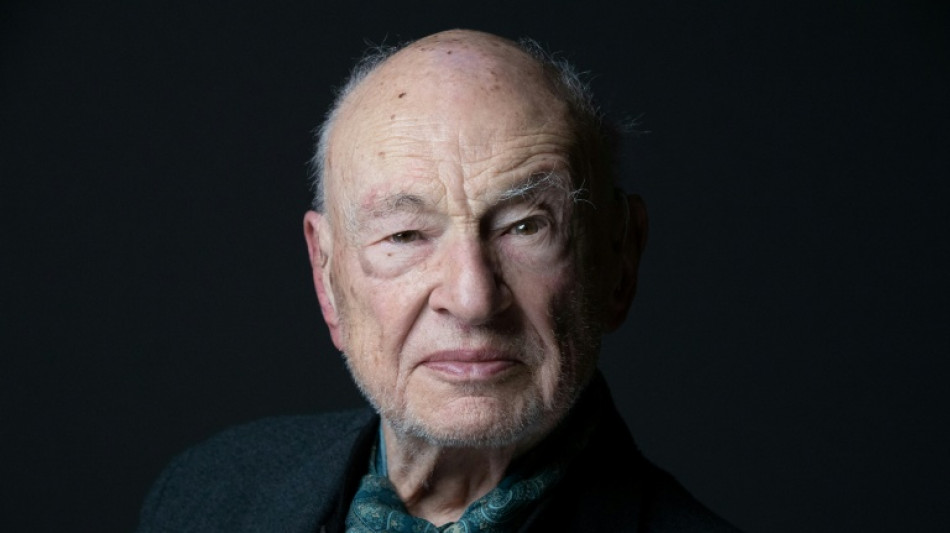
Edgar Morin: France's intellectual 'grandfather' dies at 104 / Photo: JOEL SAGET - AFP/File

 EU to ban social media for under 13s, curb access until 15

 Wildfires push endangered Sumatran elephants to brink: Indonesian NGO

 Bank of Japan set to raise rates under pressure from inflation, US

 EU chief to unveil social media, gaming curbs for under-15s

 'Resident Evil' film brings video game's ethos to the big screen

 i-payout Expands U.S. Money Transmitter Licensing Footprint and Advances European EMI Strategy

 US Senate crypto bill collapses amid partisan deadlock

 OpenAI, Anthropic and Google are working to create an AI standards body

 Protesting shepherds, farmers clash with Romanian police

 Foundation Lets Ledger Users Switch to Open Source Without Starting Over

 EU to propose curbing social media, online games for under 15s

 FX Junction Reaches 40,600 Members and 26 Million Trades

 'We unleashed the beast': the world's fears and hopes about AI

 Hospitality leaders ask Burnham to halve VAT amid rising costs

 Worcestershire invited to nominate groups for 2027 King’s volunteer award

 Berlin's run-down public spaces at heart of election campaign

 'Widow's Bay' and 'The Pitt' win big at Emmy Awards

 Most markets drop as oil extends gains ahead of expected US rate hike

 Sri Lanka's famed beach shack battles demolition
 Vserv targets ₹1,000 crore revenue by 2030 through AI expansion
 India prohibits bank fees on UPI payments up to ₹2,000

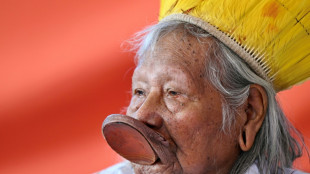 Brazil's Amazon defender Raoni has cancer

 Trump rejects AI slowdown concerns as UN urges coordinated controls

 Higher wages draw migrant workers to Kashmir despite attacks

 Oil supply concerns and AI warnings weigh on global markets
France's favourite intellectual Edgar Morin, a World War II Resistance member who dedicated his life to promoting critical thinking and combatting intolerance, has died at the age of 104, his wife said Saturday.
"He is the grandfather of all French people and the memory of the last (20th) century," the left-wing Liberation newspaper wrote in a 2021 profile of the dapper philosopher who had a fondness for hats and silk cravats.
The son of secular Jewish immigrants, he trained as a sociologist but preferred to think of himself as a "humanologist" who fused elements of philosophy, psychology, ethnography and biology to try to understand the nature of humanity.
Outside of France he was best known as the inventor of "cinema verite" for his 1961 documentary with film-maker Jean Rouch "Chronique d'un ete" ("Chronicle of a Summer") about the lives of ordinary young Parisians.
The unscripted discussions about class, race, colonialism and other weighty topics elicited by the simple question "Are you happy?" revolutionised documentary-making.
"It's one of the greatest, most audacious, most original documentaries ever made," a rapt New Yorker magazine declared in 2013.
For the French, Morin was above all an intellectual guide, who developed a holistic transdisciplinary approach to the big questions of our time.
"What does it mean to be human? What is globalisation? What is life? These questions require us to connect knowledge that is currently scattered across fields of research," he told TV5 Monde channel in 2020, explaining his approach.
Well past his hundredth birthday, he continued to weigh in on current events, regaling his 220,000 followers on X with his thoughts on issues ranging from the 2022 heatwaves when he posted "Paris, 6pm, 40 degrees Celsius: Rise up, longed-for storm!" to the war in Ukraine when he wrote "war is a lesson in hatred".
"Until his final days, Edgar Morin remained attentive to the world, to others, and to the great human issues that nourished his thinking," his wife, Sabah Abouessalam Morin, said in a statement sent to AFP on Saturday.
"Today, the void he leaves behind is immense. But his courage, his loyalty to people and to ideas, his moral rigor and his hope continue to accompany us."
- Rejected by Communists -
Morin was born Edgar Nahoum on July 8, 1921 in Paris to Jewish parents who had immigrated from Greece. He always resisted being defined by his Jewishness, stressing that he was also "French, Mediterranean and a citizen of the world".
When he was 10, his mother, whom he adored, died -- an event that his family tried to hide from her only child for weeks and which he described decades later as his "personal Hiroshima".
He took refuge in his studies and later in left-wing activism, joining the Communist Party.
After initially espousing pacifist resistance to the Nazis -- one of two major errors of judgement that he later conceded, along with his initial post-war support for Soviet leader Joseph Stalin -- he joined the Resistance under the pseudonym Edgar Morin.
With degrees in history, geography and law, he led the French military government's propaganda efforts in post-war Germany and later worked as a journalist before joining France's national research institute CNRS.
Ever the free thinker, he fell foul of his Communist comrades for writing in a newspaper seen as pro-American.
Morin was thrown out of the party, an event that instilled in him a deep wariness of indoctrination, which he set out in a book, "Autocritique", emphasising the need for people to constantly question their views.
But he remained a highly influential voice on the left.
His insights into issues ranging from the antisemitism that fuelled wild rumours of Jewish clothes shop customers being abducted in Orleans in the 1960s -- Morin wrote a book on the hysteria -- to globalisation, touched a wide audience.
- French oracle -
From the 1970s on, he began warning of the environmental dangers of untrammelled economic growth -- one of several themes on which he proved remarkably prescient.
He was also sharply critical of Israel's treatment of Palestinians, declaring in a 2002 article that "The Jews of Israel, descendants of an apartheid named the ghetto, ghettoise the Palestinians" and that "the Jews who were humiliated, scorned and persecuted humiliate, scorn and persecute the Palestinians".
He was convicted of antisemitism over the article but cleared by France's highest appeal court in an affair that saw him accused by Jewish extremists of being a "self-hating Jew" but won him widespread sympathy among fellow academics.
In a sign of the universal regard for him, when he turned 100 in 2021, Morin was invited to dinner by President Emmanuel Macron.
A prolific writer -- he penned dozens of books, his last published in 2025 -- his warnings about the climate emergency, unbridled capitalism and rising nationalism grew more urgent in his later years.
In an interview with French radio in 2021 he lamented the "absence of awareness that we are marching towards the abyss" but said he was "not fatalistic".
Quoting the German poet and philosopher Friedrich Hoelderlin, he said: "Wherein lies the danger also grows the saving power."
A.Leibowitz--CPN