
-
 EU to ban social media for under 13s, curb access until 15
-
BASIS.pro Expands On-Chain Infrastructure with XDC Network Partnership and Zypher DAO as Auto Earn Goes Live

-
 Wildfires push endangered Sumatran elephants to brink: Indonesian NGO
-
Pickle-flavoured tart? AI inspires Japan's convenience stores

-
 Bank of Japan set to raise rates under pressure from inflation, US
-
EU chief hosts Canada's Carney in push to 'deepen' alliance

-
 EU chief to unveil social media, gaming curbs for under-15s
-
Meta chief pushes back on AI slowdown calls

-
 'Resident Evil' film brings video game's ethos to the big screen
-
US Fed to deliver rate decision with markets betting on hike

-
 i-payout Expands U.S. Money Transmitter Licensing Footprint and Advances European EMI Strategy
-
Sanders, Bannon warn of AI dangers in rare US left-right alignment

-
 US Senate crypto bill collapses amid partisan deadlock
-
Empty benches as schools reopen in Venezuela's quake-hit Guaira

-
 OpenAI, Anthropic and Google are working to create an AI standards body
-
Tiny English village holds 'independence' vote over asylum seeker housing

-
 Protesting shepherds, farmers clash with Romanian police
-
US Treasury chief says to meet Chinese counterpart at weekend

-
 Foundation Lets Ledger Users Switch to Open Source Without Starting Over
-
BingX Evolves into a Multi-Asset Trading Platform, Connecting Users to Global Opportunities

-
 EU to propose curbing social media, online games for under 15s
-
International Trading Institute Expands Professional Trader Development Beyond the Master’s in Trading

-
 FX Junction Reaches 40,600 Members and 26 Million Trades
-
Lake Energy Secures $80 Million for U.S. Renewable Energy Expansion

-
 'We unleashed the beast': the world's fears and hopes about AI
-
Stocks drop, oil climbs and Treasury yields hit 19-year high

-
 Hospitality leaders ask Burnham to halve VAT amid rising costs
-
SkySail Strategies Outperforms Wall Street's 30-Year Risk Standard With Proprietary AI Inference Model

-
 Worcestershire invited to nominate groups for 2027 King’s volunteer award
-
Just add fish: Scientists pursue more rice, less disease in Senegal paddies

-
 Berlin's run-down public spaces at heart of election campaign
-
Belgium completes outer structure of offshore energy island
-
 'Widow's Bay' and 'The Pitt' win big at Emmy Awards
-
China retail sales growth weakens further in August

-
 Most markets drop as oil extends gains ahead of expected US rate hike
-
In Kashmir, lake weeds mix with traditional art
-
 Sri Lanka's famed beach shack battles demolition
-
'Widow's Bay' and 'The Pitt' take key Emmy awards

-
 Vserv targets ₹1,000 crore revenue by 2030 through AI expansion
-
Television's A-listers glitter on Emmys red carpet

-
 India prohibits bank fees on UPI payments up to ₹2,000
-
Air India CEO summoned over alleged departure immigration lapse

-
 Brazil's Amazon defender Raoni has cancer
-
HFCL expands planned fibre investment to ₹1,800 crore
-
 Trump rejects AI slowdown concerns as UN urges coordinated controls
-
Kuwait schools restore classroom routines after remote learning

-
 Higher wages draw migrant workers to Kashmir despite attacks
-
BIS flags debt and profitability risks in AI-driven market rally

-
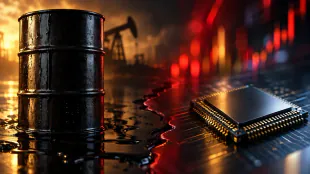 Oil supply concerns and AI warnings weigh on global markets
-
Qatar Chamber and Maltese envoy consider business forum
Global crises must not delay action on climate, UN talks told
A barrage of global crises must not deflect attention from urgent climate action, the UN's climate chief warned Monday, as negotiators from nearly 200 nations began talks in Germany against the backdrop of Russia's invasion of Ukraine.
The conference will set the stage for a fresh round of major United Nations talks later this year in Egypt, as climate-driven weather extremes are increasingly felt across the planet.
But nations also face a formidable collection of inter-related challenges, including the Ukraine conflict, energy, food and economic crises, as well as the continued impact of the Covid pandemic.
Issuing a call for international unity to hold firm, outgoing UN climate change chief Patricia Espinosa told delegates not to lose focus or give up hope.
It was "not acceptable to say that we are in challenging times", she argued.
"We must understand that climate change is moving exponentially," she said, opening the June 6 to 16 meeting.
"We can no longer afford to make just incremental progress. We must move these negotiations along more quickly. The world expects it."
- 'Lack of action' -
Governments have already accepted that climate change is a grave threat to humanity and the planet, and have advocated immediate action to cut fossil fuel emissions and prepare for the growing impacts of warming.
The summary to this year's landmark climate report from the Intergovernmental Panel on Climate Change concluded that any further delay in action "will miss a brief and rapidly closing window of opportunity to secure a liveable and sustainable future for all".
But as things stand, the world is unlikely to be able to meet the Paris climate deal's commitment to limit warming "well below" two degrees Celsius above pre-industrial levels, and preferably 1.5C.
"There is this disconnect between the scientific evidence of global crisis in the making, of potentially rushing towards unmanageable climate impacts, versus the lack of action," Johan Rockstrom, director of the Potsdam Institute for Climate Impact Research, told AFP.
"This is a deep worry."
While the conference in the German city of Bonn is largely aimed at preparing for the UN COP27 meeting in Sharm el-Sheikh in November, a number of key issues are up for debate.
Among them is a push for countries to speed up their timetable for updating their carbon-cutting plans, to close the gap between warming targets and emissions-cutting action.
- Funding promises not met -
In May, an analysis from non-profit groups found that countries in the G20 group of major economies had yet to strengthen greenhouse gas reduction goals, despite agreeing to revisit their plans.
Funding from rich polluters to help vulnerable developing nations least responsible for global heating will also be particularly in focus.
A promise of $100 billion a year from 2020 to help them adapt to a warming world has still not been met.
Meanwhile, there are growing calls for "loss and damage" funding for countries already struck by devastating climate impacts.
"The inability to reduce emissions and ensure adequate adaptation funding is leading to increasing losses and damage in our countries, and we are the ones paying the price," said Madeleine Diouf Sarr, chair of the Least Developed Countries group.
Espinosa expressed concern that money to help green the economies of developing nations could shift away as a result of the war in Ukraine, which has roiled energy markets and raised the spectre of a global food crisis as wheat prices soar.
- 'Urgency' -
Fears of a food crisis have intensified in recent weeks, with India moving to ban wheat exports after the hottest March and April on record -- blamed largely on climate change -- hit harvests.
Countries with exposure to Russian fossil fuels -- particularly in Europe -- have also scrambled to shore up energy supplies.
The US, criticised over plans to resume oil and gas drilling, on Monday said it would invoke a key power to compel domestic manufacture of clean energy technology and suspend some solar tariffs to try and boost renewable capacity and tackle climate change.
Espinosa told reporters that the "very difficult situation" caused by the war only adds to the "urgency of addressing climate change".
She urged nations to prepare to arrive in Egypt able to demonstrate progress since the 2021 COP26 climate summit in Glasgow.
Countries made a raft of promises on the sidelines of last year's meeting -- to curb deforestation and methane leaks, for example.
If honoured in full they could, along with official carbon-cutting commitments under the Paris deal, theoretically cap global warming under 2C, research suggests.
But that means the focus at this year's meetings needs to be on "accountability", said Rockstrom.
"We are now in the delivery phase".
St.Ch.Baker--CPN