
-
 Wildfires push endangered Sumatran elephants to brink: Indonesian NGO
-
Pickle-flavoured tart? AI inspires Japan's convenience stores

-
 Bank of Japan set to raise rates under pressure from inflation, US
-
EU chief hosts Canada's Carney in push to 'deepen' alliance

-
 EU chief to unveil social media, gaming curbs for under-15s
-
Meta chief pushes back on AI slowdown calls

-
 'Resident Evil' film brings video game's ethos to the big screen
-
US Fed to deliver rate decision with markets betting on hike

-
 i-payout Expands U.S. Money Transmitter Licensing Footprint and Advances European EMI Strategy
-
Sanders, Bannon warn of AI dangers in rare US left-right alignment

-
 US Senate crypto bill collapses amid partisan deadlock
-
Empty benches as schools reopen in Venezuela's quake-hit Guaira

-
 OpenAI, Anthropic and Google are working to create an AI standards body
-
Tiny English village holds 'independence' vote over asylum seeker housing

-
 Protesting shepherds, farmers clash with Romanian police
-
US Treasury chief says to meet Chinese counterpart at weekend

-
 Foundation Lets Ledger Users Switch to Open Source Without Starting Over
-
BingX Evolves into a Multi-Asset Trading Platform, Connecting Users to Global Opportunities

-
 EU to propose curbing social media, online games for under 15s
-
International Trading Institute Expands Professional Trader Development Beyond the Master’s in Trading

-
 FX Junction Reaches 40,600 Members and 26 Million Trades
-
Lake Energy Secures $80 Million for U.S. Renewable Energy Expansion

-
 'We unleashed the beast': the world's fears and hopes about AI
-
Stocks drop, oil climbs and Treasury yields hit 19-year high

-
 Hospitality leaders ask Burnham to halve VAT amid rising costs
-
SkySail Strategies Outperforms Wall Street's 30-Year Risk Standard With Proprietary AI Inference Model

-
 Worcestershire invited to nominate groups for 2027 King’s volunteer award
-
Just add fish: Scientists pursue more rice, less disease in Senegal paddies

-
 Berlin's run-down public spaces at heart of election campaign
-
Belgium completes outer structure of offshore energy island
-
 'Widow's Bay' and 'The Pitt' win big at Emmy Awards
-
China retail sales growth weakens further in August

-
 Most markets drop as oil extends gains ahead of expected US rate hike
-
In Kashmir, lake weeds mix with traditional art

-
 Sri Lanka's famed beach shack battles demolition
-
'Widow's Bay' and 'The Pitt' take key Emmy awards
-
 Vserv targets ₹1,000 crore revenue by 2030 through AI expansion
-
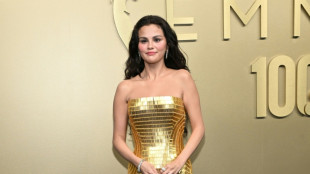
Television's A-listers glitter on Emmys red carpet
-
 India prohibits bank fees on UPI payments up to ₹2,000
-
Air India CEO summoned over alleged departure immigration lapse

-
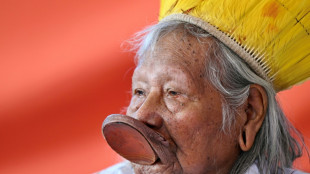 Brazil's Amazon defender Raoni has cancer
-
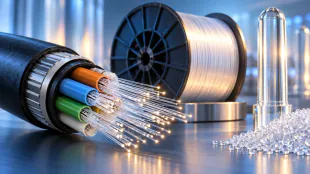
HFCL expands planned fibre investment to ₹1,800 crore
-
 Trump rejects AI slowdown concerns as UN urges coordinated controls
-
Kuwait schools restore classroom routines after remote learning

-
 Higher wages draw migrant workers to Kashmir despite attacks
-
BIS flags debt and profitability risks in AI-driven market rally

-
 Oil supply concerns and AI warnings weigh on global markets
-
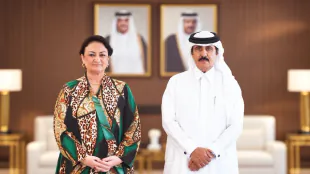
Qatar Chamber and Maltese envoy consider business forum
-
 'I am the hoax buster': Trump rejects AI danger warnings
-
Spanish PM denies being blackmailed by Morocco

First image of black hole at Milky Way's centre revealed
An international team of astronomers on Thursday unveiled the first image of a supermassive black hole at the centre of our own Milky Way galaxy -- a cosmic body known as Sagittarius A*.
The image -- produced by a global team of scientists known as the Event Horizon Telescope (EHT) Collaboration -- is the first, direct visual confirmation of the presence of this invisible object, and comes three years after the very first image of a black hole from a distant galaxy.
"For decades, we have known about a compact object that is at the heart of our galaxy that is four million times more massive than our Sun," Harvard University astronomer Sara Issaoun told a press conference in Garching, Germany, held simultaneously with other media events around the world.
"Today, right this moment, we have direct evidence that this object is a black hole."
Black holes are regions of space where the pull of gravity is so intense that nothing can escape, including light.
The image thus depicts not the black hole itself, because it is completely dark, but the glowing gas that encircles the phenomenon in a bright ring of bending light.
As seen from Earth, it appears the same size as a donut on the surface of the Moon, Issaoun explained.
"These unprecedented observations have greatly improved our understanding of what happens at the very centre of our galaxy," EHT project scientist Geoffrey Bower, of Taiwan's Academia Sinica, said in a statement.
The research results are published in The Astrophysical Journal Letters.
- Virtual telescope -
Sagittarius A* -- abbreviated to Sgr A*, and pronounced "sadge-ay-star" -- owes its name to its detection in the direction of the constellation Sagittarius.
Located 27,000 light years from Earth, its existence has been assumed since 1974, with the detection of an unusual radio source at the centre of the galaxy.
In the 1990s, astronomers mapped the orbits of the brightest stars near the centre of the Milky Way, confirming the presence of a supermassive compact object there -- work that led to the 2020 Nobel Prize in Physics.
Though the presence of a black hole was thought to be the only plausible explanation, the new image provides the first direct visual proof.
Capturing images of such a faraway object required linking eight giant radio observatories across the planet to form a single "Earth-sized" virtual telescope called the EHT.
"The EHT can see three million times sharper than the human eye," German scientist Thomas Krichbaum of the Max Planck Institute for Radio Astronomy told reporters.
"So, when you are sitting in a Munich beer garden, for example, one could see the bubbles in a glass of beer in New York."
The EHT gazed at Sgr A* across multiple nights for many hours in a row -- a similar idea to long-exposure photography and the same process used to produce the first image of a black hole, released in 2019.
That black hole is called M87* because it is in the Messier 87 galaxy.
- Einstein would be 'ecstatic' -
The two black holes bear striking similarities, despite the fact that Sgr A* is 2,000 times smaller than M87*.
"Close to the edge of these black holes, they look amazingly similar," said Sera Markoff, co-chair of the EHT Science Council, and a professor at the University of Amsterdam.
Both behaved as predicted by Einstein's 1915 theory of General Relativity, which holds that the force of gravity results from the curvature of space and time, and cosmic objects change this geometry.
Despite the fact Sgr A* is much closer to us, imaging it presented unique challenges.
Gas in the vicinity of both black holes moves at the same speed, close to the speed of light. But while it took days and weeks to orbit the larger M87*, it completed rounds of Sgr A* in just minutes.
The brightness and pattern of the gas around Sgr A* changed rapidly as the team observed it, "a bit like trying to take a clear picture of a puppy quickly chasing its tail," said EHT scientist Chi-kwan Chan of the University of Arizona.
The researchers had to develop complex new tools to account for the moving targets.
The resulting image -- the work of more than 300 researchers across 80 countries over a period of five years -- is an average of multiple images that revealed the invisible monster lurking at the centre of the galaxy.
"The fact that we're able to make an image of one, something that should be unseeable... I think that that's just really exciting," Katie Bouman, a Caltech professor who played a key role in creating the image, told AFP.
Scientists are now eager to compare the two black holes to test theories about how gasses behave around them -- a poorly understood phenomenon thought to play a role in the formation of new stars and galaxies.
Probing black holes -- in particular their infinitely small and dense centers known as singularities, where Einstein's equations break down -- could help physicists deepen their understanding of gravity and develop a more advanced theory.
"What about Einstein? Would he smile seeing all these hundreds of scientists still not having proven him wrong?" said Anton Zensus of the Max Planck Institute.
"I rather think that he would be ecstatic seeing all the experimental possibilities we have in this field today."
L.K.Baumgartner--CPN