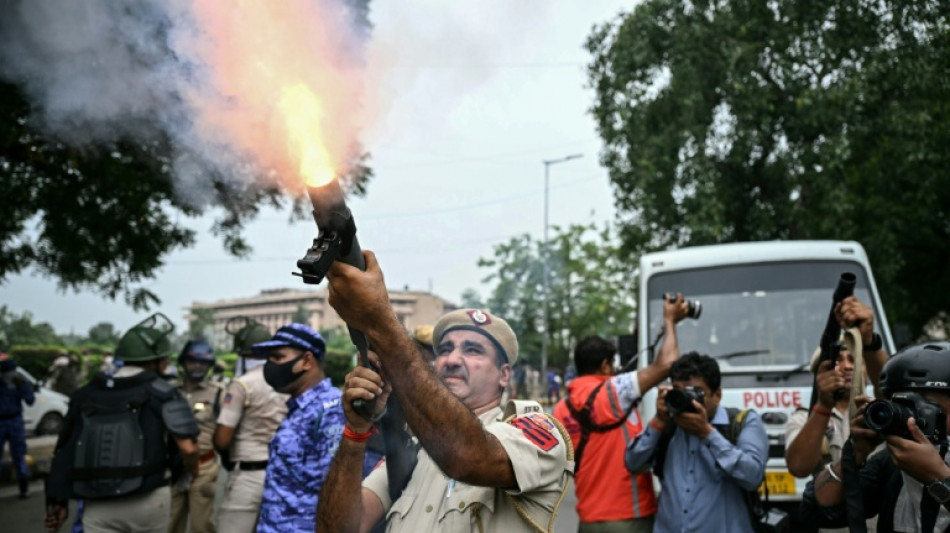
India police used excessive force during protests: Amnesty / Photo: Sajjad HUSSAIN - AFP

 S.African activists push back on data centre rush

 Billionaire Ambani's Jio to debut after record India IPO

 UK set for cautious budget as borrowing costs climb

 US Fed expected to hold rates steady ahead of key midterm elections

 AI chip giant SK hynix says quarterly operating profit soars 630%

 Charles tackles thorny legacy of slavery on Caribbean trip

 UN nuclear watchdog chief urges Iran to grant access

 Boeing releases cautious growth plan as shares fall sharply

 Tech firms gain on Anthropic IPO optimism; HSBC slumps in London

 Tech firms track Wall St rally on mixed day for stock markets

 HSBC profit jumps on higher rates, lower costs

 Reparations calls follow Charles on tough Caribbean trip

 China brands drop Mbappe for 'offending national sentiments'
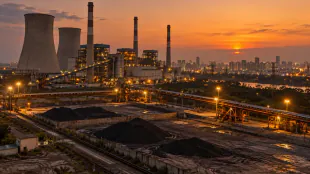 Critical coal inventories affect nearly half of India’s domestic power plants

 Gold ETF flows turn negative after 13 weeks as bullion loses 4%
Indian police used excessive force, including electric shock devices and pellet guns, against youth-led protests that forced the education minister to resign last month, Amnesty International said Monday.
A report from the rights' group clashes with the police account that force was used only after protesters turned violent, and comes after India's Supreme Court set up a panel on Thursday to investigate violence by both police and demonstrators.
Demonstrations in the capital New Delhi, triggered by the leak of the national medical entrance test, turned violent on July 20 when thousands of protesters attempted to march towards parliament.
Amnesty said witness testimony and visual evidence it had verified confirmed the use of "pellet-firing shotguns, tear gas launchers, grenades, batons and electric shock devices against protesters" in Delhi and the eastern state of Bihar.
Amnesty said it had also verified two instances of a police officer "unlawfully using lethal force against a crowd" in Bihar's Siwan district. No one was killed.
"The weapons were deployed in a manner that breached international law and standards and domestic policing guidelines," it added.
Amnesty said that there were "isolated incidents of protesters throwing stones", but that the "heavy-handed response was state-sanctioned violence masked as crowd control."
Delhi Police said in a Supreme Court hearing last week they had used force only after protesters "resorted to violence".
They said anti-social elements "masquerading as aggrieved students" caused "grievous injuries" to security forces.
On Friday, opposition leader Rahul Gandhi staged a sit-in outside a Delhi police station with a 19-year-old protester who said he was injured by pellets during the July 20 demonstration.
Gandhi demanded a police investigation into the shooting, and officers later registered a case over the complaint.
Led by the online Cockroach Janta Party, the protests broadened from anger over exam irregularities into a wider movement over unemployment, opportunities for young people and what critics describe as Prime Minister Narendra Modi's increasingly authoritarian rule.
The protests proved to be the biggest challenge that Modi has faced after winning a third term in 2024.
A.Agostinelli--CPN