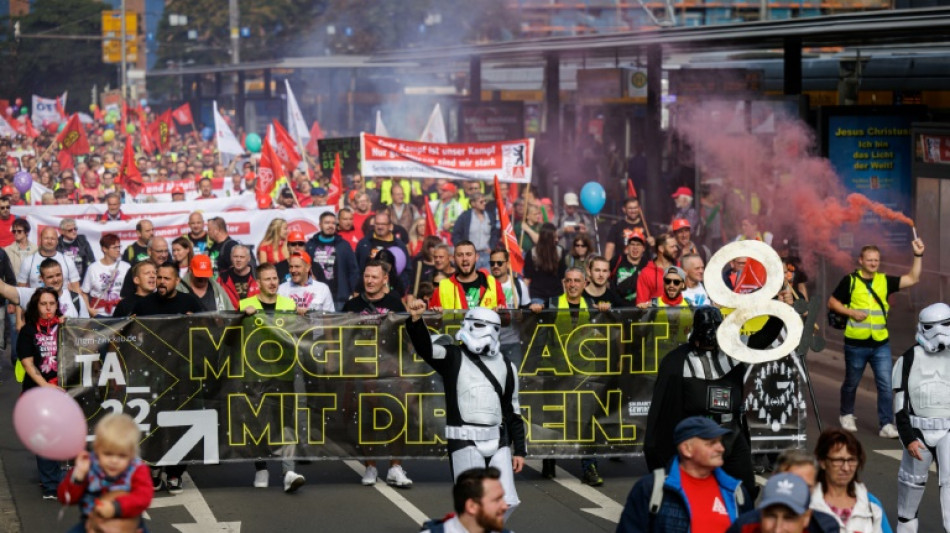
Major German trade union wins pay hike, averting strike / Photo: JENS SCHLUETER - AFP/File

 'Star Trek', 'X-Men' star Patrick Stewart dead at 86

 Canada buying stake in AI firm Cohere to bolster tech sovereignty
 Grieving Spain demands answers for latest rail disaster

 Qatar prime minister tours Cityscape Qatar 2026

 Jazeera Paints showcases housing solutions at Build Your House 2026 in Qatar

 Google drags down Wall Street stocks
 Does White House ask AI to shape policy? Democrats want the receipts
 ECB holds rates steady after Lagarde says to quit early
 ECB chief Lagarde to step down early, triggering succession race
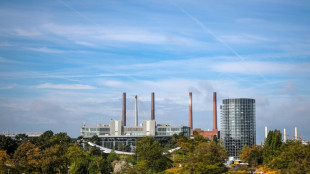 VW says 'no time to lose' to slash costs after 5.8 billion euro loss
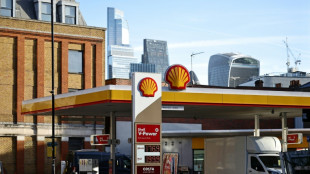 Oil majors reap bumper profits as Mideast war drives prices
 Taiwan says Pakistan briefly closed airspace to Taiwanese flights

 Samsung logs record quarterly profits despite investor AI jitters
 Shares in Google owner Alphabet plummet on profit miss, ad slowdown

Germany's biggest trade union agreed Friday to hefty wage hikes that are expected to cover almost four million workers facing soaring inflation, averting a major strike in Europe's top economy.
The deal will be closely watched across the continent, as industrial action spreads due to rising costs, particularly of energy, triggered by Russia's invasion of Ukraine.
The agreement for hikes totalling 8.5 percent between IG Metall union -- which represents workers in the key metal and electrical sectors -- and employers was reached early Friday after weeks of talks and walkouts.
The so-called "pilot agreement" in southern Baden-Wuerttemberg state, which is expected to eventually cover about 3.9 million workers across Germany, lays out how the pay increase will be introduced in two stages, in 2023 and 2024.
It also includes a 3,000-euro ($3,100) payment to combat the impact of inflation.
"Employees will soon have significantly more money in their pockets -- and permanently," said Joerg Hofmann, president of IG Metall, seen as a trend setter in wage negotiations nationwide.
The union had initially called for an eight percent increase over 12 months, the biggest hike since 2008.
Its members are from a vast range of key businesses, from the automotive to electronics sectors.
Workers have been ratcheting up pressure -- with demonstrations, and a series of "warning strikes" at the end of October, which are walkouts for a limited duration that often accompany salary negotiations in Germany.
If no deal was reached, then the union was poised to launch broader strikes lasting 24 hours.
- 'Expensive' deal -
The employers' group Gesamtmetall said that, while the agreement could dent companies' competitiveness, a serious labour dispute would have caused even greater damage.
Group president Stefan Wolf said it was an "expensive" agreement, but added: "Now we can concentrate on work and do our part to overcome an expected recession as quickly as possible."
Under the deal, workers' salaries will increase by 5.2 percent from June 2023, followed by a 3.3 percent increase in May 2024.
While companies are under pressure to hike wages due to rising costs, there are fears that raising them too sharply could stoke already sky-high inflation.
German manufacturers are also facing additional pressure due to high energy costs, triggered by Russia slashing gas supplies, as well more expensive raw materials.
German inflation hit 10.4 percent in October, while the government forecasts the economy will contract by 0.4 percent in 2023.
Berlin has been rolling out relief measures to combat rising prices, including a 200-billion-euro fund to lower energy costs.
Workers have been staging strikes across Europe, from France to Greece, due to the cost of living crisis.
Eurozone inflation is running at a record high, and the EU warned last week the single currency area is set to fall into recession this winter.
D.Avraham--CPN